
 Abibirem
 Asia
Asia Yuropu
 Amerika Anaafoɔ
 Australia ne Oceania
 Antarctica
 Pacific Po
 Atlantic Po
 India Po
 Arctic Po
 Mediterranean Po
 Po Kɔkɔɔ
 Caribbean Po
 Coral Po
 China Anaafoɔ Po
 Philippine Po
 Andaman Po
 Atifi Po
 Timor ne Arafura Po
 Bengal Ɛpo Ano
 California Ɛpo Ano
American toad
 Awuduro wɔ ne honam muƆdi: MmoawaNe ho yɛ awuduro, onni bɔre
The American toad is a common toad found across the eastern half of Canada and the United States. It lives in forests, grasslands and gardens, and it breeds in shallow ponds and pools. It matters because it eats many insects and other small creatures, and its skin releases a substance that can irritate eyes and harm small animals such as dogs.1


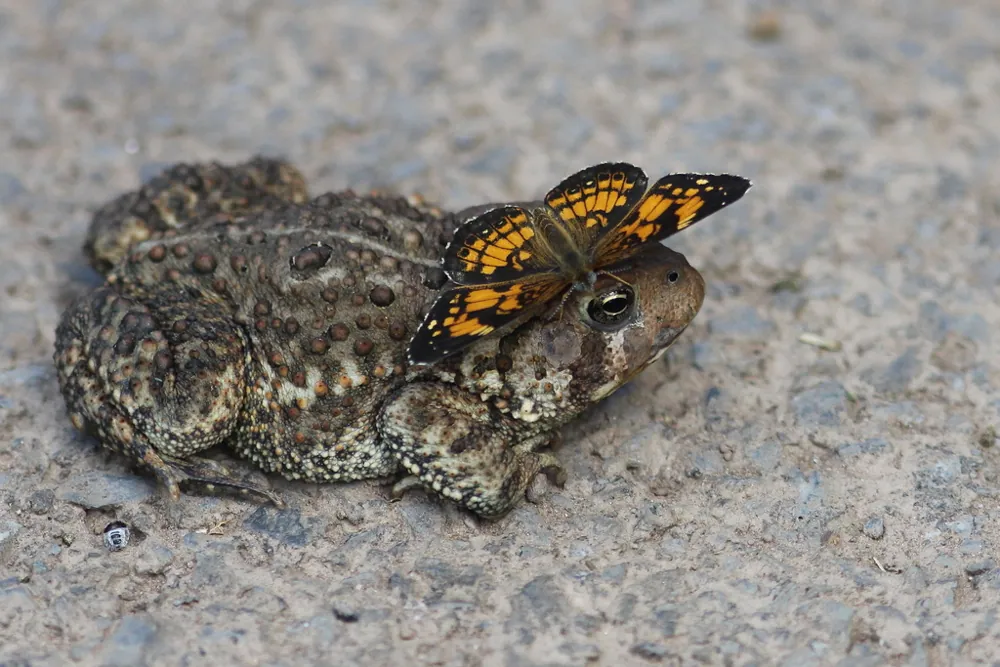
 Sɛdeɛ wobɛhunu no
- Adults are usually 5 to 9 cm long.1
- Skin colour varies from yellow to brown to black, and can be solid or speckled. It changes with habitat colours, humidity, stress and temperature.1
- Spots on the back contain only one or two warts, and the lower legs have enlarged warts.1
- The parotoid glands are the same colour as the surrounding skin.1
- Breeding males give a high trill lasting 6 to 30 seconds that sounds like a ringing telephone.1
Wɔtaa fa no sɛ: Fowler's toad, Woodhouse's toad, the Canadian toad, the southern toad and the Gulf Coast toad can look similar. Fowler's toad never has a spotted belly, and its cranial crests touch the parotoid glands. The American toad's crests almost never touch the glands. The Canadian toad's crests join to form a raised bump, which the American toad's do not. The southern toad's crests form two distinct knobs.1
Awuduro ahoɔden
Ne honam yɛ awuduro. Ɛyɛ asiane sɛ wode wo nsa bɛka, wobɛtaforɔ anaa wobɛdi.
Ne ho awuduro yɛ dɛn?
The American toad does not inject venom. Its parotoid glands secrete bufotoxin, a poisonous substance that makes the toad unpalatable to predators. It is a mild poison compared with other poisonous toads and frogs, but it can irritate human eyes and mucous membranes and is dangerous to smaller animals such as dogs when swallowed.1
Ne asiane ma nnipa te sɛn?
Asiane ma nnipa: Ɛnyɛ denƐte sɛ wowa wɔ anaa ɛnnu saa. Ɛkame ayɛ sɛ ɛnni asiane ma nnipa.Bufotoxin is a mild poison. It can irritate human eyes and mucous membranes, and it is dangerous to smaller animals, such as dogs, if they swallow it.1
Ɛyɛ dɛn bere a ehu aka no?
When threatened, the toad releases bufotoxin from its parotoid glands, which makes it unpleasant to eat.1
 Sɛ obi de ne nsa ka anaa ɔdi a
- Sɛ obi de ne nsa aka bi a: hohoro ne nsa yie na mfa nsa nka ani anaa ano. Sɛ abofra anaa fie aboa bi taforɔɔ bi anaa ɔdii bi a: frɛ awuduro ho mmoa adwumayɛbea (poison centre) anaa wo ahohiahia nɔma.
Di kan frɛ wo ahohiahia nɔma (112, 000, 911). Yei yɛ mmoa a ɛdi kan ho akwankyerɛ, ɛnyɛ dɔkota afotuo. Mmoa a ɛdi kan ho nsɛm titiriw
 Hwɛ wo ho so
- Mfa wo nsa nka wiram aboa biara, nkyere no na mfa no nni agorɔ, sɛ ɔyɛ ketewa mpo, na sɛ ɛte sɛ ɔrededa anaa wawu mpo a.
- Ma no kwan. Sɛ wohyia baako a, ma wo bo nnwo, san w'akyi brɛoo na ma ɔnkɔ ne kwan.
- Sɛ wode wo nsa kaa no anaa wodii a: mfa wo nsa ntwitwi w'ani anaa w'ano, hohoro wo nsa na hwehwɛ dɔkota mmoa.
Ɛnhwehwɛ wo sɛ ɛbɛpira wo. Ne ho awuduro no wɔ hɔ sɛdeɛ ɛbɛyɛ a biribiara renni no. Nsɛm pii fa ahobammɔ ho
Wiase mu baabi bɛn?
Ne kɛseɛ te sɛn?
Ne tenten te sɛn?
 ne tenten te sɛ agodeɛ blɔk 3 a wɔde to ntoatoasoɔ mu
 ɛbɛtumi atu mita 100 wɔ anibu 180 mu (onipa a ɔwɔ ntɛm sen biara hia 9.6)
American toad kɛseɛ te sɛn sɛ wode toto WO ho a?
Akontabuo kɛkɛ wɔ wo browser mu. Wɔnkora hwee, na wɔmfa hwee nkɔ baabiara.
Ne ntɛm te sɛn?


Nsɛm
Some American toads have lived for over 30 years, and one female was reported to be living healthily into her late 30s.1
Toads avoid mating with their siblings. Males' calls seem to help females recognise their close relatives.1
Toad tadpoles produce toxic chemicals in their skin that discourage some predators. Most fish learn quickly to avoid eating them.1
Their skin colour can change with their surroundings, humidity, stress and temperature.1
Tadpoles swim in very shallow water, often among thick grass, and gather in schools during the day to reduce predation.1
Toadlets often leave the water together in large groups and migrate to shaded forest areas near where they were bred.1
Ma bɔre ho animdefoɔ
- Nyansahu din
- Anaxyrus americanus
- Kuo
- Apɔtorɔwa a wɔn ho yɛ awuduro, apɔtorɔ ne newt
- Abusua
- Bufonidae2
- Nhyehyɛeɛ (Order)
- Anura
- Asaase akɛseɛ
- Amerika Atifi
- Mmofra nketewa
- Females lay two long ropes containing 2,000 to 20,000 small black eggs, each 1 to 2 mm across, surrounded by jelly. The eggs hatch into tadpoles in 3 to 12 days.1
- Mfeɛ a ɔtena ase
- bɛyɛ mfeɛ 301
- Asiane ma nnipa
- 1 / 5: Ɛnyɛ den3
Baabi a nsɛm no fi
- American toad (Wikipedia (CC BY-SA 4.0))
- Anaxyrus americanus (iNaturalist): din ne nkyekyɛmu.
- Venom Wiki: asiane gyinabea, kɛseɛ a ɛtaa yɛ ne ntɛm susuo no yɛ yɛn ankasa deɛ. Hwɛ sɛdeɛ yɛbu no: Sɛdeɛ yɛkyerɛ asiane gyinabea.
Nsɛm biara a ɛwɔ kratafa yi so wɔ nɔma a ɛkyerɛ ne fibea. Sɛ yɛfom biribi a, kafra, yɛyɛ mmoa ho akɔnnɔfoɔ, ɛnyɛ nyansahu nwoma. Ka kyerɛ yɛn wɔ [email protected] na yɛbɛsiesie.
 Ɔkɔm de akekantwerɛ no! Onipa baako na ɔyɛ Venom Wiki: ɛyɛ kwa, dawurubɔ nni so na biribiara nni so a ɛdi w'akyi. Akyɛdeɛ ketewa bi boa ma ɛkɔ so tena internet so.Ma akekantwere no aduane
Pii fi kuo korɔ no mu: Apɔtorɔwa a wɔn ho yɛ awuduro, apɔtorɔ ne newt
 Cane toadApɔtorɔwa a wɔn ho yɛ awuduro, apɔtorɔ ne newtƐhia dɔkotaMfa wo nsa nka
 Strawberry poison-dart frogApɔtorɔwa a wɔn ho yɛ awuduro, apɔtorɔ ne newtƐyɛ yaw kɛkɛMfa wo nsa nka
 California newtApɔtorɔwa a wɔn ho yɛ awuduro, apɔtorɔ ne newtƐtumi kumMfa wo nsa nka
 Rough-skinned newtApɔtorɔwa a wɔn ho yɛ awuduro, apɔtorɔ ne newtƐtumi kumMfa wo nsa nka
 Colorado River toadApɔtorɔwa a wɔn ho yɛ awuduro, apɔtorɔ ne newtƐhia dɔkotaMfa wo nsa nka
 Panamanian golden frogApɔtorɔwa a wɔn ho yɛ awuduro, apɔtorɔ ne newtƐhia dɔkotaMfa wo nsa nka
 Terciopelo
 Eastern coral snake
 Eastern diamondback rattlesnake
 Eyelash viper
 Timber rattlesnake
 Western diamondback rattlesnake