
 Abibirem
 Asia
Asia Yuropu
 Amerika Anaafoɔ
 Australia ne Oceania
 Antarctica
 Pacific Po
 Atlantic Po
 India Po
 Arctic Po
 Mediterranean Po
 Po Kɔkɔɔ
 Caribbean Po
 Coral Po
 China Anaafoɔ Po
 Philippine Po
 Andaman Po
 Atifi Po
 Timor ne Arafura Po
 Bengal Ɛpo Ano
 California Ɛpo Ano
Black-banded jumper ant
 Ɛwɔ
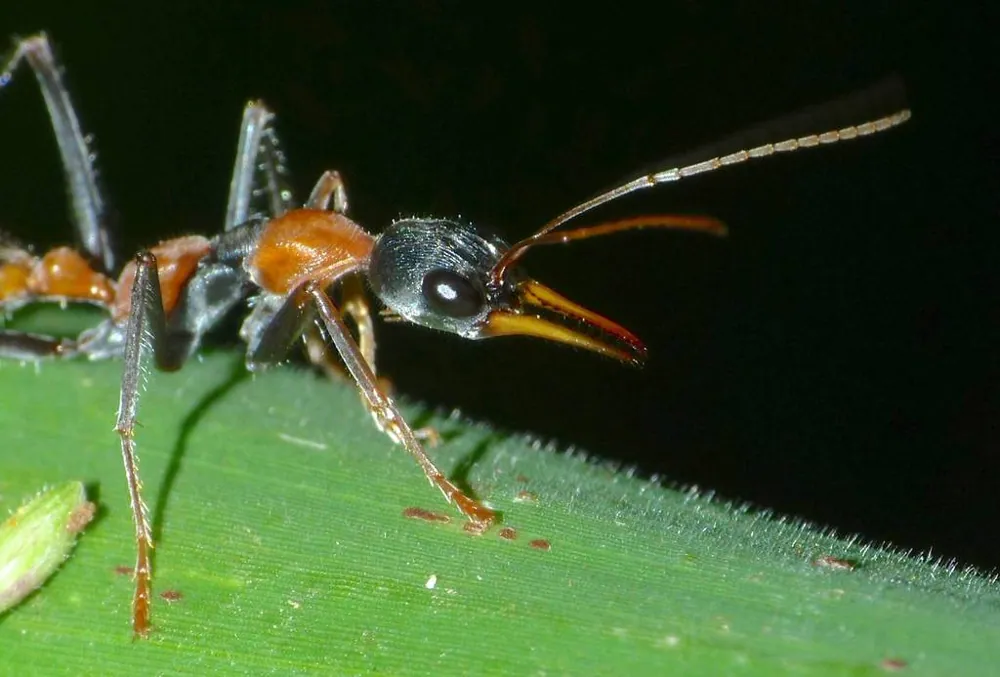
ƐwɔThe black-banded jumper ant is a large ant that can leap up to 10 centimetres, which is far above its own body length. It lives in eastern Australia, including suburbs of Sydney and Brisbane. Its sting is painful and can cause serious allergic reactions in some people, so it is worth knowing how to recognise it.1



 Sɛdeɛ wobɛhunu no
- Mostly black and orange-red in colour.1
- The gaster (rear body), head, legs and mesonotum (middle back) are black, while the pronotum, propodeum, petiole and post-petiole are red.1
- Mandibles (jaws) are either black or yellow, depending on where the ant lives.1
- Workers are 13 to 15 mm long, males 16 to 17 mm, and queens 17 to 19 mm.1
- It can leap 76 to 102 mm by suddenly extending its middle and hind legs.1
Wɔtaa fa no sɛ: It is often confused with other Myrmecia species. It can be told apart by its bi-coloured thorax and post-petiole, which are yellowish-red and black, and by its yellowish-red node.1
Bɔre ahoɔden
Bɔre fi ne dua ano nsɔe (stinger) mu ba.
Ne bɔre yɛ dɛn?
Its sting is highly venomous and causes intense burning pain. The burning can last for many days, and the sting itches. If the sting is left untreated, it may develop into an ulcer (an open sore). The venom of a close relative, M. pilosula, is among the strongest of all ants and contains acids, enzymes and phospholipases.1
Ne asiane ma nnipa te sɛn?
Asiane ma nnipa: Ɛyɛ yawƐtumi yɛ yaw paa, nanso ɛkame ayɛ sɛ ɛnyɛ asiane kɛseɛ da.A 2011 study of Australian ant allergies found that 265 of 376 participants reacted to the stings of several Myrmecia species, which can cause anaphylaxis (a severe, whole-body allergic reaction). Of these, 15 reacted to this species, while 176 reacted to M. pilosula. The study concluded that Myrmecia species were among four main groups of Australian ants responsible for anaphylaxis.1
Ɛyɛ dɛn bere a ehu aka no?
When threatened, workers and scouts quickly defend the nest and may react aggressively even to a shadow crossing it, bursting out in short hops to attack.1
 Sɛ ɛwɔ a
- Hohoro baabi a ɛwɔɔ no na dwo.
- Sɛ onipa no ntumi nhome yie, n'anim anaa ne mene mu hono, anaa ɛyɛ no sɛ ɔrebɛtɔ piti a, ɛyɛ allergy ahohiahia: frɛ wo ahohiahia nɔma.
Di kan frɛ wo ahohiahia nɔma (112, 000, 911). Yei yɛ mmoa a ɛdi kan ho akwankyerɛ, ɛnyɛ dɔkota afotuo. Mmoa a ɛdi kan ho nsɛm titiriw
 Hwɛ wo ho so
- Mfa wo nsa nka wiram aboa biara, nkyere no na mfa no nni agorɔ, sɛ ɔyɛ ketewa mpo, na sɛ ɛte sɛ ɔrededa anaa wawu mpo a.
- Ma no kwan. Sɛ wohyia baako a, ma wo bo nnwo, san w'akyi brɛoo na ma ɔnkɔ ne kwan.
- Sɛ baako wɔ wo a: ma wo bo nnwo, tena dinn, frɛ wo ahohiahia nɔma (112, 000, 911) anaa kɔ ayaresabea ntɛm. Kae sɛdeɛ na ɛte, mfonini bɛboa.
Ɛnhwehwɛ wo sɛ ɛbɛpira wo. Ɛde ne bɔre kyere aduane anaa ɛbɔ ne ho ban, na ɛpɛ sɛ ɛhinta sene biribiara. Nsɛm pii fa ahobammɔ ho
Wiase mu baabi bɛn?
Ne kɛseɛ te sɛn?
Ne tenten te sɛn?
 ɛyɛ tiaa sen wo nsateaa ketewa
Black-banded jumper ant kɛseɛ te sɛn sɛ wode toto WO ho a?
Akontabuo kɛkɛ wɔ wo browser mu. Wɔnkora hwee, na wɔmfa hwee nkɔ baabiara.
Ne ntɛm te sɛn?


Nsɛm
It can jump between 76 and 102 mm, which is far more than its own body length.1
Colonies can continue without a queen, because workers can lay fertile eggs.1
It often forages in trees, where it visits the flowers of some eucalyptus and senna plants and may help pollinate them.1
A worker can live for over a year, with a maximum of about 1.3 years.1
Its nests are camouflaged with twigs, leaves, gravel and other plant material.1
Ma bɔre ho animdefoɔ
- Nyansahu din
- Myrmecia nigrocincta
- Kuo
- Tɛtea
- Abusua
- Formicidae2
- Nhyehyɛeɛ (Order)
- Hymenoptera
- Asaase akɛseɛ
- Australia ne Oceania
- Mmofra nketewa
- Worker-laid eggs can be reared into males in colonies with no queen. Colonies typically have between 400 and 1200 individuals.1
- Mfeɛ a ɔtena ase
- bɛyɛ mfeɛ 1,31
- Asiane ma nnipa
- 2 / 5: Ɛyɛ yaw3
Baabi a nsɛm no fi
- Myrmecia nigrocincta (Wikipedia (CC BY-SA 4.0))
- Myrmecia nigrocincta (iNaturalist): din ne nkyekyɛmu.
- Venom Wiki: asiane gyinabea, kɛseɛ a ɛtaa yɛ ne ntɛm susuo no yɛ yɛn ankasa deɛ. Hwɛ sɛdeɛ yɛbu no: Sɛdeɛ yɛkyerɛ asiane gyinabea.
Nsɛm biara a ɛwɔ kratafa yi so wɔ nɔma a ɛkyerɛ ne fibea. Sɛ yɛfom biribi a, kafra, yɛyɛ mmoa ho akɔnnɔfoɔ, ɛnyɛ nyansahu nwoma. Ka kyerɛ yɛn wɔ [email protected] na yɛbɛsiesie.
 Ɔkɔm de akekantwerɛ no! Onipa baako na ɔyɛ Venom Wiki: ɛyɛ kwa, dawurubɔ nni so na biribiara nni so a ɛdi w'akyi. Akyɛdeɛ ketewa bi boa ma ɛkɔ so tena internet so.Ma akekantwere no aduane
 Bulldog ant
 Jack jumper ant
 Green weaver ant
 Giant bull ant
 Green-head ant
 Inchman ant
 Coastal taipan
 Common death adder
 Eastern brown snake
 Taipan a ɔwɔ Australia mfinimfini
 Sydney funnel-web spider
 Ɔwɔ a ɔte sɛ ɔsebɔ (Tiger snake)