
 Abibirem
 Asia
Asia Yuropu
 Amerika Anaafoɔ
 Australia ne Oceania
 Antarctica
 Pacific Po
 Atlantic Po
 India Po
 Arctic Po
 Mediterranean Po
 Po Kɔkɔɔ
 Caribbean Po
 Coral Po
 China Anaafoɔ Po
 Philippine Po
 Andaman Po
 Atifi Po
 Timor ne Arafura Po
 Bengal Ɛpo Ano
 California Ɛpo Ano
Green-head ant
 Ɛwɔ
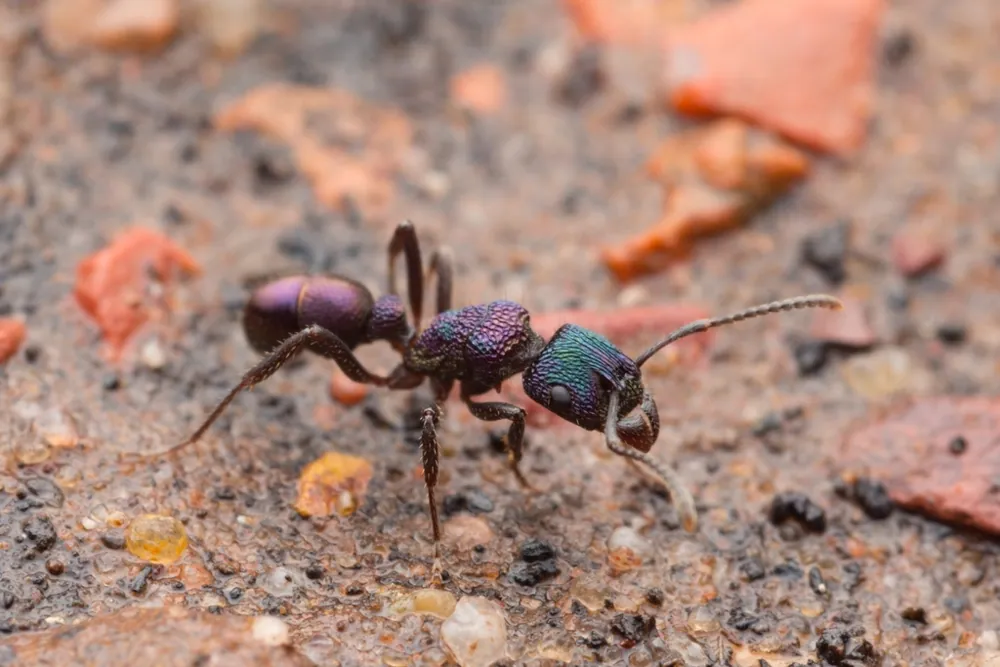
ƐwɔThe green-head ant is a small, shiny ant that lives in Australia. It has a metallic colour that can look green, purple or reddish-violet. It is one of the most widespread insects in Australia, and it can give a painful, venomous sting.1


 Sɛdeɛ wobɛhunu no
- Measures 5 to 7 mm long.1
- Metallic colour that varies by region, from green to purple or reddish-violet.1
- Hard, heavily armoured body with a single-segmented waist.1
- Queens and workers look similar and differ mainly in size. Males are the smallest and look black and dark.1
Wɔtaa fa no sɛ: Residents of northern Queensland use the name 'green ant' for the green-tree ant (Oecophylla smaragdina), so the two can be confused by name. The name 'green-head ant' is more specific.1
Bɔre ahoɔden
Bɔre fi ne dua ano nsɔe (stinger) mu ba.
Ne bɔre yɛ dɛn?
The sting is painful and venomous. It can cause anaphylactic shock, a severe allergic reaction, in people who are sensitive to it.1
Ne asiane ma nnipa te sɛn?
Asiane ma nnipa: Ɛyɛ yawƐtumi yɛ yaw paa, nanso ɛkame ayɛ sɛ ɛnyɛ asiane kɛseɛ da.The sting can cause anaphylactic shock in sensitive people. Ordinary stings are described as painful.1
 Sɛ ɛwɔ a
- Hohoro baabi a ɛwɔɔ no na dwo.
- Sɛ onipa no ntumi nhome yie, n'anim anaa ne mene mu hono, anaa ɛyɛ no sɛ ɔrebɛtɔ piti a, ɛyɛ allergy ahohiahia: frɛ wo ahohiahia nɔma.
Di kan frɛ wo ahohiahia nɔma (112, 000, 911). Yei yɛ mmoa a ɛdi kan ho akwankyerɛ, ɛnyɛ dɔkota afotuo. Mmoa a ɛdi kan ho nsɛm titiriw
 Hwɛ wo ho so
- Mfa wo nsa nka wiram aboa biara, nkyere no na mfa no nni agorɔ, sɛ ɔyɛ ketewa mpo, na sɛ ɛte sɛ ɔrededa anaa wawu mpo a.
- Ma no kwan. Sɛ wohyia baako a, ma wo bo nnwo, san w'akyi brɛoo na ma ɔnkɔ ne kwan.
- Sɛ baako wɔ wo a: ma wo bo nnwo, tena dinn, frɛ wo ahohiahia nɔma (112, 000, 911) anaa kɔ ayaresabea ntɛm. Kae sɛdeɛ na ɛte, mfonini bɛboa.
Ɛnhwehwɛ wo sɛ ɛbɛpira wo. Ɛde ne bɔre kyere aduane anaa ɛbɔ ne ho ban, na ɛpɛ sɛ ɛhinta sene biribiara. Nsɛm pii fa ahobammɔ ho
Wiase mu baabi bɛn?
Ne kɛseɛ te sɛn?
Ne tenten te sɛn?
 ɛyɛ ketewa araa sɛ ɛbɛtumi atena wo nsateaa ano
Green-head ant kɛseɛ te sɛn sɛ wode toto WO ho a?
Akontabuo kɛkɛ wɔ wo browser mu. Wɔnkora hwee, na wɔmfa hwee nkɔ baabiara.
Ne ntɛm te sɛn?


Nsɛm
Green-head ants are among the first insects to appear in burnt-off areas, arriving once the embers have stopped smouldering.1
Workers can reproduce with winged males, so queens are rarely produced in colonies.1
They are useful to farmers because they prey on agricultural pests such as beetles, moths and termites.1
They help plants by scattering and eating seeds from a variety of species, which plays an important role in seed dispersal.1
The short-beaked echidna and a number of bird species prey on them.1
The ant was introduced to New Zealand, where it was first seen in 1959, probably on cargoes of timber.1
Atosɛm sɛefoɔ
Atosɛm: The name 'green ant' always means the green-head ant.
Nokorɛ: In northern Queensland, residents use the name 'green ant' for the green-tree ant, so the shortened name can cause confusion.1
Baabi a nsɛm no fi
- Green-head ant (Wikipedia (CC BY-SA 4.0))
- Rhytidoponera metallica (iNaturalist): din ne nkyekyɛmu.
- Venom Wiki: asiane gyinabea, kɛseɛ a ɛtaa yɛ ne ntɛm susuo no yɛ yɛn ankasa deɛ. Hwɛ sɛdeɛ yɛbu no: Sɛdeɛ yɛkyerɛ asiane gyinabea.
Nsɛm biara a ɛwɔ kratafa yi so wɔ nɔma a ɛkyerɛ ne fibea. Sɛ yɛfom biribi a, kafra, yɛyɛ mmoa ho akɔnnɔfoɔ, ɛnyɛ nyansahu nwoma. Ka kyerɛ yɛn wɔ [email protected] na yɛbɛsiesie.
 Ɔkɔm de akekantwerɛ no! Onipa baako na ɔyɛ Venom Wiki: ɛyɛ kwa, dawurubɔ nni so na biribiara nni so a ɛdi w'akyi. Akyɛdeɛ ketewa bi boa ma ɛkɔ so tena internet so.Ma akekantwere no aduane
 Bulldog ant
 Jack jumper ant
 Green weaver ant
 Black-banded jumper ant
 Giant bull ant
 Inchman ant
 Coastal taipan
 Common death adder
 Eastern brown snake
 Taipan a ɔwɔ Australia mfinimfini
 Sydney funnel-web spider
 Ɔwɔ a ɔte sɛ ɔsebɔ (Tiger snake)