
 Abibirem
 Asia
Asia Yuropu
 Amerika Anaafoɔ
 Australia ne Oceania
 Antarctica
 Pacific Po
 Atlantic Po
 India Po
 Arctic Po
 Mediterranean Po
 Po Kɔkɔɔ
 Caribbean Po
 Coral Po
 China Anaafoɔ Po
 Philippine Po
 Andaman Po
 Atifi Po
 Timor ne Arafura Po
 Bengal Ɛpo Ano
 California Ɛpo Ano
Black-banded sea krait
 Ka
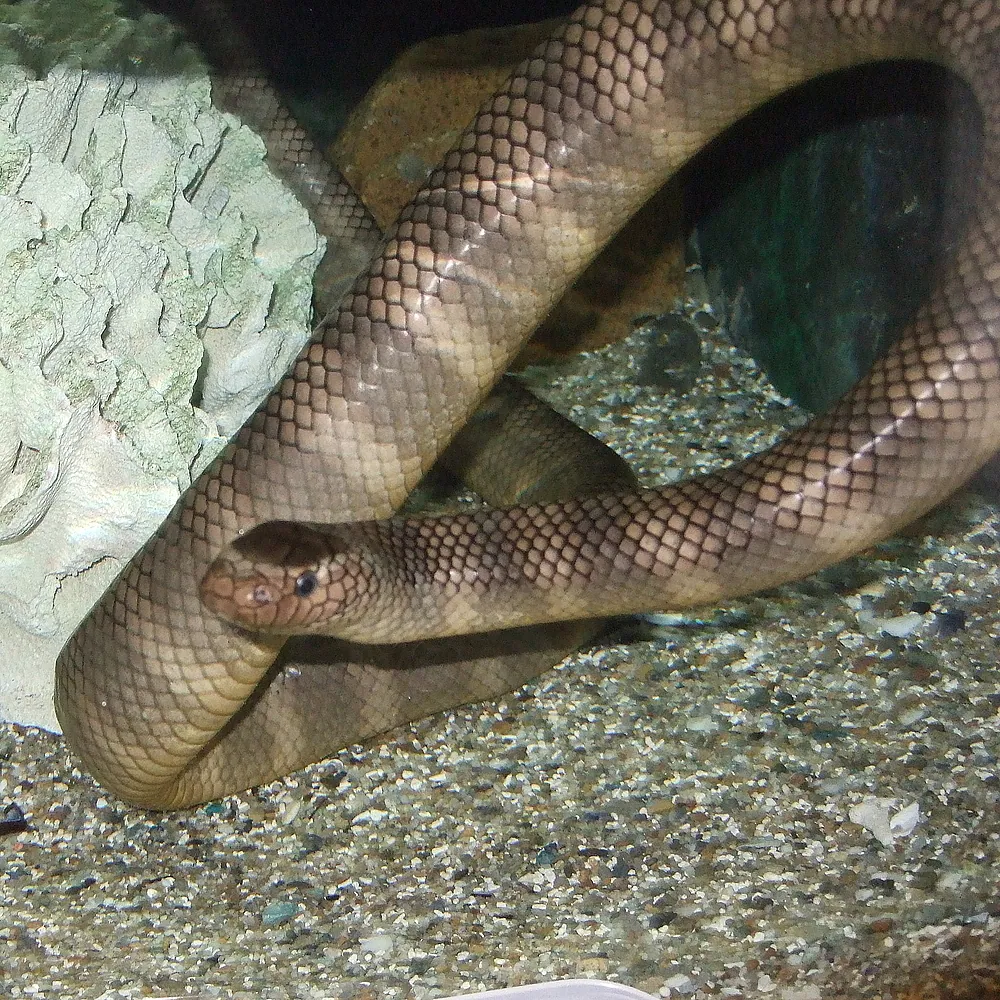
KaThe black-banded sea krait is a sea snake with venom that is reportedly ten times stronger than a cobra's. It lives in the warm western Pacific Ocean, mostly around coral reefs. It spends much of its life in water but needs to come up to breathe.1



 Sɛdeɛ wobɛhunu no
Bɔre ahoɔden
Bɔre fi ne se mu ba bere a ɔka.
Ne bɔre yɛ dɛn?
The bite is highly venomous and paralyses the prey. The venom glands are located behind the eyes.1
Ne asiane ma nnipa te sɛn?
Asiane ma nnipa: Asiane kɛseɛ womƐtumi kum onipa a wɔnhwɛ no yareɛ.Its venom is reportedly ten times stronger than cobra venom, so any bite should be treated as serious.1
Ɛyɛ dɛn bere a ehu aka no?
It prefers to save its energy and venom for hunting, so it strikes only as a very last resort when cornered, threatened or provoked.1
 Sɛ ɛka a
- Pressure immobilisation: fa elastic bandage a ɛyɛ den kyekyere baabi a ɛkaa no so, na afei kyekyere kɔ soro wɔ nsa anaa nan no nyinaa so, fa splint kyekyere ho, na ma onipa no ntena dinn koraa kosi sɛ mmoa bɛba.
- Yi onipa no fi nsuo no mu na fa no kɔ ayaresabea ntɛm.
Di kan frɛ wo ahohiahia nɔma (112, 000, 911). Yei yɛ mmoa a ɛdi kan ho akwankyerɛ, ɛnyɛ dɔkota afotuo. Mmoa a ɛdi kan ho nsɛm titiriw
 Hwɛ wo ho so
- Mfa wo nsa nka wiram aboa biara, nkyere no na mfa no nni agorɔ, sɛ ɔyɛ ketewa mpo, na sɛ ɛte sɛ ɔrededa anaa wawu mpo a.
- Ma no kwan. Sɛ wohyia baako a, ma wo bo nnwo, san w'akyi brɛoo na ma ɔnkɔ ne kwan.
- Sɛ baako ka wo a: ma wo bo nnwo, tena dinn, frɛ wo ahohiahia nɔma (112, 000, 911) anaa kɔ ayaresabea ntɛm. Kae sɛdeɛ na ɛte, mfonini bɛboa.
Ɛnhwehwɛ wo sɛ ɛbɛpira wo. Ɛde ne bɔre kyere aduane anaa ɛbɔ ne ho ban, na ɛpɛ sɛ ɛhinta sene biribiara. Nsɛm pii fa ahobammɔ ho
Wiase mu baabi bɛn?
Ne kɛseɛ te sɛn?
Ne tenten te sɛn?
 ne tenten te sɛ fie agyinamoa 3 a wɔde hwene ne dua to ntoatoasoɔ mu
 ne tenten te sɛ kwadu 9 a wɔde to ntoatoasoɔ mu
 ɛbɛtumi aguare aguare tare kɛseɛ tenten (50 m) wɔ anibu 43 mu
Black-banded sea krait kɛseɛ te sɛn sɛ wode toto WO ho a?
Akontabuo kɛkɛ wɔ wo browser mu. Wɔnkora hwee, na wɔmfa hwee nkɔ baabiara.
Ne ntɛm te sɛn?
Nsɛm
Its venom is reportedly ten times stronger than that of a cobra.1
It has been observed hunting in cooperative 'alliances' with bluefin trevally, which pick off small fish that the snake flushes from the coral.1
In some warm years, large numbers gather in sea caves and tide pools on the Ryukyu cliffs in search of fresh water and possibly to mate.1
Although it lives in the sea, it lays its eggs on land.1
In southern Japan its meat is used in a winter broth called irabu-jiru, which is said to taste like miso and a little like tuna.1
Its northward spread into waters near South Korea is linked to climate change, which has damaged its habitat.1
Ma bɔre ho animdefoɔ
Baabi a nsɛm no fi
- Black-banded sea krait (Wikipedia (CC BY-SA 4.0))
- Laticauda semifasciata (iNaturalist): din ne nkyekyɛmu.
- Venom Wiki: asiane gyinabea, kɛseɛ a ɛtaa yɛ ne ntɛm susuo no yɛ yɛn ankasa deɛ. Hwɛ sɛdeɛ yɛbu no: Sɛdeɛ yɛkyerɛ asiane gyinabea.
Nsɛm biara a ɛwɔ kratafa yi so wɔ nɔma a ɛkyerɛ ne fibea. Sɛ yɛfom biribi a, kafra, yɛyɛ mmoa ho akɔnnɔfoɔ, ɛnyɛ nyansahu nwoma. Ka kyerɛ yɛn wɔ [email protected] na yɛbɛsiesie.
 Ɔkɔm de akekantwerɛ no! Onipa baako na ɔyɛ Venom Wiki: ɛyɛ kwa, dawurubɔ nni so na biribiara nni so a ɛdi w'akyi. Akyɛdeɛ ketewa bi boa ma ɛkɔ so tena internet so.Ma akekantwere no aduane
Pii fi kuo korɔ no mu: Ɛpo mu awɔ
 Beaked sea snake
 Belcher's sea snake
 Blue-lipped sea krait
 Dubois' sea snake
 Olive sea snake
 Yellow-lipped sea krait
Ɔte nso wɔ: Pacific Po
 Australian box jellyfishJellyfish ne ɛpo mu mmoa a wɔwɔƐkumMfa wo nsa nka
 Geography coneCone snails ne octopusƐkum
 Greater blue-ringed octopusCone snails ne octopusƐkum
 Japanese pufferfishMmoa afoforɔ a wɔn ho yɛ awuduroƐkum
 Southern blue-ringed octopusCone snails ne octopusƐkum
 Hawksbill sea turtleMmoa afoforɔ a wɔn ho yɛ awuduroƐtumi kum