
 Abibirem
 Asia
Asia Yuropu
 Amerika Anaafoɔ
 Australia ne Oceania
 Antarctica
 Pacific Po
 Atlantic Po
 India Po
 Arctic Po
 Mediterranean Po
 Po Kɔkɔɔ
 Caribbean Po
 Coral Po
 China Anaafoɔ Po
 Philippine Po
 Andaman Po
 Atifi Po
 Timor ne Arafura Po
 Bengal Ɛpo Ano
 California Ɛpo Ano
Black-tailed rattlesnake
 Ka
KaThe black-tailed rattlesnake is a venomous pit viper that lives in the south-west of the United States and in Mexico. It is known as one of the calmest rattlesnakes, and it relies on camouflage rather than confrontation.1



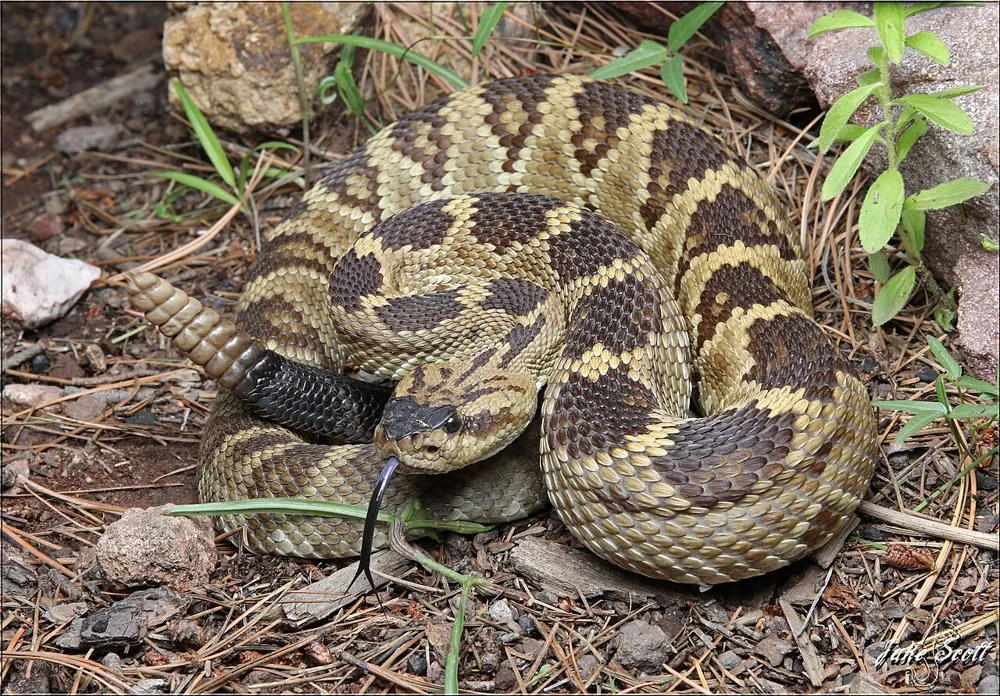
 Sɛdeɛ wobɛhunu no
- Body colour ranges from yellows and olive greens to browns and black.1
- The tail scales are entirely black, which gives the species its name.1
- Often has a black band that runs across the eyes and down to the corners of the mouth, forming a facial 'mask'.1
- Has a rattle made of keratin at the end of the tail.1
Bɔre ahoɔden
Bɔre fi ne se mu ba bere a ɔka.
Ne bɔre yɛ dɛn?
Its venom is primarily hemotoxic, meaning it mainly acts on the blood and surrounding tissue, as with most crotalids (pit vipers). It is only about two-thirds as toxic as western diamondback venom. Because the venom is weaker, the snake has larger venom glands than most rattlesnakes in its region and injects large quantities into prey.1
Ne asiane ma nnipa te sɛn?
Asiane ma nnipa: Ɛyɛ denSɛ ɛka wo a, kɔ dɔkota nkyɛn. Ɛntaa nkum obi koraa.Bites are fairly rare, because the snake is considered one of the most docile rattlesnakes. The venom is generally not fatal to humans.1
 Asɛmpa: dɔkotafoɔ wɔ aduro (antivenom) anaa ayaresa ma yei.1
Ɛyɛ dɛn bere a ehu aka no?
It normally tries to slither away when confronted, but it will rattle when cornered, and it relies mostly on camouflage to avoid discovery.1
 Sɛ ɛka a
- CroFab antivenom is often used to treat bites from this snake.1
- Ma onipa no ntena dinn na ne bo nnwo, ma nsa anaa nan a ɛkaa no no nna pɛpɛɛpɛ ne ne koma (ɛnkɔ soro, ɛnsiane fam), yi kawa ne nneɛma a ɛkyere no den, na kɔ ayaresabea ntɛm.
Di kan frɛ wo ahohiahia nɔma (112, 000, 911). Yei yɛ mmoa a ɛdi kan ho akwankyerɛ, ɛnyɛ dɔkota afotuo. Mmoa a ɛdi kan ho nsɛm titiriw
 Hwɛ wo ho so
- Mfa wo nsa nka wiram aboa biara, nkyere no na mfa no nni agorɔ, sɛ ɔyɛ ketewa mpo, na sɛ ɛte sɛ ɔrededa anaa wawu mpo a.
- Ma no kwan. Sɛ wohyia baako a, ma wo bo nnwo, san w'akyi brɛoo na ma ɔnkɔ ne kwan.
- Sɛ baako ka wo a: ma wo bo nnwo, tena dinn, frɛ wo ahohiahia nɔma (112, 000, 911) anaa kɔ ayaresabea ntɛm. Kae sɛdeɛ na ɛte, mfonini bɛboa.
Ɛnhwehwɛ wo sɛ ɛbɛpira wo. Ɛde ne bɔre kyere aduane anaa ɛbɔ ne ho ban, na ɛpɛ sɛ ɛhinta sene biribiara. Nsɛm pii fa ahobammɔ ho
Wiase mu baabi bɛn?
Ne kɛseɛ te sɛn?
Ne tenten te sɛn?
 ne tenten te sɛ fie agyinamoa 2 a wɔde hwene ne dua to ntoatoasoɔ mu
 ne tenten te sɛ kwadu 6 a wɔde to ntoatoasoɔ mu
 ɛbɛtumi atu mita 100 wɔ anibu 100 mu (onipa a ɔwɔ ntɛm sen biara hia 9.6)
Black-tailed rattlesnake kɛseɛ te sɛn sɛ wode toto WO ho a?
Akontabuo kɛkɛ wɔ wo browser mu. Wɔnkora hwee, na wɔmfa hwee nkɔ baabiara.
Ne ntɛm te sɛn?


Nsɛm
Its venom glands are larger than those of most rattlesnakes in its region, which compensates for its weaker venom.1
It is considered one of the most docile rattlesnakes because of its calm demeanour and curious nature.1
In the spring and fall it is mainly active during the day, but in summer it becomes nocturnal to avoid the heat.1
In winter it hibernates in dens made and abandoned by other animals, often sharing them with other snake species.1
Its lifespan averages 15 to 20 years.1
Atosɛm sɛefoɔ
Atosɛm: The number of segments in a rattle shows how old a rattlesnake is.
Nokorɛ: Each time the snake sheds its skin, a new segment is added. Snakes can shed several times a year, and the rattle is fragile and can break, so its length is not an accurate guide to age unless the tip (terminal button) is intact.1
Ma bɔre ho animdefoɔ
- Nyansahu din
- Crotalus molossus
- Kuo
- Rattlesnake
- Abusua
- Viperidae2
- Nhyehyɛeɛ (Order)
- Squamata
- Asaase akɛseɛ
- Amerika Atifi
- Mmofra nketewa
- The female gives birth to live young in the summer. Litters can have as many as 10 to 12 young but usually average four to six.1
- Sɛdeɛ ɔte wɔ kwaem
- Least Concern1
- Asiane ma nnipa
- 3 / 5: Ɛyɛ den3
Baabi a nsɛm no fi
- Black-tailed rattlesnake (Wikipedia (CC BY-SA 4.0))
- Crotalus molossus (iNaturalist): din ne nkyekyɛmu.
- Venom Wiki: asiane gyinabea, kɛseɛ a ɛtaa yɛ ne ntɛm susuo no yɛ yɛn ankasa deɛ. Hwɛ sɛdeɛ yɛbu no: Sɛdeɛ yɛkyerɛ asiane gyinabea.
Nsɛm biara a ɛwɔ kratafa yi so wɔ nɔma a ɛkyerɛ ne fibea. Sɛ yɛfom biribi a, kafra, yɛyɛ mmoa ho akɔnnɔfoɔ, ɛnyɛ nyansahu nwoma. Ka kyerɛ yɛn wɔ [email protected] na yɛbɛsiesie.
 Ɔkɔm de akekantwerɛ no! Onipa baako na ɔyɛ Venom Wiki: ɛyɛ kwa, dawurubɔ nni so na biribiara nni so a ɛdi w'akyi. Akyɛdeɛ ketewa bi boa ma ɛkɔ so tena internet so.Ma akekantwere no aduane
 Eastern diamondback rattlesnake
 Timber rattlesnake
 Western diamondback rattlesnake
 Sidewinder
 Mojave rattlesnake
 Aruba rattlesnake
 Terciopelo
 Eastern coral snake
 Eyelash viper
 Arizona bark scorpion
 Brown recluse
 Cane toad