
 Abibirem
 Asia
Asia Yuropu
 Amerika Anaafoɔ
 Australia ne Oceania
 Antarctica
 Pacific Po
 Atlantic Po
 India Po
 Arctic Po
 Mediterranean Po
 Po Kɔkɔɔ
 Caribbean Po
 Coral Po
 China Anaafoɔ Po
 Philippine Po
 Andaman Po
 Atifi Po
 Timor ne Arafura Po
 Bengal Ɛpo Ano
 California Ɛpo Ano
Bluebottle
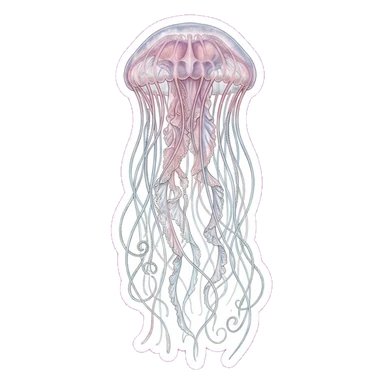 Nhama (tentacles) a ɛwɔ
The bluebottle is a floating sea creature that looks like a jellyfish, but it is actually a colony of many linked animals that work together. It drifts on the surface of warm oceans and often washes up on beaches in large numbers. Its long tentacle can cause painful stings, so it is important to know what it looks like.1
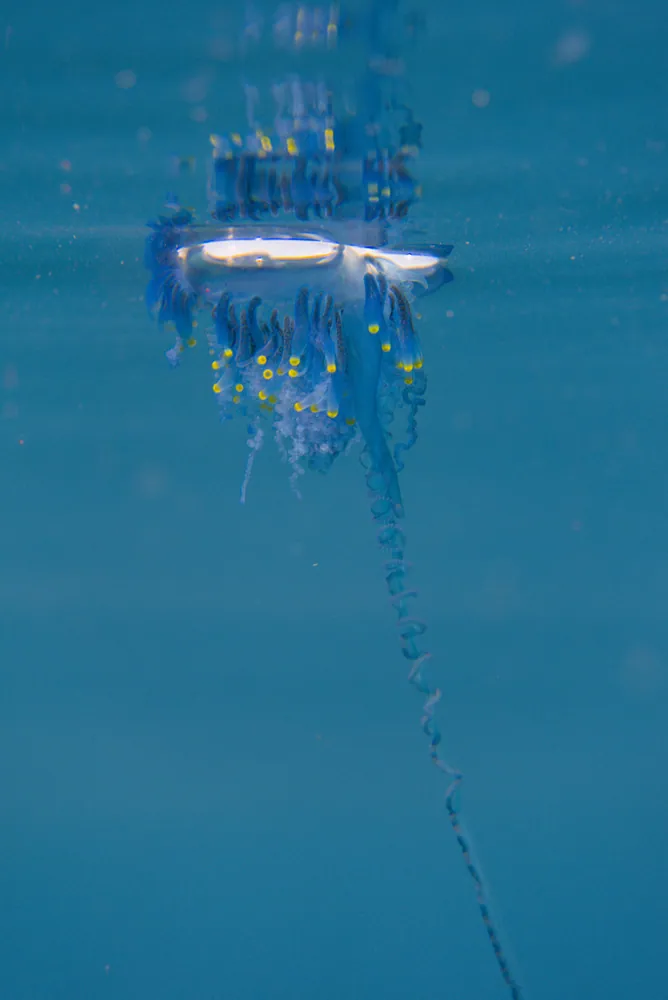
 Sɛdeɛ wobɛhunu no
- A gas-filled float that sits on the surface, with a sail on top of it1
- A single long tentacle hanging below the float1
- A float about 16 cm across, smaller than the Atlantic Portuguese man o' war, whose float is about 30 cm1
- Often found in large groups called swarms1
- Often washed up in large numbers on beaches after strong winds1
Wɔtaa fa no sɛ: The Atlantic Portuguese man o' war (Physalia physalis) is closely related and looks similar. It has a larger float, about 30 cm across, while the bluebottle's float is about 16 cm. The bluebottle has a single long fishing tentacle.1
Bɔre ahoɔden
Nwowaa (cells) nketewa mpempem a ɛwɔ tow wɔn bɔre bere a biribi de ne ho ka wɔn.
Ne bɔre yɛ dɛn?
Its tentacle is covered in venomous cells called cnidocytes, which fire stinging threads called nematocysts. These toxic stinging cells cause painful injuries when they touch human skin. The stings can cause painful injuries at the beach.1
Ne asiane ma nnipa te sɛn?
Asiane ma nnipa: Ɛyɛ yawƐtumi yɛ yaw paa, nanso ɛkame ayɛ sɛ ɛnyɛ asiane kɛseɛ da.On Australia's east coast, 10,000 to 30,000 stings per year from animals of the genus Physalia are reported, and most incidents happen on the eastern coast. No deaths have been recorded from stings by this species. The Atlantic Portuguese man o' war has caused at least three deaths.1
 Sɛ ɛwɔ a
- Fi nsuo no mu na yi nhama (tentacles) biara a ɛda so (fa nsa kotokuo anaa ntoma).
- Box jellyfish a ɛwɔ nsuo hyew mu: hwie vinegar gu baabi a ɛwɔɔ no so anibu 30 anaa deɛ ɛsen saa, frɛ ma wɔmmɛboa na siesie wo ho sɛ wobɛyɛ CPR. Bluebottles ne afoforɔ dodoɔ no: fa ɛpo nsuo hohoro, na afei nsuo hyew ma yaw no.
Di kan frɛ wo ahohiahia nɔma (112, 000, 911). Yei yɛ mmoa a ɛdi kan ho akwankyerɛ, ɛnyɛ dɔkota afotuo. Mmoa a ɛdi kan ho nsɛm titiriw
 Hwɛ wo ho so
- Mfa wo nsa nka wiram aboa biara, nkyere no na mfa no nni agorɔ, sɛ ɔyɛ ketewa mpo, na sɛ ɛte sɛ ɔrededa anaa wawu mpo a.
- Ma no kwan. Sɛ wohyia baako a, ma wo bo nnwo, san w'akyi brɛoo na ma ɔnkɔ ne kwan.
- Sɛ baako wɔ wo a: ma wo bo nnwo, tena dinn, frɛ wo ahohiahia nɔma (112, 000, 911) anaa kɔ ayaresabea ntɛm. Kae sɛdeɛ na ɛte, mfonini bɛboa.
Ɛnhwehwɛ wo sɛ ɛbɛpira wo. Ɛde ne bɔre kyere aduane anaa ɛbɔ ne ho ban, na ɛpɛ sɛ ɛhinta sene biribiara. Nsɛm pii fa ahobammɔ ho
Wiase mu baabi bɛn?
Ne kɛseɛ te sɛn?
Ne tenten te sɛn?
 ne tenten te sɛ agodeɛ blɔk 2 a wɔde to ntoatoasoɔ mu
 ɛbɛtumi aguare aguare tare kɛseɛ tenten (50 m) wɔ anibu 180 mu
Bluebottle kɛseɛ te sɛn sɛ wode toto WO ho a?
Akontabuo kɛkɛ wɔ wo browser mu. Wɔnkora hwee, na wɔmfa hwee nkɔ baabiara.
Ne ntɛm te sɛn?

Nsɛm
It is not a single animal. It is a colony of four separate types of polyps and medusoids that work together.1
Its stinging cells can remain harmful on beaches for weeks or months if the sand stays moist.1
It moves across the sea using the wind, currents and tides, helped by the sail on top of its float.1
Ma bɔre ho animdefoɔ
- Nyansahu din
- Physalia utriculus
- Kuo
- Jellyfish ne ɛpo mu mmoa a wɔwɔ
- Abusua
- Physaliidae2
- Nhyehyɛeɛ (Order)
- Siphonophorae
- Asaase akɛseɛ
- Pacific Po, India Po, Atlantic Po, Anaafoɔ Po, Coral Po, Antarctica, Timor ne Arafura Po, Bengal Ɛpo Ano, Po akɛseɛ
- Mmofra nketewa
- Its reproductive parts, called gonozooids, release eggs or sperm into the water.1
- Asiane ma nnipa
- 2 / 5: Ɛyɛ yaw3
Baabi a nsɛm no fi
- Physalia utriculus (Wikipedia (CC BY-SA 4.0))
- Physalia utriculus (iNaturalist): din ne nkyekyɛmu.
- Venom Wiki: asiane gyinabea, kɛseɛ a ɛtaa yɛ ne ntɛm susuo no yɛ yɛn ankasa deɛ. Hwɛ sɛdeɛ yɛbu no: Sɛdeɛ yɛkyerɛ asiane gyinabea.
Nsɛm biara a ɛwɔ kratafa yi so wɔ nɔma a ɛkyerɛ ne fibea. Sɛ yɛfom biribi a, kafra, yɛyɛ mmoa ho akɔnnɔfoɔ, ɛnyɛ nyansahu nwoma. Ka kyerɛ yɛn wɔ [email protected] na yɛbɛsiesie.
 Ɔkɔm de akekantwerɛ no! Onipa baako na ɔyɛ Venom Wiki: ɛyɛ kwa, dawurubɔ nni so na biribiara nni so a ɛdi w'akyi. Akyɛdeɛ ketewa bi boa ma ɛkɔ so tena internet so.Ma akekantwere no aduane
Pii fi kuo korɔ no mu: Jellyfish ne ɛpo mu mmoa a wɔwɔ
 Australian box jellyfishJellyfish ne ɛpo mu mmoa a wɔwɔƐkumMfa wo nsa nka
 Irukandji jellyfishJellyfish ne ɛpo mu mmoa a wɔwɔƐtumi kumMfa wo nsa nka
 Portuguese man o' warJellyfish ne ɛpo mu mmoa a wɔwɔƐhia dɔkotaMfa wo nsa nka
 Lion's mane jellyfishJellyfish ne ɛpo mu mmoa a wɔwɔƐyɛ yaw kɛkɛMfa wo nsa nka
 Moon jellyfishJellyfish ne ɛpo mu mmoa a wɔwɔƐnni asiane
 Common kingslayerJellyfish ne ɛpo mu mmoa a wɔwɔƐtumi kumMfa wo nsa nka
Ɔte nso wɔ: Pacific Po
 Geography coneCone snails ne octopusƐkum
 Greater blue-ringed octopusCone snails ne octopusƐkum
 Japanese pufferfishMmoa afoforɔ a wɔn ho yɛ awuduroƐkum
 Southern blue-ringed octopusCone snails ne octopusƐkum
 Hawksbill sea turtleMmoa afoforɔ a wɔn ho yɛ awuduroƐtumi kum
 Reef stonefishApataa a wɔwɔ bɔreƐtumi kumMfa wo nsa nka