
 Abibirem
 Asia
Asia Yuropu
 Amerika Anaafoɔ
 Australia ne Oceania
 Antarctica
 Pacific Po
 Atlantic Po
 India Po
 Arctic Po
 Mediterranean Po
 Po Kɔkɔɔ
 Caribbean Po
 Coral Po
 China Anaafoɔ Po
 Philippine Po
 Andaman Po
 Atifi Po
 Timor ne Arafura Po
 Bengal Ɛpo Ano
 California Ɛpo Ano
Bootlace worm
 Awuduro wɔ ne honam mu
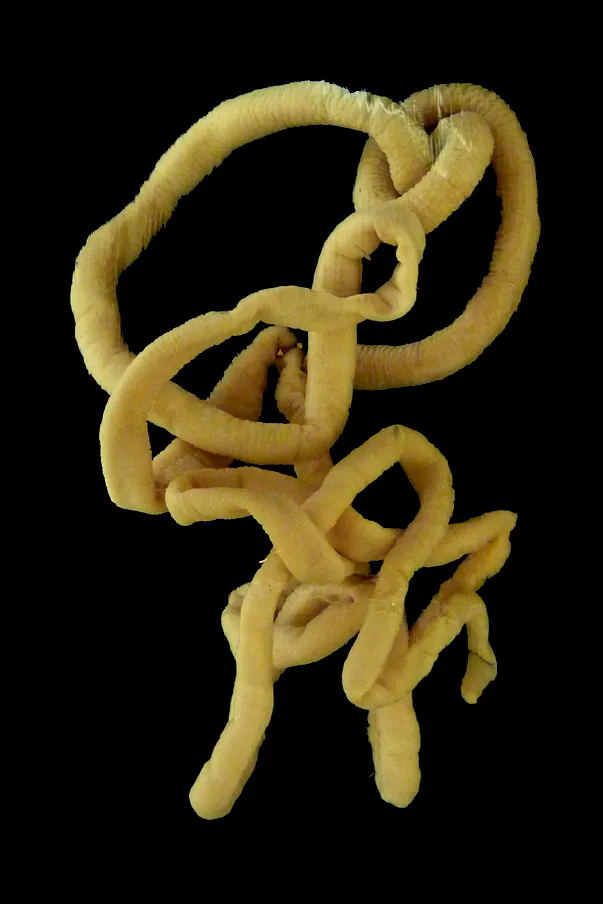
The bootlace worm is a ribbon worm that can be one of the longest animals known, with typical specimens measuring 5 to 15 metres. It lives along the coasts of northern Europe, including Britain, Norway and Denmark. Its thick, toxic mucus is its main defence.1
 Sɛdeɛ wobɛhunu no
Awuduro ahoɔden
Ne honam yɛ awuduro. Ɛyɛ asiane sɛ wode wo nsa bɛka, wobɛtaforɔ anaa wobɛdi.
Ne ho awuduro yɛ dɛn?
The bootlace worm does not bite or sting, so it is poisonous rather than venomous. Its mucus contains a relatively strong neurotoxin, which attacks the nerves. The mucus is highly toxic, but tests showed low toxicity in human cells.1
Ne asiane ma nnipa te sɛn?
Asiane ma nnipa: Ɛnyɛ denƐte sɛ wowa wɔ anaa ɛnnu saa. Ɛkame ayɛ sɛ ɛnni asiane ma nnipa.No human injuries or deaths from this worm are known. Its mucus is highly toxic, so it is best not to touch it.1
Ɛyɛ dɛn bere a ehu aka no?
When handled, it releases large amounts of thick, toxic mucus, which it uses to deter predators.1
 Sɛ obi de ne nsa ka anaa ɔdi a
- Fa kuro no hyɛ nsuo hyew mu, ɛnyɛ hyew sene deɛ onipa no betumi agyina a ɛnhye no, na hwehwɛ dɔkota mmoa na wɔayi nsɔe no. Mmɔ mmɔden sɛ wo ankasa wobɛtutu wɔn.
Di kan frɛ wo ahohiahia nɔma (112, 000, 911). Yei yɛ mmoa a ɛdi kan ho akwankyerɛ, ɛnyɛ dɔkota afotuo. Mmoa a ɛdi kan ho nsɛm titiriw
 Hwɛ wo ho so
- Mfa wo nsa nka wiram aboa biara, nkyere no na mfa no nni agorɔ, sɛ ɔyɛ ketewa mpo, na sɛ ɛte sɛ ɔrededa anaa wawu mpo a.
- Ma no kwan. Sɛ wohyia baako a, ma wo bo nnwo, san w'akyi brɛoo na ma ɔnkɔ ne kwan.
- Sɛ wode wo nsa kaa no anaa wodii a: mfa wo nsa ntwitwi w'ani anaa w'ano, hohoro wo nsa na hwehwɛ dɔkota mmoa.
Ɛnhwehwɛ wo sɛ ɛbɛpira wo. Ne ho awuduro no wɔ hɔ sɛdeɛ ɛbɛyɛ a biribiara renni no. Nsɛm pii fa ahobammɔ ho
Wiase mu baabi bɛn?
Ne kɛseɛ te sɛn?
Ne tenten te sɛn?
 ne tenten te sɛ kaa 7 a wɔasisi wɔn ntoatoasoɔ mu
Bootlace worm kɛseɛ te sɛn sɛ wode toto WO ho a?
Akontabuo kɛkɛ wɔ wo browser mu. Wɔnkora hwee, na wɔmfa hwee nkɔ baabiara.
Ne ntɛm te sɛn?


Nsɛm
In 1864, a specimen more than 55 metres long washed ashore after a severe storm near St Andrews, Scotland. It was longer than the lion's mane jellyfish.1
The bootlace worm is one of the longest known animals, and individuals have been recorded at up to 30 metres.1
Its mucus kills crabs and cockroaches in tests, and it could be used as an agricultural insecticide.1
Its body is very flexible and can stretch far beyond its usual length.1
Atosɛm sɛefoɔ
Atosɛm: The bootlace worm regularly grows to over 55 metres long.
Nokorɛ: Reports of worms over 55 metres may be animals that were stretched. Ribbon worm bodies are flexible, so measurements should be treated with caution. Individuals are known to reach up to 30 metres.1
Baabi a nsɛm no fi
- Lineus longissimus (Wikipedia (CC BY-SA 4.0))
- Lineus longissimus (iNaturalist): din ne nkyekyɛmu.
- Venom Wiki: asiane gyinabea, kɛseɛ a ɛtaa yɛ ne ntɛm susuo no yɛ yɛn ankasa deɛ. Hwɛ sɛdeɛ yɛbu no: Sɛdeɛ yɛkyerɛ asiane gyinabea.
Nsɛm biara a ɛwɔ kratafa yi so wɔ nɔma a ɛkyerɛ ne fibea. Sɛ yɛfom biribi a, kafra, yɛyɛ mmoa ho akɔnnɔfoɔ, ɛnyɛ nyansahu nwoma. Ka kyerɛ yɛn wɔ [email protected] na yɛbɛsiesie.
 Ɔkɔm de akekantwerɛ no! Onipa baako na ɔyɛ Venom Wiki: ɛyɛ kwa, dawurubɔ nni so na biribiara nni so a ɛdi w'akyi. Akyɛdeɛ ketewa bi boa ma ɛkɔ so tena internet so.Ma akekantwere no aduane
Pii fi kuo korɔ no mu: Sea urchins, ɛpo nsoromma ne sonsono
 Crown-of-thorns starfishSea urchins, ɛpo nsoromma ne sonsonoƐhia dɔkotaMfa wo nsa nka
 Flower urchinSea urchins, ɛpo nsoromma ne sonsonoƐtumi kum
 Fire urchinSea urchins, ɛpo nsoromma ne sonsonoƐhia dɔkotaMfa wo nsa nka
 Bearded firewormSea urchins, ɛpo nsoromma ne sonsonoƐyɛ yaw kɛkɛMfa wo nsa nka
 Black long-spined urchinSea urchins, ɛpo nsoromma ne sonsonoƐyɛ yaw kɛkɛMfa wo nsa nka
 BloodwormSea urchins, ɛpo nsoromma ne sonsonoƐyɛ yaw kɛkɛ
Ɔte nso wɔ: Atlantic Po
 Hawksbill sea turtleMmoa afoforɔ a wɔn ho yɛ awuduroƐtumi kum
 Portuguese man o' warJellyfish ne ɛpo mu mmoa a wɔwɔƐhia dɔkotaMfa wo nsa nka
 Blue sea dragonCone snails ne octopusƐyɛ yaw kɛkɛ
 Greenland sharkMmoa afoforɔ a wɔn ho yɛ awuduroƐyɛ yaw kɛkɛ
 Lion's mane jellyfishJellyfish ne ɛpo mu mmoa a wɔwɔƐyɛ yaw kɛkɛMfa wo nsa nka
 Common octopusCone snails ne octopusƐnni asiane