
 Abibirem
 Asia
Asia Yuropu
 Amerika Anaafoɔ
 Australia ne Oceania
 Antarctica
 Pacific Po
 Atlantic Po
 India Po
 Arctic Po
 Mediterranean Po
 Po Kɔkɔɔ
 Caribbean Po
 Coral Po
 China Anaafoɔ Po
 Philippine Po
 Andaman Po
 Atifi Po
 Timor ne Arafura Po
 Bengal Ɛpo Ano
 California Ɛpo Ano
California scorpionfish
 Nsɔe a bɔre wom
The California scorpionfish is a spiny fish that lives on the ocean floor along the Pacific coast of California and Baja California. It stays still among rocks and in caves, where its spotted colours help it blend in. Its spines carry venom, so it is one to leave alone.1



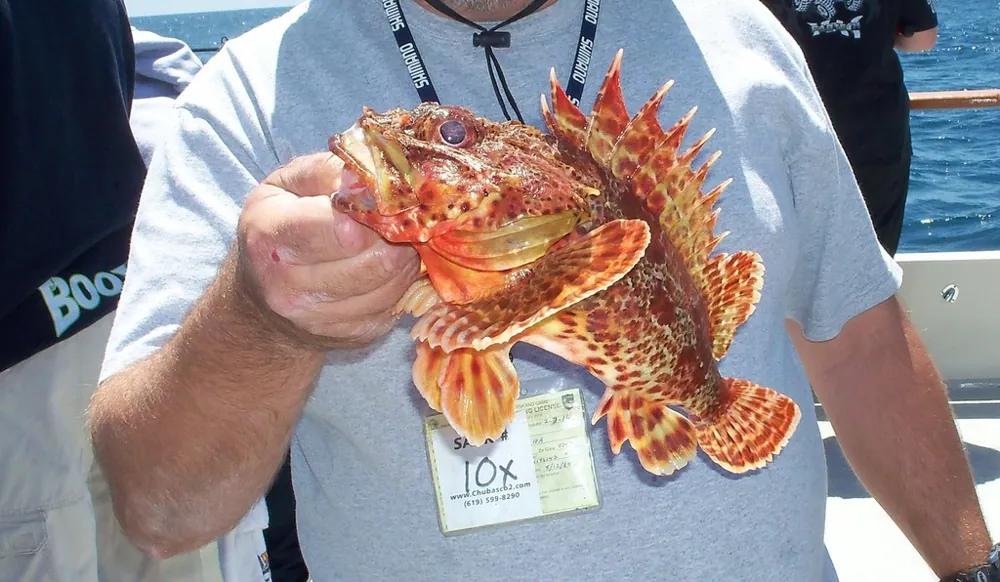
 Sɛdeɛ wobɛhunu no
Bɔre ahoɔden
Nsɔe a ano yɛ nnam na ɛkura bɔre no. Sɛ wotiatia so anaa wosɔ mu a, ɛyɛ yaw.
Ne bɔre yɛ dɛn?
Its spines contain venom-producing glands. The venom is cardiotoxic, meaning it affects the heart; in laboratory studies it caused changes in blood pressure and heart rhythm. A spine prick can cause severe, throbbing pain, swelling, numbness and discolouration of the finger, with pain spreading up the arm. Nausea, faintness and pale, clammy skin can also occur.1
Ne asiane ma nnipa te sɛn?
Asiane ma nnipa: Ɛyɛ denSɛ ne nsɔe hyɛ wo mu a, kɔ dɔkota nkyɛn. Ɛntaa nkum obi koraa.It has been responsible for many human injuries and has been called one of the most noxious marine animals in California waters. Fishermen are most often affected when removing the fish from a hook. The effects can feel much like a rattlesnake bite, and one victim developed pericarditis, an inflammation of the lining around the heart. In one reported case, the victim recovered in about two weeks.1
Ɛyɛ dɛn bere a ehu aka no?
When pulled from the water, it flares the spines on its fins and gill covers, which makes it difficult to handle.1
 Sɛ ne nsɔe hyɛ wo mu a
- Fa kuro no hyɛ nsuo hyew mu, ɛnyɛ hyew sene deɛ onipa no betumi agyina a ɛnhye no (fa wo ankasa wo nsa sɔ hwɛ), simma 30 kɔsi 90. Hwehwɛ dɔkota mmoa, titiriw ma stonefish ne stingray.
Di kan frɛ wo ahohiahia nɔma (112, 000, 911). Yei yɛ mmoa a ɛdi kan ho akwankyerɛ, ɛnyɛ dɔkota afotuo. Mmoa a ɛdi kan ho nsɛm titiriw
 Hwɛ wo ho so
- Mfa wo nsa nka wiram aboa biara, nkyere no na mfa no nni agorɔ, sɛ ɔyɛ ketewa mpo, na sɛ ɛte sɛ ɔrededa anaa wawu mpo a.
- Ma no kwan. Sɛ wohyia baako a, ma wo bo nnwo, san w'akyi brɛoo na ma ɔnkɔ ne kwan.
- Sɛ ne nsɔe hyɛ wo mu a: ma wo bo nnwo, tena dinn, frɛ wo ahohiahia nɔma (112, 000, 911) anaa kɔ ayaresabea ntɛm. Kae sɛdeɛ na ɛte, mfonini bɛboa.
Ɛnhwehwɛ wo sɛ ɛbɛpira wo. Ɛde ne bɔre kyere aduane anaa ɛbɔ ne ho ban, na ɛpɛ sɛ ɛhinta sene biribiara. Nsɛm pii fa ahobammɔ ho
Wiase mu baabi bɛn?
Ne kɛseɛ te sɛn?
Ne tenten te sɛn?
 ne tenten te sɛ kwadu 2,5 a wɔde to ntoatoasoɔ mu
 ne tenten te sɛ agodeɛ blɔk 15 a wɔde to ntoatoasoɔ mu
 ɛbɛtumi aguare aguare tare kɛseɛ tenten (50 m) wɔ anibu 90 mu
California scorpionfish kɛseɛ te sɛn sɛ wode toto WO ho a?
Akontabuo kɛkɛ wɔ wo browser mu. Wɔnkora hwee, na wɔmfa hwee nkɔ baabiara.
Ne ntɛm te sɛn?

Nsɛm
Its venom is produced in grooves along each spine, and the spine is covered by a thin membrane that is pushed back as it enters the skin, helping to inject the venom.1
It has no swim bladder, which is why it spends most of its time resting on the ocean floor.1
Some individuals have travelled up to 200 km in mark and recapture studies. One fish moved from near Santa Cruz Island to Long Beach over about 14 months.1
The California two-spot octopus preys on it, and the fish will also eat small octopuses of the same kind.1
Its maximum recorded lifespan is 21 years.1
Despite its danger, it is considered a very good food fish once the spines have been avoided, and it is sought after by some Asian communities in Southern California.1
Ma bɔre ho animdefoɔ
- Nyansahu din
- Scorpaena guttata
- Kuo
- Apataa a wɔwɔ bɔre
- Abusua
- Scorpaenidae2
- Nhyehyɛeɛ (Order)
- Perciformes
- Asaase akɛseɛ
- Pacific Po, California Ɛpo Ano, Po akɛseɛ
- Mmofra nketewa
- It lays eggs inside a floating, elastic, gelatinous mass about 25 cm long. Each egg is just over 1 mm long, and the mass turns cloudy white as it drifts at the surface.1
- Mfeɛ a ɔtena ase
- bɛyɛ mfeɛ 211
- Asiane ma nnipa
- 3 / 5: Ɛyɛ den3
Baabi a nsɛm no fi
- Scorpaena guttata (Wikipedia (CC BY-SA 4.0))
- Scorpaena guttata (iNaturalist): din ne nkyekyɛmu.
- Venom Wiki: asiane gyinabea, kɛseɛ a ɛtaa yɛ ne ntɛm susuo no yɛ yɛn ankasa deɛ. Hwɛ sɛdeɛ yɛbu no: Sɛdeɛ yɛkyerɛ asiane gyinabea.
Nsɛm biara a ɛwɔ kratafa yi so wɔ nɔma a ɛkyerɛ ne fibea. Sɛ yɛfom biribi a, kafra, yɛyɛ mmoa ho akɔnnɔfoɔ, ɛnyɛ nyansahu nwoma. Ka kyerɛ yɛn wɔ [email protected] na yɛbɛsiesie.
 Ɔkɔm de akekantwerɛ no! Onipa baako na ɔyɛ Venom Wiki: ɛyɛ kwa, dawurubɔ nni so na biribiara nni so a ɛdi w'akyi. Akyɛdeɛ ketewa bi boa ma ɛkɔ so tena internet so.Ma akekantwere no aduane
Pii fi kuo korɔ no mu: Apataa a wɔwɔ bɔre
 Reef stonefishApataa a wɔwɔ bɔreƐtumi kumMfa wo nsa nka
 Red lionfishApataa a wɔwɔ bɔreƐhia dɔkotaMfa wo nsa nka
 Estuarine stonefishApataa a wɔwɔ bɔreƐtumi kumMfa wo nsa nka
 Short-tail stingrayApataa a wɔwɔ bɔreƐtumi kum
 Striped eel catfishApataa a wɔwɔ bɔreƐtumi kumMfa wo nsa nka
 Bluespotted ribbontail rayApataa a wɔwɔ bɔreƐhia dɔkota
Ɔte nso wɔ: Pacific Po
 Australian box jellyfishJellyfish ne ɛpo mu mmoa a wɔwɔƐkumMfa wo nsa nka
 Geography coneCone snails ne octopusƐkum
 Greater blue-ringed octopusCone snails ne octopusƐkum
 Japanese pufferfishMmoa afoforɔ a wɔn ho yɛ awuduroƐkum
 Southern blue-ringed octopusCone snails ne octopusƐkum
 Hawksbill sea turtleMmoa afoforɔ a wɔn ho yɛ awuduroƐtumi kum