
 Abibirem
 Asia
Asia Yuropu
 Amerika Anaafoɔ
 Australia ne Oceania
 Antarctica
 Pacific Po
 Atlantic Po
 India Po
 Arctic Po
 Mediterranean Po
 Po Kɔkɔɔ
 Caribbean Po
 Coral Po
 China Anaafoɔ Po
 Philippine Po
 Andaman Po
 Atifi Po
 Timor ne Arafura Po
 Bengal Ɛpo Ano
 California Ɛpo Ano
Common eastern bumble bee
 Ɛwɔ
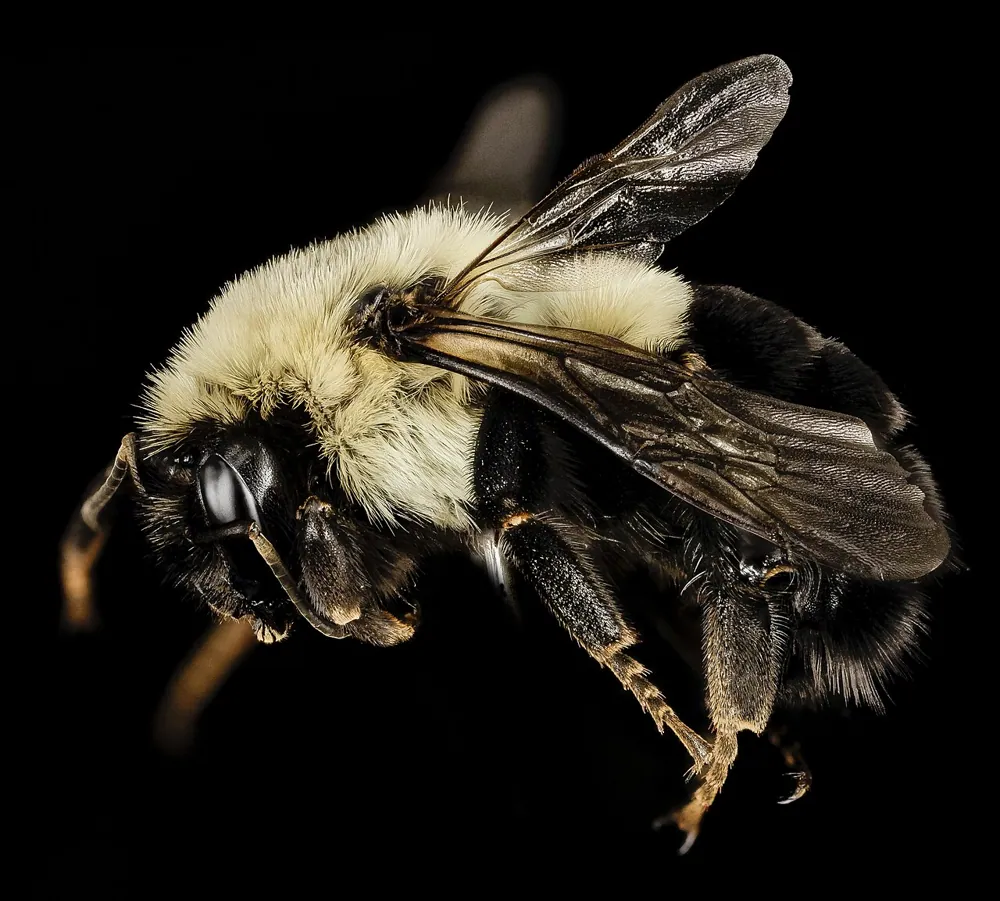
ƐwɔThe common eastern bumblebee is a furry, black and yellow bee. It is the most commonly seen bumblebee across much of eastern North America, including towns, cities and fields. Its visits to flowers help pollinate many crops, so it matters to farmers and gardeners.1



 Sɛdeɛ wobɛhunu no
- Queens and workers are black with a yellow thorax (the middle part of the body) and a yellow first abdominal segment (the first part of the rear body).1
- Males have a yellow face and head, and their coloring is slightly different from queens and workers.1
- They have short, even hair and a long, rectangular body.1
- Queens are the largest, at 17 to 23 mm long. Workers measure 8.5 to 16 mm and males 12 to 18 mm.1
Wɔtaa fa no sɛ: They look similar to Bombus bimaculatus, B. perplexus, B. vagans, B. sandersoni and B. separatus.1
Bɔre ahoɔden
Bɔre fi ne dua ano nsɔe (stinger) mu ba.
Ne asiane ma nnipa te sɛn?
Asiane ma nnipa: Ɛnyɛ denƐte sɛ wowa wɔ anaa ɛnnu saa. Ɛkame ayɛ sɛ ɛnni asiane ma nnipa. Sɛ ɛwɔ a
- Fa biribi twitwiw wowa no dua (stinger) no fi mu, na dwo baabi no.
- Sɛ onipa no ntumi nhome yie, n'anim anaa ne mene mu hono, anaa ɛyɛ no sɛ ɔrebɛtɔ piti a, ɛyɛ allergy ahohiahia: frɛ wo ahohiahia nɔma na fa n'adrenaline pen (auto-injector) wɔ no sɛ ɔwɔ bi a.
Di kan frɛ wo ahohiahia nɔma (112, 000, 911). Yei yɛ mmoa a ɛdi kan ho akwankyerɛ, ɛnyɛ dɔkota afotuo. Mmoa a ɛdi kan ho nsɛm titiriw
 Hwɛ wo ho so
- Mfa wo nsa nka wiram aboa biara, nkyere no na mfa no nni agorɔ, sɛ ɔyɛ ketewa mpo, na sɛ ɛte sɛ ɔrededa anaa wawu mpo a.
- Ma no kwan. Sɛ wohyia baako a, ma wo bo nnwo, san w'akyi brɛoo na ma ɔnkɔ ne kwan.
- Sɛ baako wɔ wo a: ma wo bo nnwo, tena dinn, frɛ wo ahohiahia nɔma (112, 000, 911) anaa kɔ ayaresabea ntɛm. Kae sɛdeɛ na ɛte, mfonini bɛboa.
Ɛnhwehwɛ wo sɛ ɛbɛpira wo. Ɛde ne bɔre kyere aduane anaa ɛbɔ ne ho ban, na ɛpɛ sɛ ɛhinta sene biribiara. Nsɛm pii fa ahobammɔ ho
Wiase mu baabi bɛn?
Ne kɛseɛ te sɛn?
Ne tenten te sɛn?
 ne tenten bɛyɛ sɛ paper clip
 ɛbɛtumi atu atwa bɔɔlobɔ agodibea mu nyinaa wɔ anibu 15 mu
Common eastern bumble bee kɛseɛ te sɛn sɛ wode toto WO ho a?
Akontabuo kɛkɛ wɔ wo browser mu. Wɔnkora hwee, na wɔmfa hwee nkɔ baabiara.
Ne ntɛm te sɛn?


Nsɛm
Queen bees can stay underwater for up to a week without drowning, which may help them survive floods or wet winters.1
Foragers use traplining, visiting flowers in the same repeatable order. This saves time and energy.1
Foraging bees share information about good food sources with other bees in the nest.1
Inside the nest, smaller workers stay near the centre and feed the young, while bigger workers work as foragers and guards on the outside.1
Commercially raised colonies are used to pollinate tomatoes, blueberries, raspberries and pumpkins in greenhouses.1
Ma bɔre ho animdefoɔ
- Nyansahu din
- Bombus impatiens
- Kuo
- Wowa, kotokurodu ne kotokurodu akɛseɛ
- Abusua
- Apidae2
- Nhyehyɛeɛ (Order)
- Hymenoptera
- Asaase akɛseɛ
- Amerika Atifi
- Mmofra nketewa
- A queen can lay about 2000 eggs in one season, but only about half of them survive to become adults. The eggs are laid in clumps throughout the nest.1
- Asiane ma nnipa
- 1 / 5: Ɛnyɛ den3
Baabi a nsɛm no fi
- Bombus impatiens (Wikipedia (CC BY-SA 4.0))
- Bombus impatiens (iNaturalist): din ne nkyekyɛmu.
- Venom Wiki: asiane gyinabea, kɛseɛ a ɛtaa yɛ ne ntɛm susuo no yɛ yɛn ankasa deɛ. Hwɛ sɛdeɛ yɛbu no: Sɛdeɛ yɛkyerɛ asiane gyinabea.
Nsɛm biara a ɛwɔ kratafa yi so wɔ nɔma a ɛkyerɛ ne fibea. Sɛ yɛfom biribi a, kafra, yɛyɛ mmoa ho akɔnnɔfoɔ, ɛnyɛ nyansahu nwoma. Ka kyerɛ yɛn wɔ [email protected] na yɛbɛsiesie.
 Ɔkɔm de akekantwerɛ no! Onipa baako na ɔyɛ Venom Wiki: ɛyɛ kwa, dawurubɔ nni so na biribiara nni so a ɛdi w'akyi. Akyɛdeɛ ketewa bi boa ma ɛkɔ so tena internet so.Ma akekantwere no aduane
Pii fi kuo korɔ no mu: Wowa, kotokurodu ne kotokurodu akɛseɛ
 Tarantula hawkWowa, kotokurodu ne kotokurodu akɛseɛƐyɛ yaw kɛkɛ
 Executioner waspWowa, kotokurodu ne kotokurodu akɛseɛƐhia dɔkota
 Warrior waspWowa, kotokurodu ne kotokurodu akɛseɛƐhia dɔkota
 Bald-faced hornetWowa, kotokurodu ne kotokurodu akɛseɛƐyɛ yaw kɛkɛ
 Cow killer velvet antWowa, kotokurodu ne kotokurodu akɛseɛƐyɛ yaw kɛkɛ
 Eastern cicada killerWowa, kotokurodu ne kotokurodu akɛseɛƐnni asiane
 Terciopelo
 Eastern coral snake
 Eastern diamondback rattlesnake
 Eyelash viper
 Timber rattlesnake
 Western diamondback rattlesnake
.jpg)