
 Abibirem
 Asia
Asia Yuropu
 Amerika Anaafoɔ
 Australia ne Oceania
 Antarctica
 Pacific Po
 Atlantic Po
 India Po
 Arctic Po
 Mediterranean Po
 Po Kɔkɔɔ
 Caribbean Po
 Coral Po
 China Anaafoɔ Po
 Philippine Po
 Andaman Po
 Atifi Po
 Timor ne Arafura Po
 Bengal Ɛpo Ano
 California Ɛpo Ano
Common stingray
 Ɛwɔ
ƐwɔThe common stingray is a flat, diamond-shaped ray that lives on sandy or muddy seabeds in shallow coastal waters. It is found in the northeastern Atlantic, the Mediterranean and the Black Sea. It has a venomous spine on its tail, which can give a very painful sting.1
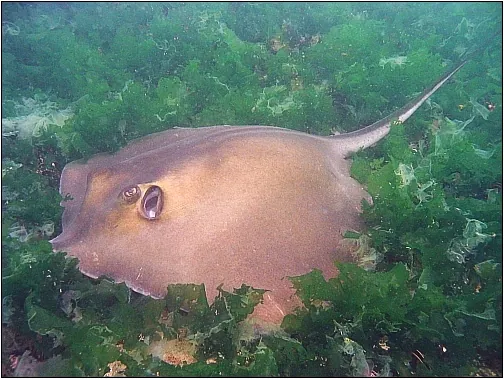
 Sɛdeɛ wobɛhunu no
- Diamond-shaped pectoral fin disc that is slightly wider than it is long1
- Plain colour: solid grey, brown, reddish or olive-green above, and whitish below with dark fin edges1
- Mostly smooth skin; the largest individuals have a row of bony knobs along the middle of the back1
- Slender, whip-like tail with a serrated venomous spine about a third of the way along it1
Wɔtaa fa no sɛ: The blue stingray of southern Africa was once thought to be a variant of this species, but it is a separate species. The common stingray lacks the blue markings of the blue stingray. Tortonese's stingray of the Mediterranean is similar, and the difference between the two is poorly understood.1
Bɔre ahoɔden
Bɔre fi ne dua ano nsɔe (stinger) mu ba.
Ne bɔre yɛ dɛn?
The venom comes from a gland at the base of a serrated tail spine. A sting causes an excruciatingly painful wound. It is rarely life-threatening.1
Ne asiane ma nnipa te sɛn?
Asiane ma nnipa: Ɛyɛ denSɛ ɛwɔ wo a, kɔ dɔkota nkyɛn. Ɛntaa nkum obi koraa.The common stingray is not aggressive, but it can inflict a very painful wound with its tail spine. The wound is rarely life-threatening.1
 Sɛ ɛwɔ a
- Fa kuro no hyɛ nsuo hyew mu, ɛnyɛ hyew sene deɛ onipa no betumi agyina a ɛnhye no (fa wo ankasa wo nsa sɔ hwɛ), simma 30 kɔsi 90. Hwehwɛ dɔkota mmoa, titiriw ma stonefish ne stingray.
Di kan frɛ wo ahohiahia nɔma (112, 000, 911). Yei yɛ mmoa a ɛdi kan ho akwankyerɛ, ɛnyɛ dɔkota afotuo. Mmoa a ɛdi kan ho nsɛm titiriw
 Hwɛ wo ho so
- Mfa wo nsa nka wiram aboa biara, nkyere no na mfa no nni agorɔ, sɛ ɔyɛ ketewa mpo, na sɛ ɛte sɛ ɔrededa anaa wawu mpo a.
- Ma no kwan. Sɛ wohyia baako a, ma wo bo nnwo, san w'akyi brɛoo na ma ɔnkɔ ne kwan.
- Sɛ baako wɔ wo a: ma wo bo nnwo, tena dinn, frɛ wo ahohiahia nɔma (112, 000, 911) anaa kɔ ayaresabea ntɛm. Kae sɛdeɛ na ɛte, mfonini bɛboa.
Ɛnhwehwɛ wo sɛ ɛbɛpira wo. Ɛde ne bɔre kyere aduane anaa ɛbɔ ne ho ban, na ɛpɛ sɛ ɛhinta sene biribiara. Nsɛm pii fa ahobammɔ ho
Wiase mu baabi bɛn?
Ne kɛseɛ te sɛn?
Ne tenten te sɛn?
 ne tenten te sɛ nkraman 2,5 a wɔde hwene ne dua to ntoatoasoɔ mu
 ne tenten te sɛ kwadu 14 a wɔde to ntoatoasoɔ mu
 ɛbɛtumi aguare aguare tare kɛseɛ tenten (50 m) wɔ anibu 9,5 mu
Common stingray kɛseɛ te sɛn sɛ wode toto WO ho a?
Akontabuo kɛkɛ wɔ wo browser mu. Wɔnkora hwee, na wɔmfa hwee nkɔ baabiara.
Ne ntɛm te sɛn?


Nsɛm
The tail spine is replaced regularly, and a second or even third spine may be growing in behind the first.1
The largest recorded specimen was found in 2016 in İzmir Province, Turkey, with fins measuring 2.21 m across.1
Welsh fishermen once used its liver oil to treat burns and other injuries, and its liver is a delicacy in French cuisine.1
The oldest known wild individual was ten years old, but the species has lived up to 21 years in captivity.1
Atosɛm sɛefoɔ
Atosɛm: The stingray's spine could kill trees, pierce armour like an arrow, corrode iron and even dissolve stone, as some ancient writers claimed.
Nokorɛ: The common stingray's wound is painful but rarely life-threatening. These ancient claims about its spine were legends.1
Ma bɔre ho animdefoɔ
- Nyansahu din
- Dasyatis pastinaca
- Kuo
- Apataa a wɔwɔ bɔre
- Abusua
- Dasyatidae2
- Nhyehyɛeɛ (Order)
- Myliobatiformes
- Asaase akɛseɛ
- Atlantic Po, Mediterranean Po, Atifi Po, Po akɛseɛ
- Mmofra nketewa
- It is aplacental viviparous, meaning it gives birth to live young. Females bear 4–9 young twice a year in shallow inshore water, after a gestation period of four months.1
- Mfeɛ a ɔtena ase
- bɛyɛ mfeɛ 211
- Sɛdeɛ ɔte wɔ kwaem
- Vulnerable1
- Asiane ma nnipa
- 3 / 5: Ɛyɛ den3
Baabi a nsɛm no fi
- Common stingray (Wikipedia (CC BY-SA 4.0))
- Dasyatis pastinaca (iNaturalist): din ne nkyekyɛmu.
- Venom Wiki: asiane gyinabea, kɛseɛ a ɛtaa yɛ ne ntɛm susuo no yɛ yɛn ankasa deɛ. Hwɛ sɛdeɛ yɛbu no: Sɛdeɛ yɛkyerɛ asiane gyinabea.
Nsɛm biara a ɛwɔ kratafa yi so wɔ nɔma a ɛkyerɛ ne fibea. Sɛ yɛfom biribi a, kafra, yɛyɛ mmoa ho akɔnnɔfoɔ, ɛnyɛ nyansahu nwoma. Ka kyerɛ yɛn wɔ [email protected] na yɛbɛsiesie.
 Ɔkɔm de akekantwerɛ no! Onipa baako na ɔyɛ Venom Wiki: ɛyɛ kwa, dawurubɔ nni so na biribiara nni so a ɛdi w'akyi. Akyɛdeɛ ketewa bi boa ma ɛkɔ so tena internet so.Ma akekantwere no aduane
Pii fi kuo korɔ no mu: Apataa a wɔwɔ bɔre
 Reef stonefishApataa a wɔwɔ bɔreƐtumi kumMfa wo nsa nka
 Red lionfishApataa a wɔwɔ bɔreƐhia dɔkotaMfa wo nsa nka
 Estuarine stonefishApataa a wɔwɔ bɔreƐtumi kumMfa wo nsa nka
 Short-tail stingrayApataa a wɔwɔ bɔreƐtumi kum
 Striped eel catfishApataa a wɔwɔ bɔreƐtumi kumMfa wo nsa nka
 Bluespotted ribbontail rayApataa a wɔwɔ bɔreƐhia dɔkota
Ɔte nso wɔ: Atlantic Po
 Hawksbill sea turtleMmoa afoforɔ a wɔn ho yɛ awuduroƐtumi kum
 Portuguese man o' warJellyfish ne ɛpo mu mmoa a wɔwɔƐhia dɔkotaMfa wo nsa nka
 Blue sea dragonCone snails ne octopusƐyɛ yaw kɛkɛ
 Greenland sharkMmoa afoforɔ a wɔn ho yɛ awuduroƐyɛ yaw kɛkɛ
 Lion's mane jellyfishJellyfish ne ɛpo mu mmoa a wɔwɔƐyɛ yaw kɛkɛMfa wo nsa nka
 Common octopusCone snails ne octopusƐnni asiane