
 Abibirem
 Asia
Asia Yuropu
 Amerika Anaafoɔ
 Australia ne Oceania
 Antarctica
 Pacific Po
 Atlantic Po
 India Po
 Arctic Po
 Mediterranean Po
 Po Kɔkɔɔ
 Caribbean Po
 Coral Po
 China Anaafoɔ Po
 Philippine Po
 Andaman Po
 Atifi Po
 Timor ne Arafura Po
 Bengal Ɛpo Ano
 California Ɛpo Ano
Eastern massasauga
 Ka
KaThe eastern massasauga is a small rattlesnake that lives in eastern North America, mainly around the Great Lakes. It is the only venomous snake in Ontario, Canada. It is shy and keeps away from people, but it is a protected species because its numbers have fallen sharply.1



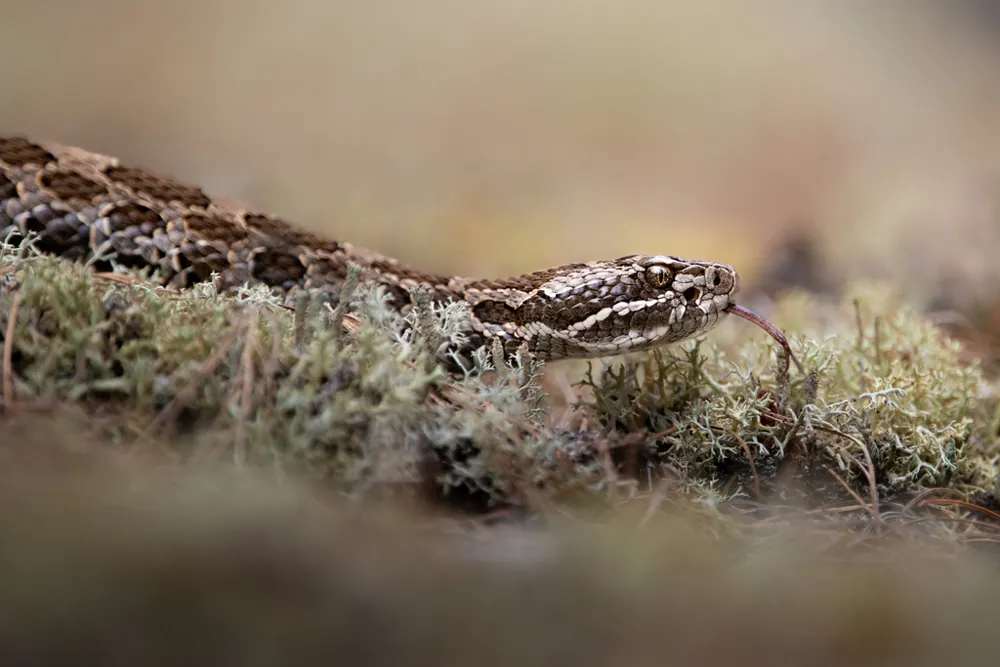
 Sɛdeɛ wobɛhunu no
- Ground colour is grey or tan.1
- A row of large, rounded brown or black blotches runs down the centre of the back.1
- Three smaller rows of alternating spots run down each side.1
- Solid black individuals also occur.1
- Like all rattlesnakes, it has heat-sensing pits on each side of its head, between the eye and the nostril.1
Bɔre ahoɔden
Bɔre fi ne se mu ba bere a ɔka.
Ne bɔre yɛ dɛn?
Its venom is cytotoxic, which means it destroys tissue. It also contains digestive enzymes that disrupt blood flow and stop blood from clotting. In its prey, these effects cause severe internal bleeding.1
Ne asiane ma nnipa te sɛn?
Asiane ma nnipa: Ɛyɛ denSɛ ɛka wo a, kɔ dɔkota nkyɛn. Ɛntaa nkum obi koraa.The snake is shy and avoids humans when it can. Most bites in Ontario happened after people handled it or accidentally stepped on it. Only two deaths from its bites have been recorded in Ontario, and in both cases the victims did not receive proper treatment.1
Ɛyɛ dɛn bere a ehu aka no?
It is shy and tends to withdraw from people rather than confront them.1
 Sɛ ɛka a
- Ma onipa no ntena dinn na ne bo nnwo, ma nsa anaa nan a ɛkaa no no nna pɛpɛɛpɛ ne ne koma (ɛnkɔ soro, ɛnsiane fam), yi kawa ne nneɛma a ɛkyere no den, na kɔ ayaresabea ntɛm.
Di kan frɛ wo ahohiahia nɔma (112, 000, 911). Yei yɛ mmoa a ɛdi kan ho akwankyerɛ, ɛnyɛ dɔkota afotuo. Mmoa a ɛdi kan ho nsɛm titiriw
 Hwɛ wo ho so
- Mfa wo nsa nka wiram aboa biara, nkyere no na mfa no nni agorɔ, sɛ ɔyɛ ketewa mpo, na sɛ ɛte sɛ ɔrededa anaa wawu mpo a.
- Ma no kwan. Sɛ wohyia baako a, ma wo bo nnwo, san w'akyi brɛoo na ma ɔnkɔ ne kwan.
- Sɛ baako ka wo a: ma wo bo nnwo, tena dinn, frɛ wo ahohiahia nɔma (112, 000, 911) anaa kɔ ayaresabea ntɛm. Kae sɛdeɛ na ɛte, mfonini bɛboa.
Ɛnhwehwɛ wo sɛ ɛbɛpira wo. Ɛde ne bɔre kyere aduane anaa ɛbɔ ne ho ban, na ɛpɛ sɛ ɛhinta sene biribiara. Nsɛm pii fa ahobammɔ ho
Wiase mu baabi bɛn?
Ne kɛseɛ te sɛn?
Ne tenten te sɛn?
 ne tenten te sɛ kwadu 4 a wɔde to ntoatoasoɔ mu
 ɛbɛtumi atu mita 100 wɔ anibu 110 mu (onipa a ɔwɔ ntɛm sen biara hia 9.6)
Eastern massasauga kɛseɛ te sɛn sɛ wode toto WO ho a?
Akontabuo kɛkɛ wɔ wo browser mu. Wɔnkora hwee, na wɔmfa hwee nkɔ baabiara.
Ne ntɛm te sɛn?


Nsɛm
It is a pit viper, a family that includes all rattlesnakes, and it is the only venomous snake in Ontario.1
Mothers and newborns stay together for a few days, until the young shed their skin for the first time.1
Females often do not breed every year, usually having a two-year breeding cycle.1
Its populations have declined so much that it has disappeared from many of its former areas, and now survives mainly in small, isolated groups.1
Ma bɔre ho animdefoɔ
- Nyansahu din
- Sistrurus catenatus
- Kuo
- Rattlesnake
- Abusua
- Viperidae2
- Nhyehyɛeɛ (Order)
- Squamata
- Asaase akɛseɛ
- Amerika Atifi
- Mmofra nketewa
- It gives birth to live young (it is ovoviviparous), usually in August or September. Litters of 5 to 14 have been reported in Illinois and 6 to 19 in Wisconsin, and the newborns are 18.8 to 24.4 cm long from snout to vent.1
- Sɛdeɛ ɔte wɔ kwaem
- Threatened in Canada under federal and Ontario law; listed as endangered in several US states; IUCN Red List: least concern (2007, with a note that the assessment needs updating)1
- Asiane ma nnipa
- 3 / 5: Ɛyɛ den3
Baabi a nsɛm no fi
- Eastern massasauga (Wikipedia (CC BY-SA 4.0))
- Sistrurus catenatus (iNaturalist): din ne nkyekyɛmu.
- Venom Wiki: asiane gyinabea, kɛseɛ a ɛtaa yɛ ne ntɛm susuo no yɛ yɛn ankasa deɛ. Hwɛ sɛdeɛ yɛbu no: Sɛdeɛ yɛkyerɛ asiane gyinabea.
Nsɛm biara a ɛwɔ kratafa yi so wɔ nɔma a ɛkyerɛ ne fibea. Sɛ yɛfom biribi a, kafra, yɛyɛ mmoa ho akɔnnɔfoɔ, ɛnyɛ nyansahu nwoma. Ka kyerɛ yɛn wɔ [email protected] na yɛbɛsiesie.
 Ɔkɔm de akekantwerɛ no! Onipa baako na ɔyɛ Venom Wiki: ɛyɛ kwa, dawurubɔ nni so na biribiara nni so a ɛdi w'akyi. Akyɛdeɛ ketewa bi boa ma ɛkɔ so tena internet so.Ma akekantwere no aduane
 Eastern diamondback rattlesnake
 Timber rattlesnake
 Western diamondback rattlesnake
 Sidewinder
 Mojave rattlesnake
 Aruba rattlesnake
 Terciopelo
 Eastern coral snake
 Eyelash viper
 Arizona bark scorpion
 Brown recluse
 Cane toad