
 Abibirem
 Asia
Asia Yuropu
 Amerika Anaafoɔ
 Australia ne Oceania
 Antarctica
 Pacific Po
 Atlantic Po
 India Po
 Arctic Po
 Mediterranean Po
 Po Kɔkɔɔ
 Caribbean Po
 Coral Po
 China Anaafoɔ Po
 Philippine Po
 Andaman Po
 Atifi Po
 Timor ne Arafura Po
 Bengal Ɛpo Ano
 California Ɛpo Ano
Eastern mouse spider
 Ka
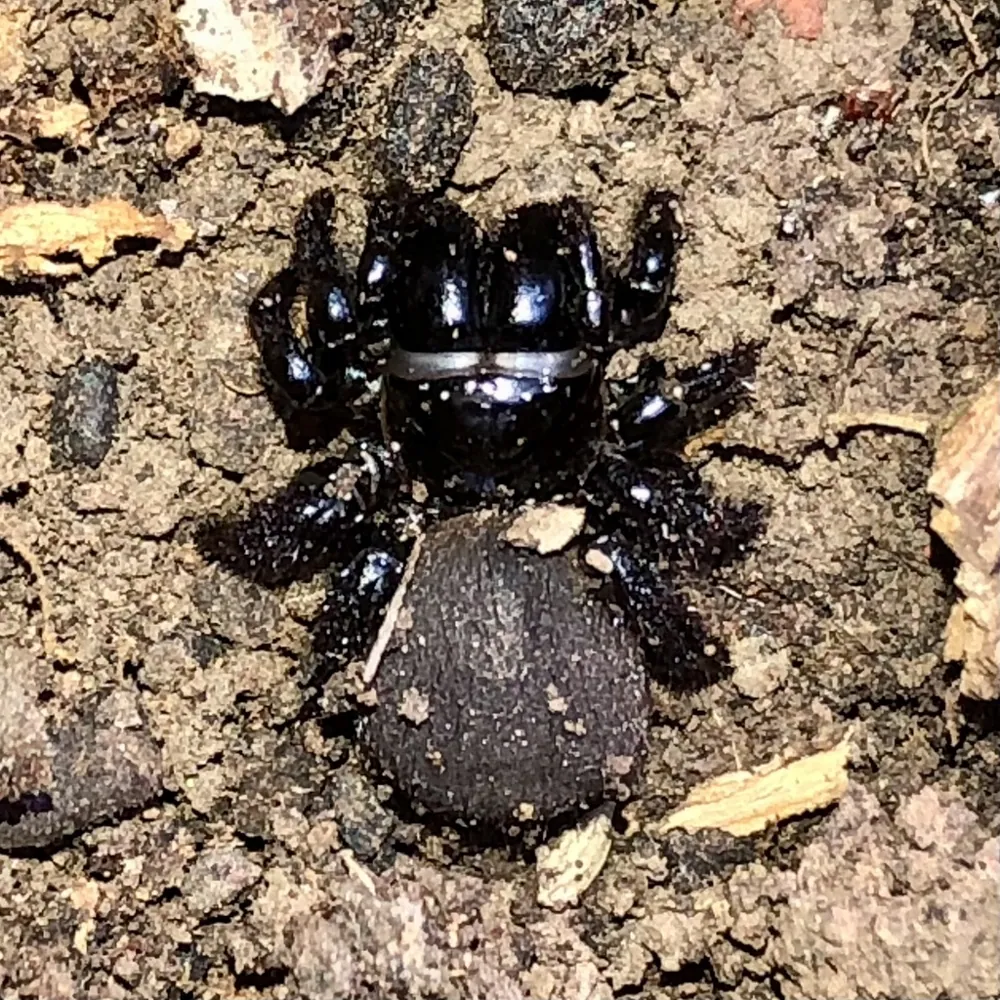
KaThe eastern mouse spider is a spider from the family Actinopodidae. It lives only on the eastern coast of Australia. People often mistake it for the Australian funnel-web spider, which is more dangerous, so knowing the difference matters.1
 Sɛdeɛ wobɛhunu no
- Females are large and very strong, with powerful jaws called chelicerae.1
- Females have a shiny black carapace (the hard upper shell of the body) and an abdomen (rear body) coloured brown to almost black.1
- Males have an all-black carapace and a trapezium-shaped (four-sided, with two parallel sides) lighter patch on top of the abdomen, which can be white, pale blue or mauve.1
- Their fangs often cross over slightly.1
- The burrow entrance is hidden by a flap of silk, which can be found by brushing away loose soil.1
Wɔtaa fa no sɛ: It is often mistaken for the Australian funnel-web spider. Funnel-web fangs stay parallel, while mouse spider fangs often cross over slightly. Funnel-webs often have a drop of venom on their fang tips and have longer spinnerets (silk-producing organs at the rear of the abdomen).1
Bɔre ahoɔden
Bɔre fi ne se mu ba bere a ɔka.
Ne bɔre yɛ dɛn?
Common symptoms of a bite are numbness and tingling at the bite site, sweating, headache and nausea. Its venom contains toxins similar to robustoxin, the toxin found in Australian funnel-web spider venom. Severe reactions are rare.1
Ne asiane ma nnipa te sɛn?
Asiane ma nnipa: Ɛyɛ denSɛ ɛka wo a, kɔ dɔkota nkyɛn. Ɛntaa nkum obi koraa.Although it appears to be the most dangerous member of its genus, serious envenomations by this species are relatively rare. Most documented bites did not need antivenom or cause serious symptoms. Only one severe case is recorded: a 19-month-old child who developed high blood pressure, muscle spasms, an arched back and unconsciousness.1
 Asɛmpa: dɔkotafoɔ wɔ aduro (antivenom) anaa ayaresa ma yei.1
Ɛyɛ dɛn bere a ehu aka no?
Compared with the Australian funnel-web spider, it is far less aggressive towards humans and often gives dry bites, which deliver no venom.1
 Sɛ ɛka a
- The child with the severe case responded well to funnel-web spider antivenom. Australian funnel-web spider antivenom has been found to be effective in treating severe mouse spider bites.1
- Hohoro baabi a ɛkaa no na dwo. Hwehwɛ dɔkota mmoa sɛ yaw no mu yɛ den anaa onipa no ho ntɔ no a.
- Wɔ Australia, ananse tuntum kɛseɛ biara ka no, hwɛ no sɛ funnel-web ka: Pressure immobilisation: fa elastic bandage a ɛyɛ den kyekyere baabi a ɛkaa no so, na afei kyekyere kɔ soro wɔ nsa anaa nan no nyinaa so, fa splint kyekyere ho, na ma onipa no ntena dinn koraa kosi sɛ mmoa bɛba.
Di kan frɛ wo ahohiahia nɔma (112, 000, 911). Yei yɛ mmoa a ɛdi kan ho akwankyerɛ, ɛnyɛ dɔkota afotuo. Mmoa a ɛdi kan ho nsɛm titiriw
 Hwɛ wo ho so
- Mfa wo nsa nka wiram aboa biara, nkyere no na mfa no nni agorɔ, sɛ ɔyɛ ketewa mpo, na sɛ ɛte sɛ ɔrededa anaa wawu mpo a.
- Ma no kwan. Sɛ wohyia baako a, ma wo bo nnwo, san w'akyi brɛoo na ma ɔnkɔ ne kwan.
- Sɛ baako ka wo a: ma wo bo nnwo, tena dinn, frɛ wo ahohiahia nɔma (112, 000, 911) anaa kɔ ayaresabea ntɛm. Kae sɛdeɛ na ɛte, mfonini bɛboa.
Ɛnhwehwɛ wo sɛ ɛbɛpira wo. Ɛde ne bɔre kyere aduane anaa ɛbɔ ne ho ban, na ɛpɛ sɛ ɛhinta sene biribiara. Nsɛm pii fa ahobammɔ ho
Wiase mu baabi bɛn?
Ne kɛseɛ te sɛn?
Ne tenten te sɛn?
 ɛyɛ tiaa sen wo nsateaa ketewa
 ɛbɛtumi atu mita 100 wɔ anibu 300 mu (onipa a ɔwɔ ntɛm sen biara hia 9.6)
Eastern mouse spider kɛseɛ te sɛn sɛ wode toto WO ho a?
Akontabuo kɛkɛ wɔ wo browser mu. Wɔnkora hwee, na wɔmfa hwee nkɔ baabiara.
Ne ntɛm te sɛn?


Nsɛm
Its venom contains toxins similar to robustoxin, which is found in Australian funnel-web spider venom.1
Australian funnel-web spider antivenom has been found to work against severe mouse spider bites.1
Males roam in autumn and early winter, which is when envenomation cases have peaked.1
Rainbow described the specimen as a beautiful and strikingly marked novelty.1
Atosɛm sɛefoɔ
Atosɛm: It is as dangerous as the Australian funnel-web spider.
Nokorɛ: It is far less aggressive towards humans, often gives dry bites, and serious envenomations are relatively rare.1
Baabi a nsɛm no fi
- Missulena bradleyi (Wikipedia (CC BY-SA 4.0))
- Missulena bradleyi (iNaturalist): din ne nkyekyɛmu.
- Venom Wiki: asiane gyinabea, kɛseɛ a ɛtaa yɛ ne ntɛm susuo no yɛ yɛn ankasa deɛ. Hwɛ sɛdeɛ yɛbu no: Sɛdeɛ yɛkyerɛ asiane gyinabea.
Nsɛm biara a ɛwɔ kratafa yi so wɔ nɔma a ɛkyerɛ ne fibea. Sɛ yɛfom biribi a, kafra, yɛyɛ mmoa ho akɔnnɔfoɔ, ɛnyɛ nyansahu nwoma. Ka kyerɛ yɛn wɔ [email protected] na yɛbɛsiesie.
 Ɔkɔm de akekantwerɛ no! Onipa baako na ɔyɛ Venom Wiki: ɛyɛ kwa, dawurubɔ nni so na biribiara nni so a ɛdi w'akyi. Akyɛdeɛ ketewa bi boa ma ɛkɔ so tena internet so.Ma akekantwere no aduane
Pii fi kuo korɔ no mu: Tarantula ne funnel-web
 Sydney funnel-web spiderTarantula ne funnel-webƐkum
 Northern tree-dwelling funnel-web spiderTarantula ne funnel-webƐkum
 Red-headed mouse spiderTarantula ne funnel-webƐhia dɔkota
 Queensland whistling tarantulaTarantula ne funnel-webƐyɛ yaw kɛkɛ
 Blue Mountains funnel-web spiderTarantula ne funnel-webƐtumi kum
 Darling Downs funnel-web spiderTarantula ne funnel-webƐtumi kum
 Coastal taipan
 Common death adder
 Eastern brown snake
 Taipan a ɔwɔ Australia mfinimfini
 Ɔwɔ a ɔte sɛ ɔsebɔ (Tiger snake)
 Redback spider