
 Abibirem
 Asia
Asia Yuropu
 Amerika Anaafoɔ
 Australia ne Oceania
 Antarctica
 Pacific Po
 Atlantic Po
 India Po
 Arctic Po
 Mediterranean Po
 Po Kɔkɔɔ
 Caribbean Po
 Coral Po
 China Anaafoɔ Po
 Philippine Po
 Andaman Po
 Atifi Po
 Timor ne Arafura Po
 Bengal Ɛpo Ano
 California Ɛpo Ano
Eel-tailed catfish
 Nsɔe a bɔre wom
The eel-tailed catfish is a freshwater fish with a large head, thick lips and a tail that narrows like an eel's. It lives in the Murray-Darling river system in eastern Australia. Its fins carry sharp, venomous spines, so it is important to know it when you are in the water.1



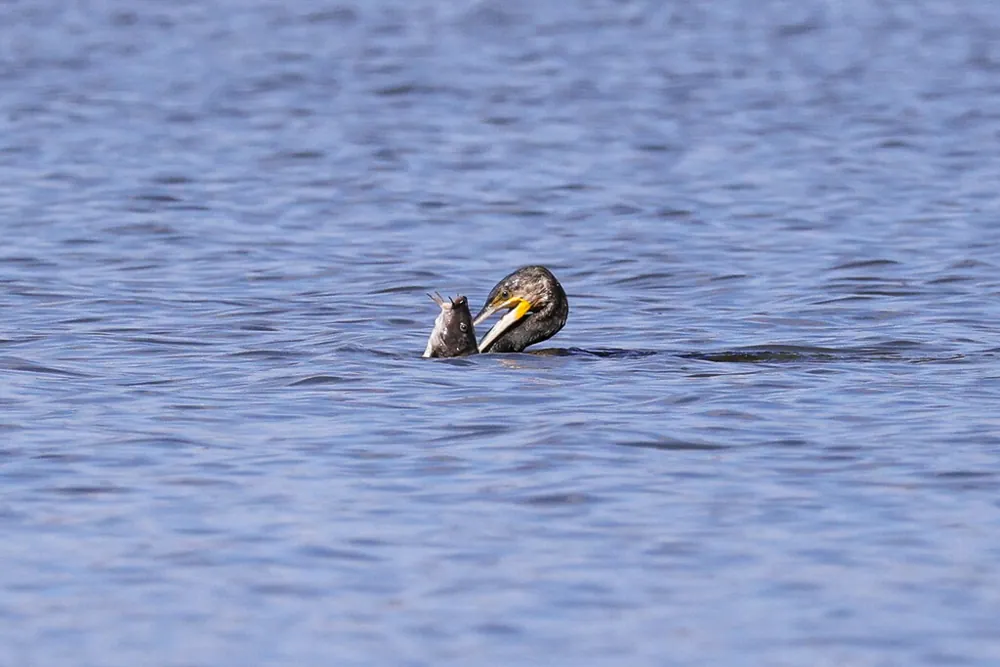
 Sɛdeɛ wobɛhunu no
- Large head with thick, fleshy lips and tube-shaped nostrils1
- Four pairs of barbels (whisker-like feelers) around the mouth1
- Almost cylindrical body that tapers into a pointed, eel-like tail with a continuous fin edge1
- Olive-green to brown, black or purplish back with a white underside1
- Sharp, serrated spines on the dorsal (back) and pectoral (side) fins, which are venomous1
Bɔre ahoɔden
Nsɔe a ano yɛ nnam na ɛkura bɔre no. Sɛ wotiatia so anaa wosɔ mu a, ɛyɛ yaw.
Ne bɔre yɛ dɛn?
Its fin spines are venomous and can cause a very painful wound.1
Ne asiane ma nnipa te sɛn?
Asiane ma nnipa: Ɛyɛ yawƐtumi yɛ yaw paa, nanso ɛkame ayɛ sɛ ɛnyɛ asiane kɛseɛ da.The spines can cause a very painful wound.1
 Sɛ ne nsɔe hyɛ wo mu a
- Fa kuro no hyɛ nsuo hyew mu, ɛnyɛ hyew sene deɛ onipa no betumi agyina a ɛnhye no (fa wo ankasa wo nsa sɔ hwɛ), simma 30 kɔsi 90. Hwehwɛ dɔkota mmoa, titiriw ma stonefish ne stingray.
Di kan frɛ wo ahohiahia nɔma (112, 000, 911). Yei yɛ mmoa a ɛdi kan ho akwankyerɛ, ɛnyɛ dɔkota afotuo. Mmoa a ɛdi kan ho nsɛm titiriw
 Hwɛ wo ho so
- Mfa wo nsa nka wiram aboa biara, nkyere no na mfa no nni agorɔ, sɛ ɔyɛ ketewa mpo, na sɛ ɛte sɛ ɔrededa anaa wawu mpo a.
- Ma no kwan. Sɛ wohyia baako a, ma wo bo nnwo, san w'akyi brɛoo na ma ɔnkɔ ne kwan.
- Sɛ ne nsɔe hyɛ wo mu a: ma wo bo nnwo, tena dinn, frɛ wo ahohiahia nɔma (112, 000, 911) anaa kɔ ayaresabea ntɛm. Kae sɛdeɛ na ɛte, mfonini bɛboa.
Ɛnhwehwɛ wo sɛ ɛbɛpira wo. Ɛde ne bɔre kyere aduane anaa ɛbɔ ne ho ban, na ɛpɛ sɛ ɛhinta sene biribiara. Nsɛm pii fa ahobammɔ ho
Wiase mu baabi bɛn?
Ne kɛseɛ te sɛn?
Ne tenten te sɛn?
Ne mu duru te sɛn?
 ne tenten te sɛ fie agyinamoa 2 a wɔde hwene ne dua to ntoatoasoɔ mu
 ne tenten te sɛ kwadu 5 a wɔde to ntoatoasoɔ mune mu duru bɛyɛ sɛ fie agyinamoa
 ɛbɛtumi aguare aguare tare kɛseɛ tenten (50 m) wɔ anibu 24 mu
Eel-tailed catfish kɛseɛ te sɛn sɛ wode toto WO ho a?
Akontabuo kɛkɛ wɔ wo browser mu. Wɔnkora hwee, na wɔmfa hwee nkɔ baabiara.
Ne ntɛm te sɛn?
Nsɛm
Males and females both help: the parents guard the nest of eggs until they hatch.1
The nest is built one or two weeks before spawning, when water reaches 20–24 °C.1
Juveniles often gather in groups, although adults usually live alone.1
Its populations in the southern Murray-Darling have declined so much that most are extinct or nearly so.1
Ma bɔre ho animdefoɔ
- Nyansahu din
- Tandanus tandanus
- Kuo
- Apataa a wɔwɔ bɔre
- Abusua
- Plotosidae2
- Nhyehyɛeɛ (Order)
- Siluriformes
- Asaase akɛseɛ
- Australia ne Oceania
- Mmofra nketewa
- Eggs are laid in a large nest of small stones and gravel, up to a metre across. One or both parents guard the eggs until they hatch.1
- Mfeɛ a ɔtena ase
- bɛyɛ mfeɛ 81
- Sɛdeɛ ɔte wɔ kwaem
- Endangered in New South Wales; Threatened in Victoria; Protected in South Australia1
- Asiane ma nnipa
- 2 / 5: Ɛyɛ yaw3
Baabi a nsɛm no fi
- Eel-tailed catfish (Wikipedia (CC BY-SA 4.0))
- Tandanus tandanus (iNaturalist): din ne nkyekyɛmu.
- Venom Wiki: asiane gyinabea, kɛseɛ a ɛtaa yɛ ne ntɛm susuo no yɛ yɛn ankasa deɛ. Hwɛ sɛdeɛ yɛbu no: Sɛdeɛ yɛkyerɛ asiane gyinabea.
Nsɛm biara a ɛwɔ kratafa yi so wɔ nɔma a ɛkyerɛ ne fibea. Sɛ yɛfom biribi a, kafra, yɛyɛ mmoa ho akɔnnɔfoɔ, ɛnyɛ nyansahu nwoma. Ka kyerɛ yɛn wɔ [email protected] na yɛbɛsiesie.
 Ɔkɔm de akekantwerɛ no! Onipa baako na ɔyɛ Venom Wiki: ɛyɛ kwa, dawurubɔ nni so na biribiara nni so a ɛdi w'akyi. Akyɛdeɛ ketewa bi boa ma ɛkɔ so tena internet so.Ma akekantwere no aduane
Pii fi kuo korɔ no mu: Apataa a wɔwɔ bɔre
 BullroutApataa a wɔwɔ bɔreƐhia dɔkotaMfa wo nsa nka
 Reef stonefishApataa a wɔwɔ bɔreƐtumi kumMfa wo nsa nka
 Red lionfishApataa a wɔwɔ bɔreƐhia dɔkotaMfa wo nsa nka
 Estuarine stonefishApataa a wɔwɔ bɔreƐtumi kumMfa wo nsa nka
 Short-tail stingrayApataa a wɔwɔ bɔreƐtumi kum
 Striped eel catfishApataa a wɔwɔ bɔreƐtumi kumMfa wo nsa nka
 Coastal taipan
 Common death adder
 Eastern brown snake
 Taipan a ɔwɔ Australia mfinimfini
 Sydney funnel-web spider
 Ɔwɔ a ɔte sɛ ɔsebɔ (Tiger snake)