
 Abibirem
 Asia
Asia Yuropu
 Amerika Anaafoɔ
 Australia ne Oceania
 Antarctica
 Pacific Po
 Atlantic Po
 India Po
 Arctic Po
 Mediterranean Po
 Po Kɔkɔɔ
 Caribbean Po
 Coral Po
 China Anaafoɔ Po
 Philippine Po
 Andaman Po
 Atifi Po
 Timor ne Arafura Po
 Bengal Ɛpo Ano
 California Ɛpo Ano
False stonefish
 Nsɔe a bɔre wom
The false stonefish is a venomous fish that lives on the seabed in warm seas. It hides among rocks, coral and rubble, where it waits to ambush passing prey. It is worth knowing about because its back spines can give a painful sting.1
 Sɛdeɛ wobɛhunu no
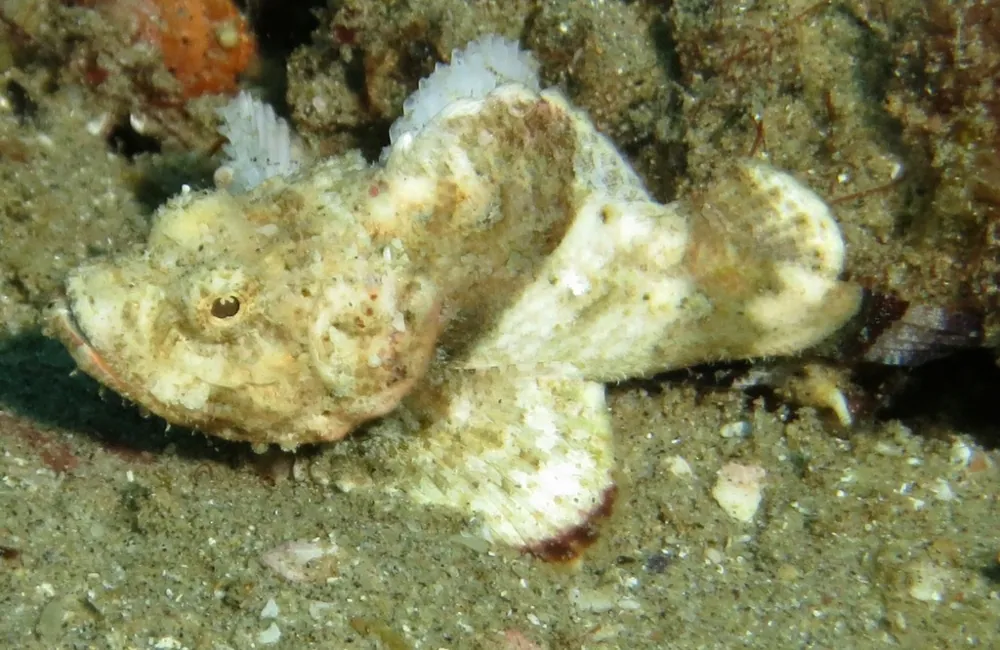
- Broad head with a wide mouth, a humped back and a tapering body1
- Rough skin with low cone-shaped bumps, spines and tassels1
- Mottled grey and white colouring with reddish-brown blotches, which blends in with stones and coral1
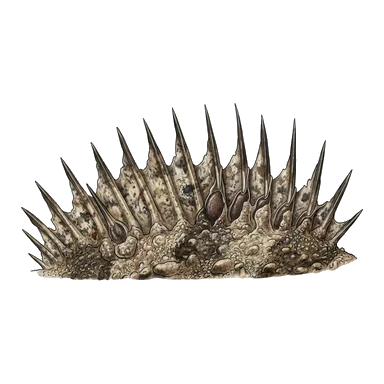
- Twelve venomous spines in the dorsal (back) fin1
- Inner sides of the broad pectoral (side) fins show orange, black and white blotches1
Wɔtaa fa no sɛ: It closely resembles the reef stonefish (Synanceia verrucosa), which is why the two are easily confused.1
Bɔre ahoɔden
Nsɔe a ano yɛ nnam na ɛkura bɔre no. Sɛ wotiatia so anaa wosɔ mu a, ɛyɛ yaw.
Ne bɔre yɛ dɛn?
Its venomous spines are in the dorsal fin on its back. They can inflict a painful wound when a person is pricked by them.1
Ne asiane ma nnipa te sɛn?
Asiane ma nnipa: Ɛyɛ denSɛ ne nsɔe hyɛ wo mu a, kɔ dɔkota nkyɛn. Ɛntaa nkum obi koraa.An 1829 account by the zoologists Cuvier and Valenciennes says the venom killed two local people in the Moluccas Islands of Indonesia, after what they described as frightful suffering. Local people there avoided the fish because they saw it as a bad omen.1
Ɛyɛ dɛn bere a ehu aka no?
When disturbed by a possible predator, it flares its pectoral fins as a warning.1
 Sɛ ne nsɔe hyɛ wo mu a
- Fa kuro no hyɛ nsuo hyew mu, ɛnyɛ hyew sene deɛ onipa no betumi agyina a ɛnhye no (fa wo ankasa wo nsa sɔ hwɛ), simma 30 kɔsi 90. Hwehwɛ dɔkota mmoa, titiriw ma stonefish ne stingray.
Di kan frɛ wo ahohiahia nɔma (112, 000, 911). Yei yɛ mmoa a ɛdi kan ho akwankyerɛ, ɛnyɛ dɔkota afotuo. Mmoa a ɛdi kan ho nsɛm titiriw
 Hwɛ wo ho so
- Mfa wo nsa nka wiram aboa biara, nkyere no na mfa no nni agorɔ, sɛ ɔyɛ ketewa mpo, na sɛ ɛte sɛ ɔrededa anaa wawu mpo a.
- Ma no kwan. Sɛ wohyia baako a, ma wo bo nnwo, san w'akyi brɛoo na ma ɔnkɔ ne kwan.
- Sɛ ne nsɔe hyɛ wo mu a: ma wo bo nnwo, tena dinn, frɛ wo ahohiahia nɔma (112, 000, 911) anaa kɔ ayaresabea ntɛm. Kae sɛdeɛ na ɛte, mfonini bɛboa.
Ɛnhwehwɛ wo sɛ ɛbɛpira wo. Ɛde ne bɔre kyere aduane anaa ɛbɔ ne ho ban, na ɛpɛ sɛ ɛhinta sene biribiara. Nsɛm pii fa ahobammɔ ho
Wiase mu baabi bɛn?
Ne kɛseɛ te sɛn?
Ne tenten te sɛn?
 ne tenten te sɛ agodeɛ blɔk 9 a wɔde to ntoatoasoɔ mu
 ɛbɛtumi aguare aguare tare kɛseɛ tenten (50 m) wɔ anibu 90 mu
False stonefish kɛseɛ te sɛn sɛ wode toto WO ho a?
Akontabuo kɛkɛ wɔ wo browser mu. Wɔnkora hwee, na wɔmfa hwee nkɔ baabiara.
Ne ntɛm te sɛn?

Nsɛm
When lit by blue or ultraviolet light, it glows red. This is called biofluorescence, and it may help the fish communicate with others of its kind and aid its camouflage.1
It has twelve venomous spines in its dorsal fin, and it is these spines that make it dangerous.1
Its wide mouth and camouflage let it wait for prey to pass close by before it strikes.1
It is sometimes partly covered with sediment, which helps it stay hidden on the seabed.1
Baabi a nsɛm no fi
- Scorpaenopsis diabolus (Wikipedia (CC BY-SA 4.0))
- Scorpaenopsis diabolus (iNaturalist): din ne nkyekyɛmu.
- Venom Wiki: asiane gyinabea, kɛseɛ a ɛtaa yɛ ne ntɛm susuo no yɛ yɛn ankasa deɛ. Hwɛ sɛdeɛ yɛbu no: Sɛdeɛ yɛkyerɛ asiane gyinabea.
Nsɛm biara a ɛwɔ kratafa yi so wɔ nɔma a ɛkyerɛ ne fibea. Sɛ yɛfom biribi a, kafra, yɛyɛ mmoa ho akɔnnɔfoɔ, ɛnyɛ nyansahu nwoma. Ka kyerɛ yɛn wɔ [email protected] na yɛbɛsiesie.
 Ɔkɔm de akekantwerɛ no! Onipa baako na ɔyɛ Venom Wiki: ɛyɛ kwa, dawurubɔ nni so na biribiara nni so a ɛdi w'akyi. Akyɛdeɛ ketewa bi boa ma ɛkɔ so tena internet so.Ma akekantwere no aduane
Pii fi kuo korɔ no mu: Apataa a wɔwɔ bɔre
 Reef stonefishApataa a wɔwɔ bɔreƐtumi kumMfa wo nsa nka
 Red lionfishApataa a wɔwɔ bɔreƐhia dɔkotaMfa wo nsa nka
 Estuarine stonefishApataa a wɔwɔ bɔreƐtumi kumMfa wo nsa nka
 Short-tail stingrayApataa a wɔwɔ bɔreƐtumi kum
 Striped eel catfishApataa a wɔwɔ bɔreƐtumi kumMfa wo nsa nka
 Bluespotted ribbontail rayApataa a wɔwɔ bɔreƐhia dɔkota
Ɔte nso wɔ: India Po
 Australian box jellyfishJellyfish ne ɛpo mu mmoa a wɔwɔƐkumMfa wo nsa nka
 Geography coneCone snails ne octopusƐkum
 Greater blue-ringed octopusCone snails ne octopusƐkum
 Southern blue-ringed octopusCone snails ne octopusƐkum
 Hawksbill sea turtleMmoa afoforɔ a wɔn ho yɛ awuduroƐtumi kum
 Irukandji jellyfishJellyfish ne ɛpo mu mmoa a wɔwɔƐtumi kumMfa wo nsa nka