
 Abibirem
 Asia
Asia Yuropu
 Amerika Anaafoɔ
 Australia ne Oceania
 Antarctica
 Pacific Po
 Atlantic Po
 India Po
 Arctic Po
 Mediterranean Po
 Po Kɔkɔɔ
 Caribbean Po
 Coral Po
 China Anaafoɔ Po
 Philippine Po
 Andaman Po
 Atifi Po
 Timor ne Arafura Po
 Bengal Ɛpo Ano
 California Ɛpo Ano
Lace monitor
 Ka
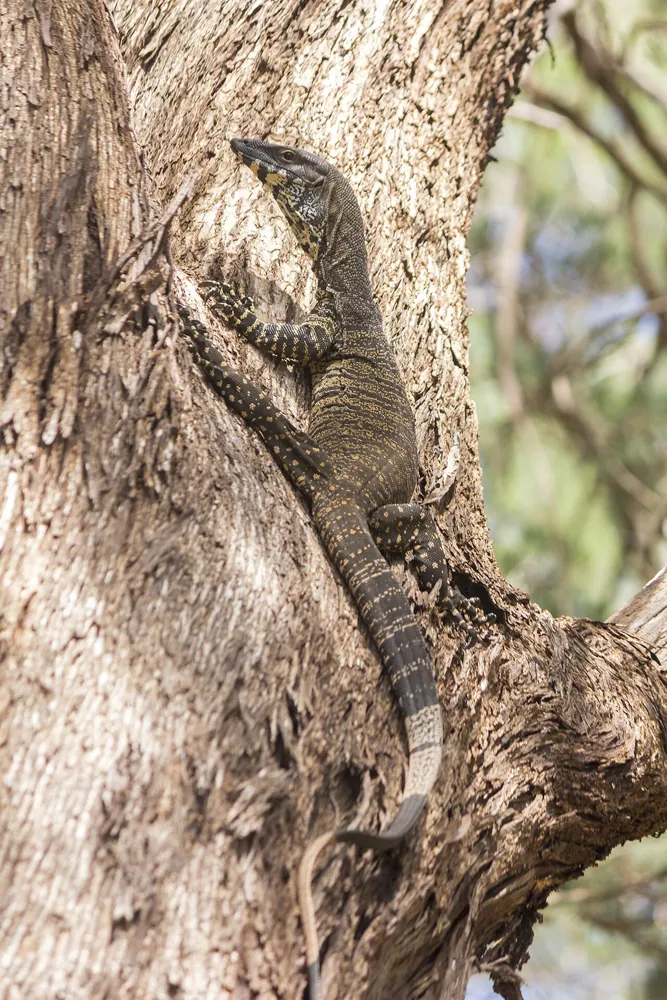
KaThe lace monitor is a large lizard that lives in eastern Australia, and it can grow up to 2 metres long. It is a skilled climber that often lives in trees, and it is one of the country's biggest monitor lizards. It is also known as the tree goanna.1



 Sɛdeɛ wobɛhunu no
- The main form is dark grey to dull bluish-black with scattered cream-coloured spots.1
- The head is black, and the snout has prominent black and yellow bands that extend under the chin and neck.1
- The tail has narrow black and cream bands that get wider towards the tip.1
- Bell's form has a yellow-brown or yellow base colour with fine black mottling and broad black or dark brown bands from the shoulders to the tail.1
- Juveniles have more defined banding, with five narrow black bands on the neck and eight on the body.1
Bɔre ahoɔden
Bɔre fi ne se mu ba bere a ɔka.
Ne bɔre yɛ dɛn?
Lace monitors have venom glands, and their venom is similar to snake venom, but it is not strong enough to cause serious harm. A bite on the hand can cause swelling within minutes, localised disruption of blood clotting (the blood clots less well in that area), and shooting pain up to the elbow. This pain can often last for several hours.1
Ne asiane ma nnipa te sɛn?
Asiane ma nnipa: Ɛyɛ yawƐtumi yɛ yaw paa, nanso ɛkame ayɛ sɛ ɛnyɛ asiane kɛseɛ da.Its venom is not enough to cause serious harm. Scientists have cautioned that calling these lizards venomous overestimates the medical risk to bite victims.1
Ɛyɛ dɛn bere a ehu aka no?
When disturbed, lace monitors retreat to a nearby tree.1
 Sɛ ɛka a
- Hohoro kuro no, ma onipa no bo nnwo na hwehwɛ dɔkota mmoa.
Di kan frɛ wo ahohiahia nɔma (112, 000, 911). Yei yɛ mmoa a ɛdi kan ho akwankyerɛ, ɛnyɛ dɔkota afotuo. Mmoa a ɛdi kan ho nsɛm titiriw
 Hwɛ wo ho so
- Mfa wo nsa nka wiram aboa biara, nkyere no na mfa no nni agorɔ, sɛ ɔyɛ ketewa mpo, na sɛ ɛte sɛ ɔrededa anaa wawu mpo a.
- Ma no kwan. Sɛ wohyia baako a, ma wo bo nnwo, san w'akyi brɛoo na ma ɔnkɔ ne kwan.
- Sɛ baako ka wo a: ma wo bo nnwo, tena dinn, frɛ wo ahohiahia nɔma (112, 000, 911) anaa kɔ ayaresabea ntɛm. Kae sɛdeɛ na ɛte, mfonini bɛboa.
Ɛnhwehwɛ wo sɛ ɛbɛpira wo. Ɛde ne bɔre kyere aduane anaa ɛbɔ ne ho ban, na ɛpɛ sɛ ɛhinta sene biribiara. Nsɛm pii fa ahobammɔ ho
Wiase mu baabi bɛn?
Ne kɛseɛ te sɛn?
Ne tenten te sɛn?
Ne mu duru te sɛn?
 ne tenten te sɛ fie agyinamoa 4 a wɔde hwene ne dua to ntoatoasoɔ mu
 ne tenten te sɛ kwadu 11 a wɔde to ntoatoasoɔ mu
 ɛbɛtumi atu mita 100 wɔ anibu 22 mu (onipa a ɔwɔ ntɛm sen biara hia 9.6)
Lace monitor kɛseɛ te sɛn sɛ wode toto WO ho a?
Akontabuo kɛkɛ wɔ wo browser mu. Wɔnkora hwee, na wɔmfa hwee nkɔ baabiara.
Ne ntɛm te sɛn?

Nsɛm
Populations near rubbish tips were thirty five times greater than in natural forest, and individuals were around twice as heavy.1
Lace monitors quickly learned to avoid cane toads after they had been poisoned by them.1
One lace monitor was recorded climbing a brick wall to find shelter during a thunderstorm.1
Its closest living relative is the Komodo dragon.1
Atosɛm sɛefoɔ
Atosɛm: Bites from monitors were thought to be dangerous mainly because of infection from bacteria in their mouths.
Nokorɛ: Researchers found in 2005 that the immediate effects of bites were more likely caused by venom.1
Ma bɔre ho animdefoɔ
- Nyansahu din
- Varanus varius
- Kuo
- Koterɛ a wɔwɔ bɔre
- Abusua
- Varanidae2
- Nhyehyɛeɛ (Order)
- Squamata
- Asaase akɛseɛ
- Australia ne Oceania
- Mmofra nketewa
- Females lay an average of eight eggs, and up to 12, in active termite nests on the ground or in trees. The eggs hatch 6 to 7 months later.1
- Mfeɛ a ɔtena ase
- bɛyɛ mfeɛ 201
- Sɛdeɛ ɔte wɔ kwaem
- Least Concern1
- Asiane ma nnipa
- 2 / 5: Ɛyɛ yaw3
Baabi a nsɛm no fi
- Lace monitor (Wikipedia (CC BY-SA 4.0))
- Varanus varius (iNaturalist): din ne nkyekyɛmu.
- Venom Wiki: asiane gyinabea, kɛseɛ a ɛtaa yɛ ne ntɛm susuo no yɛ yɛn ankasa deɛ. Hwɛ sɛdeɛ yɛbu no: Sɛdeɛ yɛkyerɛ asiane gyinabea.
Nsɛm biara a ɛwɔ kratafa yi so wɔ nɔma a ɛkyerɛ ne fibea. Sɛ yɛfom biribi a, kafra, yɛyɛ mmoa ho akɔnnɔfoɔ, ɛnyɛ nyansahu nwoma. Ka kyerɛ yɛn wɔ [email protected] na yɛbɛsiesie.
 Ɔkɔm de akekantwerɛ no! Onipa baako na ɔyɛ Venom Wiki: ɛyɛ kwa, dawurubɔ nni so na biribiara nni so a ɛdi w'akyi. Akyɛdeɛ ketewa bi boa ma ɛkɔ so tena internet so.Ma akekantwere no aduane
 Perentie
 Spiny-tailed monitor
 Yellow-spotted monitor
 Mitchell's water monitor
 Komodo dragon
 Gila monster
 Coastal taipan
 Common death adder
 Eastern brown snake
 Taipan a ɔwɔ Australia mfinimfini
 Sydney funnel-web spider
 Ɔwɔ a ɔte sɛ ɔsebɔ (Tiger snake)
,_photographed_in_the_Kindra_State_Forest.jpg)