
 Abibirem
 Asia
Asia Yuropu
 Amerika Anaafoɔ
 Australia ne Oceania
 Antarctica
 Pacific Po
 Atlantic Po
 India Po
 Arctic Po
 Mediterranean Po
 Po Kɔkɔɔ
 Caribbean Po
 Coral Po
 China Anaafoɔ Po
 Philippine Po
 Andaman Po
 Atifi Po
 Timor ne Arafura Po
 Bengal Ɛpo Ano
 California Ɛpo Ano
Yellow-spotted monitor
 Ka
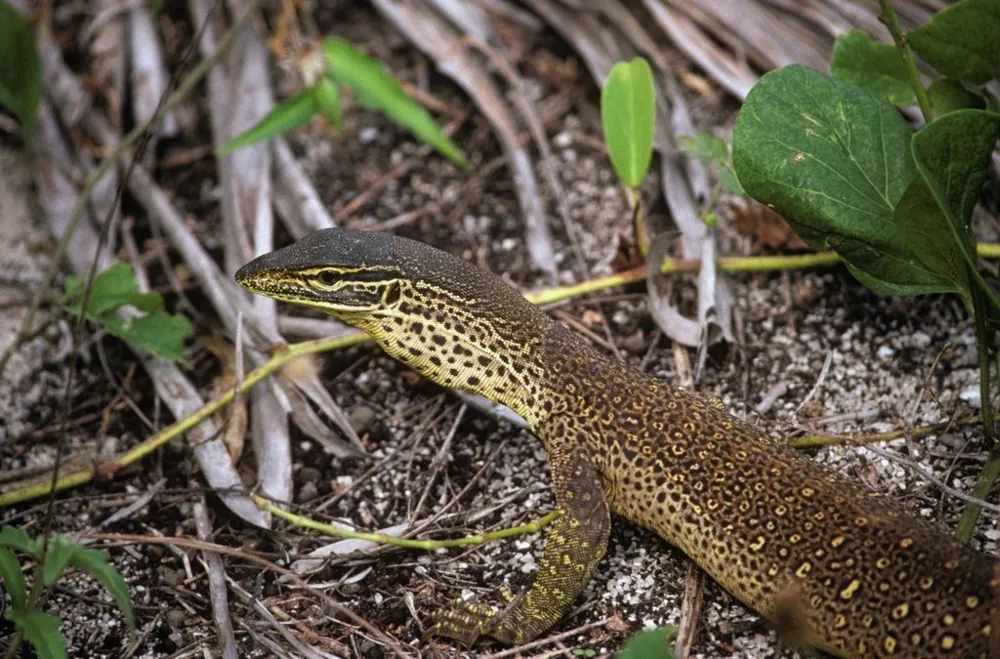
KaThe yellow-spotted monitor is a large, fast lizard that lives in northern and western Australia and southern New Guinea. It is one of Australia's biggest lizards, and it plays an important part in its ecosystem as a predator. It can give a painful bite if it feels threatened.1



 Sɛdeɛ wobɛhunu no
- Most individuals are yellow, with a brown or dark tan background.1
- Large, dark spots form rows along the back, and they are most distinct in the middle of the back.1
- Bands of colour appear toward the tip of the tail.1
- Adults are large: females average about 90 cm long and males about 120 to 150 cm.1
- Colour varies between individuals and places. The subspecies rubidus is reddish rather than brown.1
Wɔtaa fa no sɛ: The sand goanna (Varanus gouldii) somewhat resembles the yellow-spotted monitor.1
Bɔre ahoɔden
Bɔre fi ne se mu ba bere a ɔka.
Ne asiane ma nnipa te sɛn?
Asiane ma nnipa: Ɛyɛ yawƐtumi yɛ yaw paa, nanso ɛkame ayɛ sɛ ɛnyɛ asiane kɛseɛ da.Ɛyɛ dɛn bere a ehu aka no?
When threatened, it raises itself up on its hind legs and supports itself with its tail, which lets it watch for danger. It can also run up to 100 metres to a tree or burrow.1
 Sɛ ɛka a
- Hohoro kuro no, ma onipa no bo nnwo na hwehwɛ dɔkota mmoa.
Di kan frɛ wo ahohiahia nɔma (112, 000, 911). Yei yɛ mmoa a ɛdi kan ho akwankyerɛ, ɛnyɛ dɔkota afotuo. Mmoa a ɛdi kan ho nsɛm titiriw
 Hwɛ wo ho so
- Mfa wo nsa nka wiram aboa biara, nkyere no na mfa no nni agorɔ, sɛ ɔyɛ ketewa mpo, na sɛ ɛte sɛ ɔrededa anaa wawu mpo a.
- Ma no kwan. Sɛ wohyia baako a, ma wo bo nnwo, san w'akyi brɛoo na ma ɔnkɔ ne kwan.
- Sɛ baako ka wo a: ma wo bo nnwo, tena dinn, frɛ wo ahohiahia nɔma (112, 000, 911) anaa kɔ ayaresabea ntɛm. Kae sɛdeɛ na ɛte, mfonini bɛboa.
Ɛnhwehwɛ wo sɛ ɛbɛpira wo. Ɛde ne bɔre kyere aduane anaa ɛbɔ ne ho ban, na ɛpɛ sɛ ɛhinta sene biribiara. Nsɛm pii fa ahobammɔ ho
Wiase mu baabi bɛn?
Ne kɛseɛ te sɛn?
Ne tenten te sɛn?
Ne mu duru te sɛn?
 ne tenten te sɛ fie agyinamoa 3 a wɔde hwene ne dua to ntoatoasoɔ mu
 ne tenten te sɛ kwadu 9 a wɔde to ntoatoasoɔ mune mu duru bɛyɛ sɛ fie agyinamoa
 ɛbɛtumi atu mita 100 wɔ anibu 24 mu (onipa a ɔwɔ ntɛm sen biara hia 9.6)
Yellow-spotted monitor kɛseɛ te sɛn sɛ wode toto WO ho a?
Akontabuo kɛkɛ wɔ wo browser mu. Wɔnkora hwee, na wɔmfa hwee nkɔ baabiara.
Ne ntɛm te sɛn?

Nsɛm
The yellow-spotted monitor digs some of the deepest burrows known for any vertebrate, with an average depth of 2.6 m as of 2015.1
During the dry season, it has been recorded diving underwater to feed on freshwater mussels.1
Argus monitors can mature sexually in less than a year, which is much faster than most other large monitors, which usually take 2 or more years.1
Several individuals may share one interconnected system of burrows, called a warren. One study found at least 6 individuals using the same warren.1
It is the third largest lizard in Australia, after the perentie and the lace monitor.1
Its sense of smell is its sharpest sense, and it flicks its forked tongue to search for food, much as snakes do.1
Baabi a nsɛm no fi
- Yellow-spotted monitor (Wikipedia (CC BY-SA 4.0))
- Varanus panoptes (iNaturalist): din ne nkyekyɛmu.
- Venom Wiki: asiane gyinabea, kɛseɛ a ɛtaa yɛ ne ntɛm susuo no yɛ yɛn ankasa deɛ. Hwɛ sɛdeɛ yɛbu no: Sɛdeɛ yɛkyerɛ asiane gyinabea.
Nsɛm biara a ɛwɔ kratafa yi so wɔ nɔma a ɛkyerɛ ne fibea. Sɛ yɛfom biribi a, kafra, yɛyɛ mmoa ho akɔnnɔfoɔ, ɛnyɛ nyansahu nwoma. Ka kyerɛ yɛn wɔ [email protected] na yɛbɛsiesie.
 Ɔkɔm de akekantwerɛ no! Onipa baako na ɔyɛ Venom Wiki: ɛyɛ kwa, dawurubɔ nni so na biribiara nni so a ɛdi w'akyi. Akyɛdeɛ ketewa bi boa ma ɛkɔ so tena internet so.Ma akekantwere no aduane
 Lace monitor
 Perentie
 Spiny-tailed monitor
 Mitchell's water monitor
 Komodo dragon
 Gila monster
 Coastal taipan
 Common death adder
 Eastern brown snake
 Taipan a ɔwɔ Australia mfinimfini
 Sydney funnel-web spider
 Ɔwɔ a ɔte sɛ ɔsebɔ (Tiger snake)