
 Abibirem
 Asia
Asia Yuropu
 Amerika Anaafoɔ
 Australia ne Oceania
 Antarctica
 Pacific Po
 Atlantic Po
 India Po
 Arctic Po
 Mediterranean Po
 Po Kɔkɔɔ
 Caribbean Po
 Coral Po
 China Anaafoɔ Po
 Philippine Po
 Andaman Po
 Atifi Po
 Timor ne Arafura Po
 Bengal Ɛpo Ano
 California Ɛpo Ano
Masked hunter
 Ka
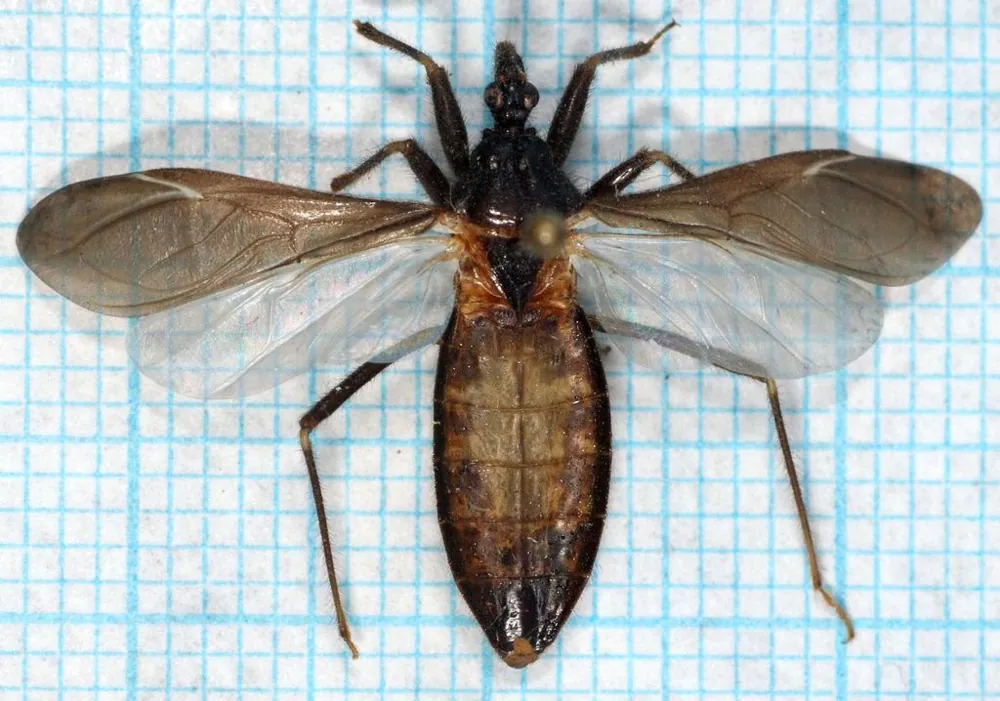
KaThe masked hunter is a dark brown to black insect from the assassin bug family. It hunts small creatures such as bed bugs, woodlice and termites, and it is often found in homes. Its nymphs hide by covering their bodies with dust and debris.1

 Sɛdeɛ wobɛhunu no
- Adults are uniformly dark brown to black and measure 17–22 mm in length.1
- The head is elongated, with a short, three-segmented beak and long, slender antennae.1
- The abdomen is wide and extends beyond the wings in the middle, showing the edges of its abdominal segments.1
- Nymphs look like small adults but are often grey or light-coloured, because a sticky body coat collects dust, lint and small particles.1
Wɔtaa fa no sɛ: Masked hunters are sometimes mistaken for the kissing bug. Unlike the kissing bug, masked hunters do not carry Chagas disease.1
Bɔre ahoɔden
Bɔre fi ne se mu ba bere a ɔka.
Ne asiane ma nnipa te sɛn?
Asiane ma nnipa: Ɛyɛ yawƐtumi yɛ yaw paa, nanso ɛkame ayɛ sɛ ɛnyɛ asiane kɛseɛ da.A handled or trapped masked hunter can deliver a rostral stab, which is painful and comparable to a bee's sting. The swelling can last for about a week. They do not feed on human blood.1
Ɛyɛ dɛn bere a ehu aka no?
When handled or trapped, it defends itself by delivering a stab with its beak.1
 Sɛ ɛka a
- Caterpillar nwi a ɛwɔ: fa sticky tape yi firi so, na afei hohoro honam no. Ntwitwi.
- Ka ho: hohoro na dwo. Hwehwɛ dɔkota mmoa sɛ onipa no ho ntɔ no anaa mogya tu no ntɛm a.
Di kan frɛ wo ahohiahia nɔma (112, 000, 911). Yei yɛ mmoa a ɛdi kan ho akwankyerɛ, ɛnyɛ dɔkota afotuo. Mmoa a ɛdi kan ho nsɛm titiriw
 Hwɛ wo ho so
- Mfa wo nsa nka wiram aboa biara, nkyere no na mfa no nni agorɔ, sɛ ɔyɛ ketewa mpo, na sɛ ɛte sɛ ɔrededa anaa wawu mpo a.
- Ma no kwan. Sɛ wohyia baako a, ma wo bo nnwo, san w'akyi brɛoo na ma ɔnkɔ ne kwan.
- Sɛ baako ka wo a: ma wo bo nnwo, tena dinn, frɛ wo ahohiahia nɔma (112, 000, 911) anaa kɔ ayaresabea ntɛm. Kae sɛdeɛ na ɛte, mfonini bɛboa.
Ɛnhwehwɛ wo sɛ ɛbɛpira wo. Ɛde ne bɔre kyere aduane anaa ɛbɔ ne ho ban, na ɛpɛ sɛ ɛhinta sene biribiara. Nsɛm pii fa ahobammɔ ho
Wiase mu baabi bɛn?
Ne kɛseɛ te sɛn?
Ne tenten te sɛn?
 ne tenten bɛyɛ sɛ paper clip
Masked hunter kɛseɛ te sɛn sɛ wode toto WO ho a?
Akontabuo kɛkɛ wɔ wo browser mu. Wɔnkora hwee, na wɔmfa hwee nkɔ baabiara.
Ne ntɛm te sɛn?


Nsɛm
Nymphs build two layers of camouflage on their bodies, an inner layer of fine particles and an outer layer of coarser ones, using their hind legs and a tarsal fan.1
Their sticky body coat catches dust, lint and other small particles, which hides them from both predators and prey.1
Because they hunt bed bugs, a masked hunter in the home can be a sign of a bed bug problem, and controlling the bed bugs usually deals with the hunters too.1
Masked hunters were probably introduced to North America by accident in the late 1800s to early 1900s. They were first found in Canada in 1905 and in the United States in 1917.1
Atosɛm sɛefoɔ
Atosɛm: Masked hunters are kissing bugs and carry Chagas disease.
Nokorɛ: Masked hunters are sometimes mistaken for kissing bugs, but they do not carry Chagas disease. Their stab is painful, but it does not spread that disease.1
Baabi a nsɛm no fi
- Reduvius personatus (Wikipedia (CC BY-SA 4.0))
- Reduvius personatus (iNaturalist): din ne nkyekyɛmu.
- Venom Wiki: asiane gyinabea, kɛseɛ a ɛtaa yɛ ne ntɛm susuo no yɛ yɛn ankasa deɛ. Hwɛ sɛdeɛ yɛbu no: Sɛdeɛ yɛkyerɛ asiane gyinabea.
Nsɛm biara a ɛwɔ kratafa yi so wɔ nɔma a ɛkyerɛ ne fibea. Sɛ yɛfom biribi a, kafra, yɛyɛ mmoa ho akɔnnɔfoɔ, ɛnyɛ nyansahu nwoma. Ka kyerɛ yɛn wɔ [email protected] na yɛbɛsiesie.
 Ɔkɔm de akekantwerɛ no! Onipa baako na ɔyɛ Venom Wiki: ɛyɛ kwa, dawurubɔ nni so na biribiara nni so a ɛdi w'akyi. Akyɛdeɛ ketewa bi boa ma ɛkɔ so tena internet so.Ma akekantwere no aduane
Pii fi kuo korɔ no mu: Caterpillar ne mmoawa
 Oak processionaryCaterpillar ne mmoawaƐyɛ yaw kɛkɛMfa wo nsa nka
 Pine processionaryCaterpillar ne mmoawaƐyɛ yaw kɛkɛMfa wo nsa nka
 Common bombardier beetleCaterpillar ne mmoawaƐnni asiane
 Asian giant water bugCaterpillar ne mmoawaƐyɛ yaw kɛkɛ
 Blue-striped nettle grubCaterpillar ne mmoawaƐyɛ yaw kɛkɛMfa wo nsa nka
 Brown-tail mothCaterpillar ne mmoawaƐyɛ yaw kɛkɛMfa wo nsa nka
Ɔte nso wɔ: Yuropu
 Common European adderViper ne adderƐhia dɔkota
 Spanish flyMmoa afoforɔ a wɔn ho yɛ awuduroƐhia dɔkotaMfa wo nsa nka
 Common waspWowa, kotokurodu ne kotokurodu akɛseɛƐyɛ yaw kɛkɛ
 European hornetWowa, kotokurodu ne kotokurodu akɛseɛƐyɛ yaw kɛkɛ
 Fire salamanderApɔtorɔwa a wɔn ho yɛ awuduro, apɔtorɔ ne newtƐyɛ yaw kɛkɛMfa wo nsa nka
 Western honey beeWowa, kotokurodu ne kotokurodu akɛseɛƐyɛ yaw kɛkɛ