
 Abibirem
 Asia
Asia Yuropu
 Amerika Anaafoɔ
 Australia ne Oceania
 Antarctica
 Pacific Po
 Atlantic Po
 India Po
 Arctic Po
 Mediterranean Po
 Po Kɔkɔɔ
 Caribbean Po
 Coral Po
 China Anaafoɔ Po
 Philippine Po
 Andaman Po
 Atifi Po
 Timor ne Arafura Po
 Bengal Ɛpo Ano
 California Ɛpo Ano
Common European adder
 Ka
KaThe common European adder is a venomous snake that lives across much of Europe and as far east as East Asia. In several European countries it is the only native venomous snake. It is not aggressive and usually bites only when it is cornered, stepped on or picked up.1



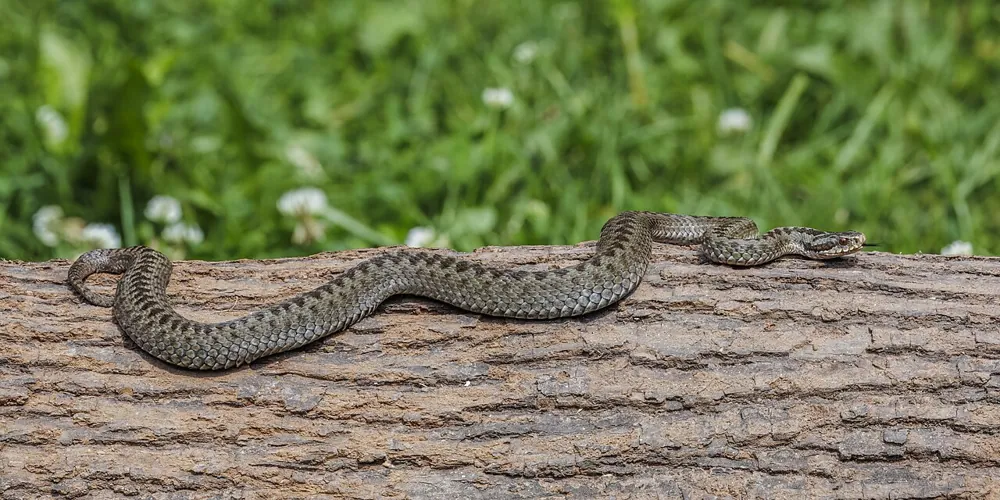
 Sɛdeɛ wobɛhunu no
- Relatively thick body. Adults are usually about 60 cm long, including the tail.1
- Most have a dark zigzag pattern running along the back and tail.1
- A dark V or X marking is usually present on top of the head.1
- A dark streak runs from the eye to the neck, then continues as spots along the sides.1
- Females are usually brown with dark brown markings. Males are a uniform grey with black markings.1
Bɔre ahoɔden
Bɔre fi ne se mu ba bere a ɔka.
Ne bɔre yɛ dɛn?
Bites can be very painful, but they are rarely fatal.1
Ne asiane ma nnipa te sɛn?
Asiane ma nnipa: Ɛyɛ denSɛ ɛka wo a, kɔ dɔkota nkyɛn. Ɛntaa nkum obi koraa.The adder is not regarded as especially dangerous. It is not aggressive and usually bites only when really provoked, stepped on or picked up. Bites are rarely fatal.1
Ɛyɛ dɛn bere a ehu aka no?
When it feels threatened, it usually slips away into the undergrowth. Some snakes, often pregnant females, hiss loudly to warn off danger, and the front of the body is drawn into an S-shape before a strike.1
 Sɛ ɛka a
- Ma onipa no ntena dinn na ne bo nnwo, ma nsa anaa nan a ɛkaa no no nna pɛpɛɛpɛ ne ne koma (ɛnkɔ soro, ɛnsiane fam), yi kawa ne nneɛma a ɛkyere no den, na kɔ ayaresabea ntɛm.
Di kan frɛ wo ahohiahia nɔma (112, 000, 911). Yei yɛ mmoa a ɛdi kan ho akwankyerɛ, ɛnyɛ dɔkota afotuo. Mmoa a ɛdi kan ho nsɛm titiriw
 Hwɛ wo ho so
- Mfa wo nsa nka wiram aboa biara, nkyere no na mfa no nni agorɔ, sɛ ɔyɛ ketewa mpo, na sɛ ɛte sɛ ɔrededa anaa wawu mpo a.
- Ma no kwan. Sɛ wohyia baako a, ma wo bo nnwo, san w'akyi brɛoo na ma ɔnkɔ ne kwan.
- Sɛ baako ka wo a: ma wo bo nnwo, tena dinn, frɛ wo ahohiahia nɔma (112, 000, 911) anaa kɔ ayaresabea ntɛm. Kae sɛdeɛ na ɛte, mfonini bɛboa.
Ɛnhwehwɛ wo sɛ ɛbɛpira wo. Ɛde ne bɔre kyere aduane anaa ɛbɔ ne ho ban, na ɛpɛ sɛ ɛhinta sene biribiara. Nsɛm pii fa ahobammɔ ho
Wiase mu baabi bɛn?
Ne kɛseɛ te sɛn?
Ne tenten te sɛn?
Ne mu duru te sɛn?
 ne tenten te sɛ fie agyinamoa 2 a wɔde hwene ne dua to ntoatoasoɔ mu
 ne tenten te sɛ kwadu 5 a wɔde to ntoatoasoɔ mu
 ɛbɛtumi atu mita 100 wɔ anibu 110 mu (onipa a ɔwɔ ntɛm sen biara hia 9.6)
Common European adder kɛseɛ te sɛn sɛ wode toto WO ho a?
Akontabuo kɛkɛ wɔ wo browser mu. Wɔnkora hwee, na wɔmfa hwee nkɔ baabiara.
Ne ntɛm te sɛn?


Nsɛm
It hibernates in winter. In northern Sweden, hibernation lasts 8 to 9 months, and it may come out to bask on mild days, sometimes crossing snow to do so.1
Around 15% of adults and 30 to 40% of juveniles die during hibernation.1
Males and females can often be told apart by colour, which is unusual for snakes.1
In several European countries it is the only native venomous snake.1
It is found farther north than any other snake species.1
Atosɛm sɛefoɔ
Atosɛm: Adders are aggressive snakes that attack people.
Nokorɛ: Adders are timid. They usually disappear at the slightest hint of danger and bite only when cornered, alarmed, stepped on or picked up.1
Ma bɔre ho animdefoɔ
- Nyansahu din
- Vipera berus
- Kuo
- Viper ne adder
- Abusua
- Viperidae2
- Nhyehyɛeɛ (Order)
- Squamata
- Asaase akɛseɛ
- Yuropu, Asia
- Mmofra nketewa
- It gives birth to live young rather than laying eggs. Females breed once every two or three years, and litters range from three to 20 young.1
- Sɛdeɛ ɔte wɔ kwaem
- Least concern (IUCN Red List), although its population is decreasing. It is protected in many countries, and it is listed as endangered in Switzerland.1
- Asiane ma nnipa
- 3 / 5: Ɛyɛ den3
Baabi a nsɛm no fi
- Adder (Wikipedia (CC BY-SA 4.0))
- Vipera berus (iNaturalist): din ne nkyekyɛmu.
- Venom Wiki: asiane gyinabea, kɛseɛ a ɛtaa yɛ ne ntɛm susuo no yɛ yɛn ankasa deɛ. Hwɛ sɛdeɛ yɛbu no: Sɛdeɛ yɛkyerɛ asiane gyinabea.
Nsɛm biara a ɛwɔ kratafa yi so wɔ nɔma a ɛkyerɛ ne fibea. Sɛ yɛfom biribi a, kafra, yɛyɛ mmoa ho akɔnnɔfoɔ, ɛnyɛ nyansahu nwoma. Ka kyerɛ yɛn wɔ [email protected] na yɛbɛsiesie.
 Ɔkɔm de akekantwerɛ no! Onipa baako na ɔyɛ Venom Wiki: ɛyɛ kwa, dawurubɔ nni so na biribiara nni so a ɛdi w'akyi. Akyɛdeɛ ketewa bi boa ma ɛkɔ so tena internet so.Ma akekantwere no aduane
Pii fi kuo korɔ no mu: Viper ne adder
 Indian saw-scaled viper
 Puff adder
 Russell ɔnanka
 Eastern Russell's viper
 Northeast African carpet viper
 Armenian viper
_female_Pieniny.jpg)
Ɔte nso wɔ: Yuropu
 Spanish flyMmoa afoforɔ a wɔn ho yɛ awuduroƐhia dɔkotaMfa wo nsa nka
 Common waspWowa, kotokurodu ne kotokurodu akɛseɛƐyɛ yaw kɛkɛ
 European hornetWowa, kotokurodu ne kotokurodu akɛseɛƐyɛ yaw kɛkɛ
 Fire salamanderApɔtorɔwa a wɔn ho yɛ awuduro, apɔtorɔ ne newtƐyɛ yaw kɛkɛMfa wo nsa nka
 Western honey beeWowa, kotokurodu ne kotokurodu akɛseɛƐyɛ yaw kɛkɛ
 Mediterranean black widowAnanseƐhia dɔkota