
 Abibirem
 Asia
Asia Yuropu
 Amerika Anaafoɔ
 Australia ne Oceania
 Antarctica
 Pacific Po
 Atlantic Po
 India Po
 Arctic Po
 Mediterranean Po
 Po Kɔkɔɔ
 Caribbean Po
 Coral Po
 China Anaafoɔ Po
 Philippine Po
 Andaman Po
 Atifi Po
 Timor ne Arafura Po
 Bengal Ɛpo Ano
 California Ɛpo Ano
Patagonian bumblebee
 Ɛwɔ
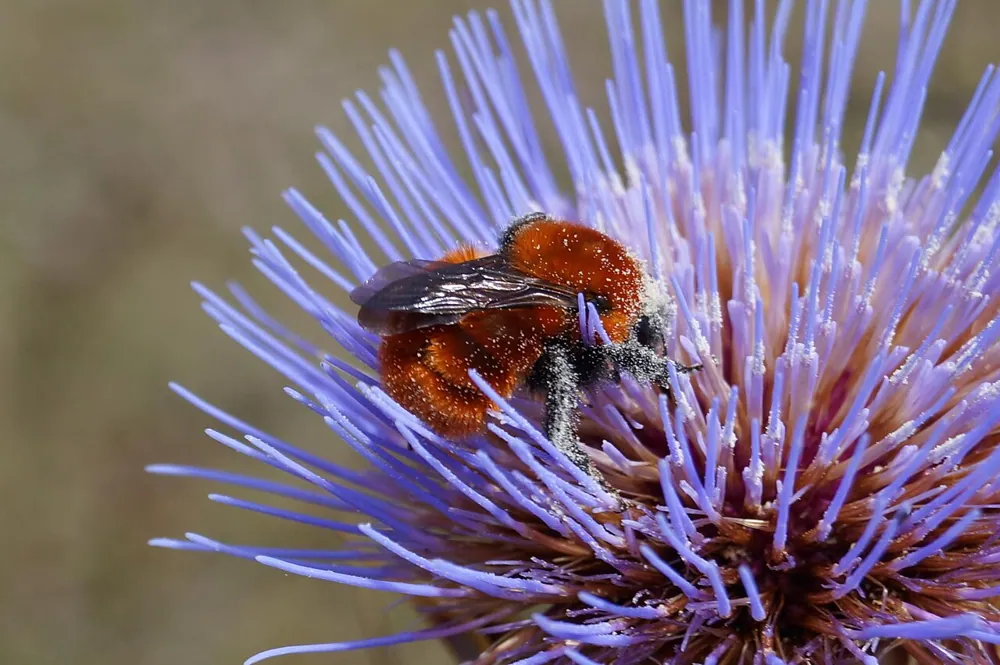
ƐwɔThe Patagonian bumblebee is a large, furry bee that lives naturally only in the temperate forests of southern South America. Its queens are among the biggest bumblebees in the world. Its numbers have fallen since other bumblebee species were brought into the region to pollinate crops.1



 Sɛdeɛ wobɛhunu no
- Mostly red-orange in colour, with a completely red-orange thorax.1
- The abdomen is a lighter orange, fading slightly towards the end, and has a rounded tip.1
- The head, wings and legs are distinctly black.1
- Long bristles cover most of the body, giving it a very furry look.1
- Queens can reach up to 4 cm from head to tail and weigh around 0.5 to 1.5 grams.1
Wɔtaa fa no sɛ: The syrphid fly Aneriophora aureorufa looks very similar to this bumblebee. The two have similar colour and size and can be hard to tell apart in the wild because of their similar flight.1
Bɔre ahoɔden
Bɔre fi ne dua ano nsɔe (stinger) mu ba.
Ne asiane ma nnipa te sɛn?
Asiane ma nnipa: Ɛnyɛ denƐte sɛ wowa wɔ anaa ɛnnu saa. Ɛkame ayɛ sɛ ɛnni asiane ma nnipa. Sɛ ɛwɔ a
- Fa biribi twitwiw wowa no dua (stinger) no fi mu, na dwo baabi no.
- Sɛ onipa no ntumi nhome yie, n'anim anaa ne mene mu hono, anaa ɛyɛ no sɛ ɔrebɛtɔ piti a, ɛyɛ allergy ahohiahia: frɛ wo ahohiahia nɔma na fa n'adrenaline pen (auto-injector) wɔ no sɛ ɔwɔ bi a.
Di kan frɛ wo ahohiahia nɔma (112, 000, 911). Yei yɛ mmoa a ɛdi kan ho akwankyerɛ, ɛnyɛ dɔkota afotuo. Mmoa a ɛdi kan ho nsɛm titiriw
 Hwɛ wo ho so
- Mfa wo nsa nka wiram aboa biara, nkyere no na mfa no nni agorɔ, sɛ ɔyɛ ketewa mpo, na sɛ ɛte sɛ ɔrededa anaa wawu mpo a.
- Ma no kwan. Sɛ wohyia baako a, ma wo bo nnwo, san w'akyi brɛoo na ma ɔnkɔ ne kwan.
- Sɛ baako wɔ wo a: ma wo bo nnwo, tena dinn, frɛ wo ahohiahia nɔma (112, 000, 911) anaa kɔ ayaresabea ntɛm. Kae sɛdeɛ na ɛte, mfonini bɛboa.
Ɛnhwehwɛ wo sɛ ɛbɛpira wo. Ɛde ne bɔre kyere aduane anaa ɛbɔ ne ho ban, na ɛpɛ sɛ ɛhinta sene biribiara. Nsɛm pii fa ahobammɔ ho
Wiase mu baabi bɛn?
Ne kɛseɛ te sɛn?
Ne tenten te sɛn?
Ne mu duru te sɛn?
 ne tenten bɛyɛ sɛ paper clip
 ne mu yɛ hare araa sɛ worente nka wɔ wo nsa so
 ɛbɛtumi atu atwa bɔɔlobɔ agodibea mu nyinaa wɔ anibu 10 mu
Patagonian bumblebee kɛseɛ te sɛn sɛ wode toto WO ho a?
Akontabuo kɛkɛ wɔ wo browser mu. Wɔnkora hwee, na wɔmfa hwee nkɔ baabiara.
Ne ntɛm te sɛn?


Nsɛm
It is one of the largest bee species in the world, and its furry look has earned it the nickname 'flying mouse'.1
It often visits red flowers, which most bees avoid. It can detect red through a specific receptor system.1
A syrphid fly in Patagonia, Aneriophora aureorufa, has evolved to look and fly much like this bumblebee, which may help it avoid predators.1
In the Maulino forest of central Chile, individuals living in fragmented forest have longer wings relative to their body size, because they need to fly longer distances between patches.1
Its populations began to decline after non-native bumblebees were introduced into Chile to pollinate crops.1
It is the only native bumblebee species in southern South America.1
Ma bɔre ho animdefoɔ
- Nyansahu din
- Bombus dahlbomii
- Kuo
- Wowa, kotokurodu ne kotokurodu akɛseɛ
- Abusua
- Apidae2
- Nhyehyɛeɛ (Order)
- Hymenoptera
- Asaase akɛseɛ
- Amerika Anaafoɔ
- Mmofra nketewa
- Queens lay their first eggs in a structure made of pollen and wax inside an underground cavity. The first brood becomes workers after a couple of months, and nests can hold more than 100 workers.1
- Asiane ma nnipa
- 1 / 5: Ɛnyɛ den3
Baabi a nsɛm no fi
- Bombus dahlbomii (Wikipedia (CC BY-SA 4.0))
- Bombus dahlbomii (iNaturalist): din ne nkyekyɛmu.
- Venom Wiki: asiane gyinabea, kɛseɛ a ɛtaa yɛ ne ntɛm susuo no yɛ yɛn ankasa deɛ. Hwɛ sɛdeɛ yɛbu no: Sɛdeɛ yɛkyerɛ asiane gyinabea.
Nsɛm biara a ɛwɔ kratafa yi so wɔ nɔma a ɛkyerɛ ne fibea. Sɛ yɛfom biribi a, kafra, yɛyɛ mmoa ho akɔnnɔfoɔ, ɛnyɛ nyansahu nwoma. Ka kyerɛ yɛn wɔ [email protected] na yɛbɛsiesie.
 Ɔkɔm de akekantwerɛ no! Onipa baako na ɔyɛ Venom Wiki: ɛyɛ kwa, dawurubɔ nni so na biribiara nni so a ɛdi w'akyi. Akyɛdeɛ ketewa bi boa ma ɛkɔ so tena internet so.Ma akekantwere no aduane
Pii fi kuo korɔ no mu: Wowa, kotokurodu ne kotokurodu akɛseɛ
 Tarantula hawkWowa, kotokurodu ne kotokurodu akɛseɛƐyɛ yaw kɛkɛ
 Executioner waspWowa, kotokurodu ne kotokurodu akɛseɛƐhia dɔkota
 Warrior waspWowa, kotokurodu ne kotokurodu akɛseɛƐhia dɔkota
 Armadillo waspWowa, kotokurodu ne kotokurodu akɛseɛƐhia dɔkota
 Giant tarantula hawkWowa, kotokurodu ne kotokurodu akɛseɛƐyɛ yaw kɛkɛ
 Paulista waspWowa, kotokurodu ne kotokurodu akɛseɛƐyɛ yaw kɛkɛ
 Golden poison frog
 Terciopelo
 Brazilian wandering spider
 Eyelash viper
 Golden lancehead
 South American bushmaster