
 Abibirem
 Asia
Asia Yuropu
 Amerika Anaafoɔ
 Australia ne Oceania
 Antarctica
 Pacific Po
 Atlantic Po
 India Po
 Arctic Po
 Mediterranean Po
 Po Kɔkɔɔ
 Caribbean Po
 Coral Po
 China Anaafoɔ Po
 Philippine Po
 Andaman Po
 Atifi Po
 Timor ne Arafura Po
 Bengal Ɛpo Ano
 California Ɛpo Ano
Red paper wasp
 Ɛwɔ
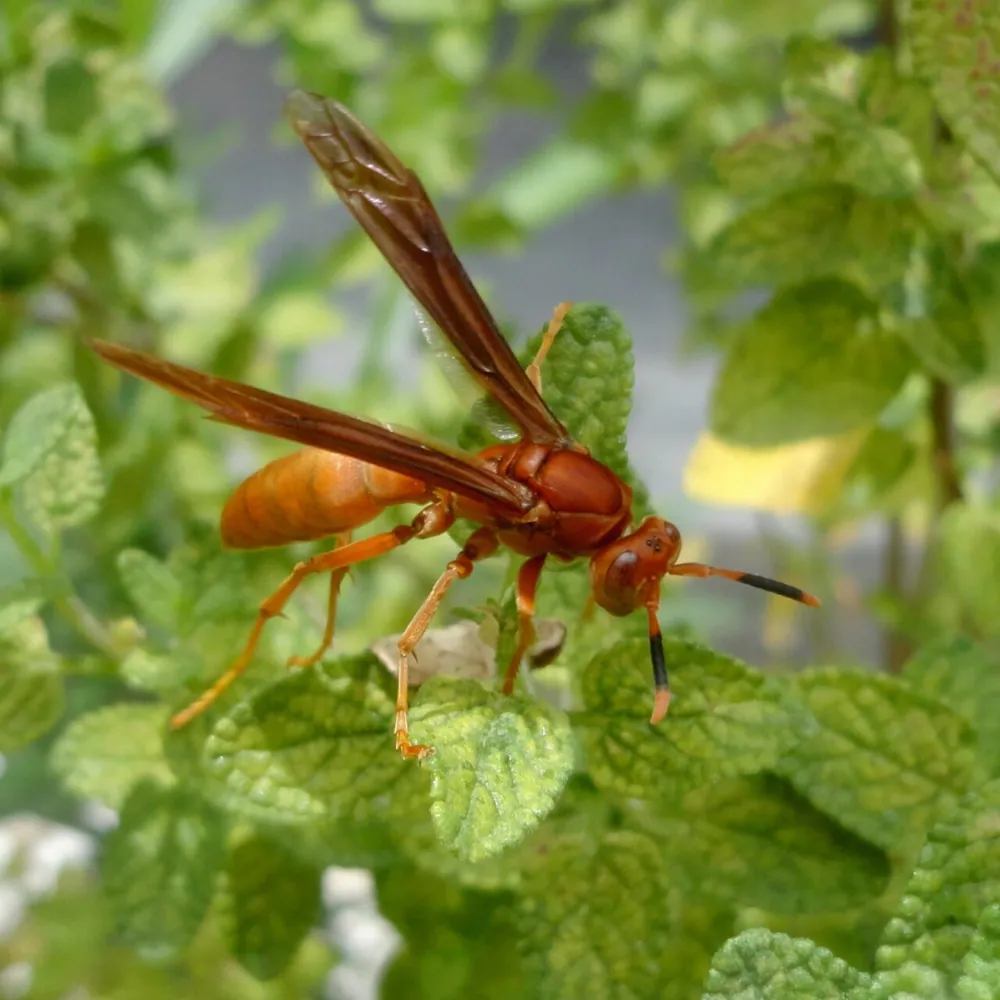
ƐwɔThe red paper wasp is a social wasp that builds papery nests from chewed plant fibres and saliva. It lives across much of the Neotropical region, from southern Arizona down to Argentina. Its colonies share work between many females, which makes it a useful example for scientists studying how social animals organise themselves.1


 Sɛdeɛ wobɛhunu no
- Body is a uniform light to dark mahogany-brown, sometimes with a lighter head and thorax.1
- Some individuals have a yellow edge on the front of the first abdominal segment.1
- Wings are purplish black, with black or reddish-brown veins.1
- It is a large paper wasp, with wings 17.0 to 24.5 mm long.1
- Nests have open combs with hexagonal cells and no outer envelope.1
Bɔre ahoɔden
Bɔre fi ne dua ano nsɔe (stinger) mu ba.
Ne asiane ma nnipa te sɛn?
Asiane ma nnipa: Ɛyɛ yawƐtumi yɛ yaw paa, nanso ɛkame ayɛ sɛ ɛnyɛ asiane kɛseɛ da. Sɛ ɛwɔ a
- Fa biribi twitwiw wowa no dua (stinger) no fi mu, na dwo baabi no.
- Sɛ onipa no ntumi nhome yie, n'anim anaa ne mene mu hono, anaa ɛyɛ no sɛ ɔrebɛtɔ piti a, ɛyɛ allergy ahohiahia: frɛ wo ahohiahia nɔma na fa n'adrenaline pen (auto-injector) wɔ no sɛ ɔwɔ bi a.
Di kan frɛ wo ahohiahia nɔma (112, 000, 911). Yei yɛ mmoa a ɛdi kan ho akwankyerɛ, ɛnyɛ dɔkota afotuo. Mmoa a ɛdi kan ho nsɛm titiriw
 Hwɛ wo ho so
- Mfa wo nsa nka wiram aboa biara, nkyere no na mfa no nni agorɔ, sɛ ɔyɛ ketewa mpo, na sɛ ɛte sɛ ɔrededa anaa wawu mpo a.
- Ma no kwan. Sɛ wohyia baako a, ma wo bo nnwo, san w'akyi brɛoo na ma ɔnkɔ ne kwan.
- Sɛ baako wɔ wo a: ma wo bo nnwo, tena dinn, frɛ wo ahohiahia nɔma (112, 000, 911) anaa kɔ ayaresabea ntɛm. Kae sɛdeɛ na ɛte, mfonini bɛboa.
Ɛnhwehwɛ wo sɛ ɛbɛpira wo. Ɛde ne bɔre kyere aduane anaa ɛbɔ ne ho ban, na ɛpɛ sɛ ɛhinta sene biribiara. Nsɛm pii fa ahobammɔ ho
Wiase mu baabi bɛn?
Ne kɛseɛ te sɛn?
Ne tenten te sɛn?
 ne tenten bɛyɛ sɛ paper clip
 ɛbɛtumi atu atwa bɔɔlobɔ agodibea mu nyinaa wɔ anibu 14 mu
Red paper wasp kɛseɛ te sɛn sɛ wode toto WO ho a?
Akontabuo kɛkɛ wɔ wo browser mu. Wɔnkora hwee, na wɔmfa hwee nkɔ baabiara.
Ne ntɛm te sɛn?


Nsɛm
A single queen dominates the other females, sometimes using physical attacks that can turn into fatal battles.1
Colonies build many combs, often around 38 in total, and move brood into new combs as old ones are abandoned. This is thought to protect the colony from moth infestations.1
Male wasps follow two mating tactics: some defend territories, while smaller males patrol from tree to tree and sneak matings when they can.1
Around 56% of females drift to nearby nests, which helps protect the colony against predators. An egg has a 40% chance of being eaten by a predator before it reaches adulthood.1
Colonies are founded or abandoned at any time of year, so their development is not tied to the seasons.1
Atosɛm sɛefoɔ
Atosɛm: The species name canadensis shows that this wasp lives in Canada.
Nokorɛ: Linnaeus was misinformed about where his specimen came from. In North America, this wasp only reaches as far north as southern Arizona.1
Ma bɔre ho animdefoɔ
- Nyansahu din
- Polistes canadensis
- Kuo
- Wowa, kotokurodu ne kotokurodu akɛseɛ
- Abusua
- Vespidae2
- Nhyehyɛeɛ (Order)
- Hymenoptera
- Asaase akɛseɛ
- Amerika Atifi, Amerika Anaafoɔ
- Mmofra nketewa
- Eggs are laid in hexagonal cells, and the egg-to-adult stage takes around 40 days, with broods raised year round.1
- Asiane ma nnipa
- 2 / 5: Ɛyɛ yaw3
Baabi a nsɛm no fi
- Polistes canadensis (Wikipedia (CC BY-SA 4.0))
- Polistes canadensis (iNaturalist): din ne nkyekyɛmu.
- Venom Wiki: asiane gyinabea, kɛseɛ a ɛtaa yɛ ne ntɛm susuo no yɛ yɛn ankasa deɛ. Hwɛ sɛdeɛ yɛbu no: Sɛdeɛ yɛkyerɛ asiane gyinabea.
Nsɛm biara a ɛwɔ kratafa yi so wɔ nɔma a ɛkyerɛ ne fibea. Sɛ yɛfom biribi a, kafra, yɛyɛ mmoa ho akɔnnɔfoɔ, ɛnyɛ nyansahu nwoma. Ka kyerɛ yɛn wɔ [email protected] na yɛbɛsiesie.
 Ɔkɔm de akekantwerɛ no! Onipa baako na ɔyɛ Venom Wiki: ɛyɛ kwa, dawurubɔ nni so na biribiara nni so a ɛdi w'akyi. Akyɛdeɛ ketewa bi boa ma ɛkɔ so tena internet so.Ma akekantwere no aduane
Pii fi kuo korɔ no mu: Wowa, kotokurodu ne kotokurodu akɛseɛ
 Tarantula hawkWowa, kotokurodu ne kotokurodu akɛseɛƐyɛ yaw kɛkɛ
 Executioner waspWowa, kotokurodu ne kotokurodu akɛseɛƐhia dɔkota
 Warrior waspWowa, kotokurodu ne kotokurodu akɛseɛƐhia dɔkota
 Bald-faced hornetWowa, kotokurodu ne kotokurodu akɛseɛƐyɛ yaw kɛkɛ
 Cow killer velvet antWowa, kotokurodu ne kotokurodu akɛseɛƐyɛ yaw kɛkɛ
 Eastern cicada killerWowa, kotokurodu ne kotokurodu akɛseɛƐnni asiane
 Terciopelo
 Eastern coral snake
 Eastern diamondback rattlesnake
 Eyelash viper
 Timber rattlesnake
 Western diamondback rattlesnake