
 Abibirem
 Asia
Asia Yuropu
 Amerika Anaafoɔ
 Australia ne Oceania
 Antarctica
 Pacific Po
 Atlantic Po
 India Po
 Arctic Po
 Mediterranean Po
 Po Kɔkɔɔ
 Caribbean Po
 Coral Po
 China Anaafoɔ Po
 Philippine Po
 Andaman Po
 Atifi Po
 Timor ne Arafura Po
 Bengal Ɛpo Ano
 California Ɛpo Ano
Red Sea fire urchin
 Nsɔe a bɔre wom
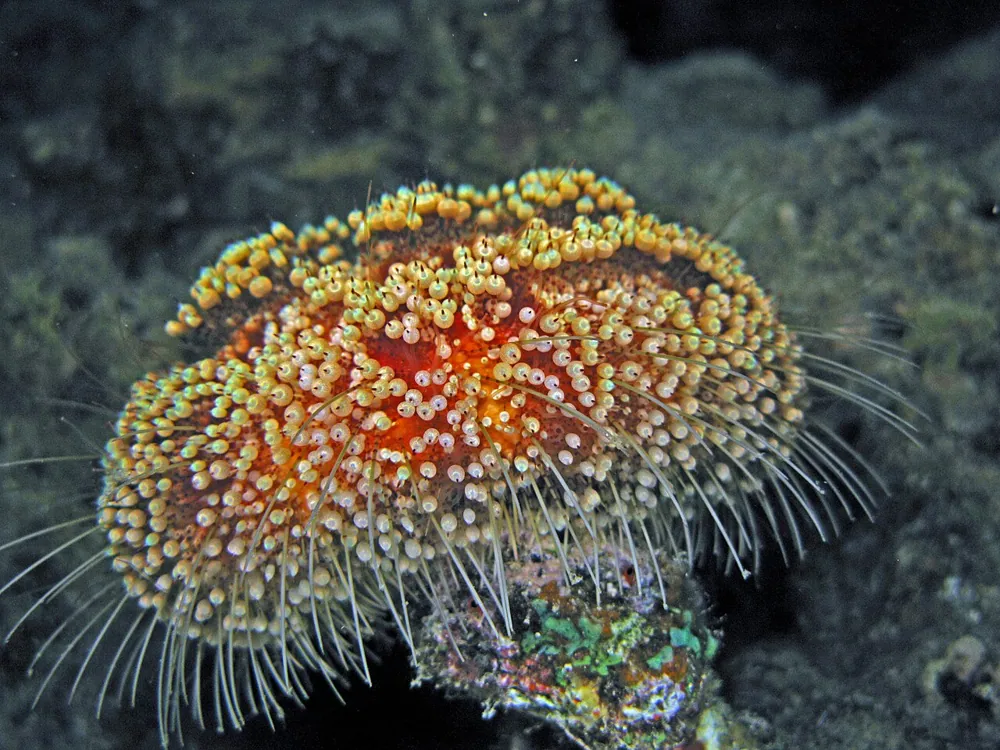
The Red Sea fire urchin is a spiny sea creature that lives on the seabed. It is a fairly common sea urchin across much of the Indo-Pacific. Its spines can cause extreme pain, so it is important to know it when you are in the water.1


 Sɛdeɛ wobɛhunu no
- Its spines regularly cover the whole aboral (back) side of its body.1
- Its body plates are articulated, which makes the test (shell) quite flexible.1
- It is most active at night.1
Wɔtaa fa no sɛ: It was once considered a colour variant of Asthenosoma varium. In the Red Sea fire urchin, the spines cover the whole back side evenly. In A. varium, the spines are grouped in rectangular patches separated by bare areas.1
Bɔre ahoɔden
Nsɔe a ano yɛ nnam na ɛkura bɔre no. Sɛ wotiatia so anaa wosɔ mu a, ɛyɛ yaw.
Ne bɔre yɛ dɛn?
Its spines inflict extreme pain on anyone who is pricked by them. The pain is the main effect described for this urchin.1
Ne asiane ma nnipa te sɛn?
Asiane ma nnipa: Ɛyɛ denSɛ ne nsɔe hyɛ wo mu a, kɔ dɔkota nkyɛn. Ɛntaa nkum obi koraa.Its spines cause extreme pain, which is the main danger to people who touch it or come into contact with its spines.1
 Sɛ ne nsɔe hyɛ wo mu a
- Fa kuro no hyɛ nsuo hyew mu, ɛnyɛ hyew sene deɛ onipa no betumi agyina a ɛnhye no, na hwehwɛ dɔkota mmoa na wɔayi nsɔe no. Mmɔ mmɔden sɛ wo ankasa wobɛtutu wɔn.
Di kan frɛ wo ahohiahia nɔma (112, 000, 911). Yei yɛ mmoa a ɛdi kan ho akwankyerɛ, ɛnyɛ dɔkota afotuo. Mmoa a ɛdi kan ho nsɛm titiriw
 Hwɛ wo ho so
- Mfa wo nsa nka wiram aboa biara, nkyere no na mfa no nni agorɔ, sɛ ɔyɛ ketewa mpo, na sɛ ɛte sɛ ɔrededa anaa wawu mpo a.
- Ma no kwan. Sɛ wohyia baako a, ma wo bo nnwo, san w'akyi brɛoo na ma ɔnkɔ ne kwan.
- Sɛ ne nsɔe hyɛ wo mu a: ma wo bo nnwo, tena dinn, frɛ wo ahohiahia nɔma (112, 000, 911) anaa kɔ ayaresabea ntɛm. Kae sɛdeɛ na ɛte, mfonini bɛboa.
Ɛnhwehwɛ wo sɛ ɛbɛpira wo. Ɛde ne bɔre kyere aduane anaa ɛbɔ ne ho ban, na ɛpɛ sɛ ɛhinta sene biribiara. Nsɛm pii fa ahobammɔ ho
Wiase mu baabi bɛn?
Ne kɛseɛ te sɛn?
Ne tenten te sɛn?
 ne tenten te sɛ agodeɛ blɔk 8 a wɔde to ntoatoasoɔ mu
 ɛyɛ brɛoo sen nwa a ɔte turom
Red Sea fire urchin kɛseɛ te sɛn sɛ wode toto WO ho a?
Akontabuo kɛkɛ wɔ wo browser mu. Wɔnkora hwee, na wɔmfa hwee nkɔ baabiara.
Ne ntɛm te sɛn?


Nsɛm
It often shelters commensal shrimps, including Allopontonia iaini and Periclimenes colemani, and the parasitic gastropod Leutzenia asthenosomae.1
Until 1998 it was considered a colour variant of Asthenosoma varium.1
Sea urchins are close relatives of starfish, crinoids, brittle stars and sea cucumbers. Together these are called echinoderms, meaning 'spiny skins'.1
Baabi a nsɛm no fi
- Asthenosoma marisrubri (Wikipedia (CC BY-SA 4.0))
- Asthenosoma marisrubri (iNaturalist): din ne nkyekyɛmu.
- Venom Wiki: asiane gyinabea, kɛseɛ a ɛtaa yɛ ne ntɛm susuo no yɛ yɛn ankasa deɛ. Hwɛ sɛdeɛ yɛbu no: Sɛdeɛ yɛkyerɛ asiane gyinabea.
Nsɛm biara a ɛwɔ kratafa yi so wɔ nɔma a ɛkyerɛ ne fibea. Sɛ yɛfom biribi a, kafra, yɛyɛ mmoa ho akɔnnɔfoɔ, ɛnyɛ nyansahu nwoma. Ka kyerɛ yɛn wɔ [email protected] na yɛbɛsiesie.
 Ɔkɔm de akekantwerɛ no! Onipa baako na ɔyɛ Venom Wiki: ɛyɛ kwa, dawurubɔ nni so na biribiara nni so a ɛdi w'akyi. Akyɛdeɛ ketewa bi boa ma ɛkɔ so tena internet so.Ma akekantwere no aduane
Pii fi kuo korɔ no mu: Sea urchins, ɛpo nsoromma ne sonsono
 Crown-of-thorns starfishSea urchins, ɛpo nsoromma ne sonsonoƐhia dɔkotaMfa wo nsa nka
 Flower urchinSea urchins, ɛpo nsoromma ne sonsonoƐtumi kum
 Fire urchinSea urchins, ɛpo nsoromma ne sonsonoƐhia dɔkotaMfa wo nsa nka
 Bearded firewormSea urchins, ɛpo nsoromma ne sonsonoƐyɛ yaw kɛkɛMfa wo nsa nka
 Black long-spined urchinSea urchins, ɛpo nsoromma ne sonsonoƐyɛ yaw kɛkɛMfa wo nsa nka
 BloodwormSea urchins, ɛpo nsoromma ne sonsonoƐyɛ yaw kɛkɛ
Ɔte nso wɔ: Po Kɔkɔɔ
 Hawksbill sea turtleMmoa afoforɔ a wɔn ho yɛ awuduroƐtumi kum
 Reef stonefishApataa a wɔwɔ bɔreƐtumi kumMfa wo nsa nka
 Red lionfishApataa a wɔwɔ bɔreƐhia dɔkotaMfa wo nsa nka
 Common octopusCone snails ne octopusƐnni asiane
 Moon jellyfishJellyfish ne ɛpo mu mmoa a wɔwɔƐnni asiane
 Silver-cheeked toadfishMmoa afoforɔ a wɔn ho yɛ awuduroƐkum