
 Abibirem
 Asia
Asia Yuropu
 Amerika Anaafoɔ
 Australia ne Oceania
 Antarctica
 Pacific Po
 Atlantic Po
 India Po
 Arctic Po
 Mediterranean Po
 Po Kɔkɔɔ
 Caribbean Po
 Coral Po
 China Anaafoɔ Po
 Philippine Po
 Andaman Po
 Atifi Po
 Timor ne Arafura Po
 Bengal Ɛpo Ano
 California Ɛpo Ano
Red widow
 Ka
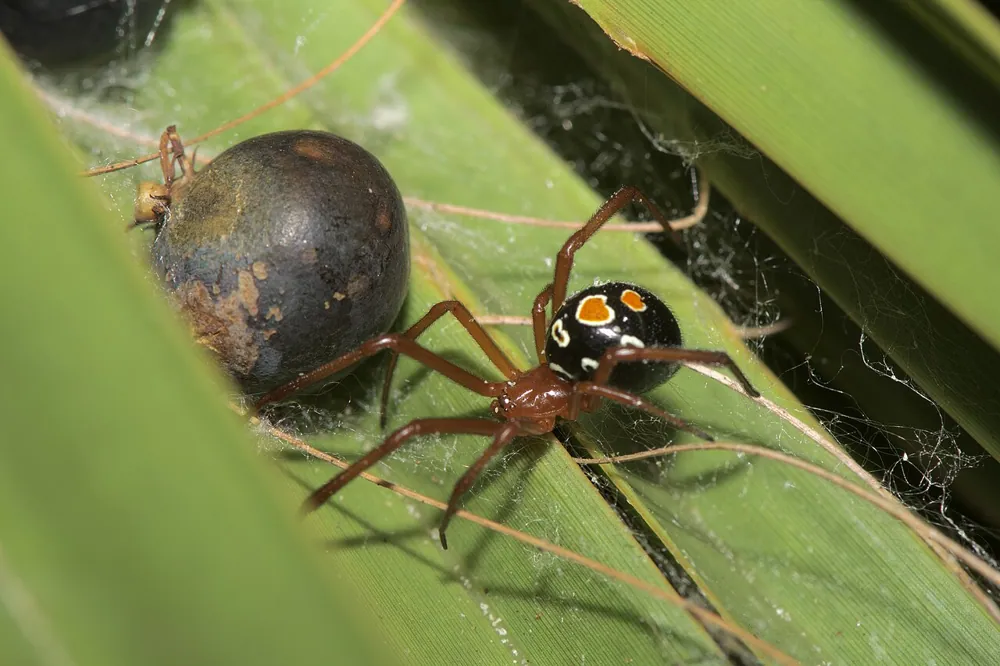
KaThe red widow is a venomous spider that lives only in Florida, in the dry, sandy scrub where sand pine trees grow. It is a close relative of the black widow, but it rarely comes into contact with people, so it is not often met. Its bright red colours make it easy to recognise.1
 Sɛdeɛ wobɛhunu no
- The cephalothorax (the front part of the body) is red-orange.1
- The abdomen is black, with yellow rings outlining rows of red spots.1
- The legs are vermilion red.1
- The underside does not have the familiar hourglass marking. It usually has one or two small red marks instead.1
- Females are almost double the size of males.1
Wɔtaa fa no sɛ: It is closely related to the black widow (Latrodectus mactans). The two can be told apart by features of the male and female genitalia, which are examined under magnification. The red widow's male embolus has one fewer loop, and the female's connecting ducts to the spermatheca also have one fewer loop.1
Bɔre ahoɔden
Bɔre fi ne se mu ba bere a ɔka.
Ne bɔre yɛ dɛn?
The red widow is venomous like other members of the genus Latrodectus. In a documented bite, the main effect was a mildly painful throbbing sensation that lasted several hours. The median lethal dose (LD50) of its venom in mice is 2.20 mg/kg, and each spider contains about 0.157 mg of venom.1
Ne asiane ma nnipa te sɛn?
Asiane ma nnipa: Ɛyɛ yawƐtumi yɛ yaw paa, nanso ɛkame ayɛ sɛ ɛnyɛ asiane kɛseɛ da.No bites from this spider are recorded in the medical literature. It seldom comes into contact with humans, unlike the black and brown widows, which live close to people. One documented bite caused a mildly painful throbbing that lasted several hours.1
 Sɛ ɛka a
- Hohoro baabi a ɛkaa no na fa ice pack hyɛ so ma yaw no. Hwehwɛ dɔkota mmoa sɛ yaw no mu yɛ den, ɛtrɛtrɛw anaa onipa no ho ntɔ no a.
Di kan frɛ wo ahohiahia nɔma (112, 000, 911). Yei yɛ mmoa a ɛdi kan ho akwankyerɛ, ɛnyɛ dɔkota afotuo. Mmoa a ɛdi kan ho nsɛm titiriw
 Hwɛ wo ho so
- Mfa wo nsa nka wiram aboa biara, nkyere no na mfa no nni agorɔ, sɛ ɔyɛ ketewa mpo, na sɛ ɛte sɛ ɔrededa anaa wawu mpo a.
- Ma no kwan. Sɛ wohyia baako a, ma wo bo nnwo, san w'akyi brɛoo na ma ɔnkɔ ne kwan.
- Sɛ baako ka wo a: ma wo bo nnwo, tena dinn, frɛ wo ahohiahia nɔma (112, 000, 911) anaa kɔ ayaresabea ntɛm. Kae sɛdeɛ na ɛte, mfonini bɛboa.
Ɛnhwehwɛ wo sɛ ɛbɛpira wo. Ɛde ne bɔre kyere aduane anaa ɛbɔ ne ho ban, na ɛpɛ sɛ ɛhinta sene biribiara. Nsɛm pii fa ahobammɔ ho
Wiase mu baabi bɛn?
Ne kɛseɛ te sɛn?
Ne tenten te sɛn?
 ne tenten bɛyɛ sɛ paper clip
Red widow kɛseɛ te sɛn sɛ wode toto WO ho a?
Akontabuo kɛkɛ wɔ wo browser mu. Wɔnkora hwee, na wɔmfa hwee nkɔ baabiara.
Ne ntɛm te sɛn?


Nsɛm
A bite was filmed and documented in 2023 by biologist Spencer Hoffman, one of the few recorded bites from this species.1
Females are almost double the size of males.1
Its predators are thought to include sphecid wasps and the Florida scrub jay.1
It lives in sand-pine scrub, a habitat found only in Florida and coastal Alabama.1
Atosɛm sɛefoɔ
Atosɛm: All widow spiders have the hourglass marking on the underside.
Nokorɛ: The red widow does not have the familiar hourglass marking. It usually has one or two small red marks instead.1
Baabi a nsɛm no fi
- Latrodectus bishopi (Wikipedia (CC BY-SA 4.0))
- Latrodectus bishopi (iNaturalist): din ne nkyekyɛmu.
- Venom Wiki: asiane gyinabea, kɛseɛ a ɛtaa yɛ ne ntɛm susuo no yɛ yɛn ankasa deɛ. Hwɛ sɛdeɛ yɛbu no: Sɛdeɛ yɛkyerɛ asiane gyinabea.
Nsɛm biara a ɛwɔ kratafa yi so wɔ nɔma a ɛkyerɛ ne fibea. Sɛ yɛfom biribi a, kafra, yɛyɛ mmoa ho akɔnnɔfoɔ, ɛnyɛ nyansahu nwoma. Ka kyerɛ yɛn wɔ [email protected] na yɛbɛsiesie.
 Ɔkɔm de akekantwerɛ no! Onipa baako na ɔyɛ Venom Wiki: ɛyɛ kwa, dawurubɔ nni so na biribiara nni so a ɛdi w'akyi. Akyɛdeɛ ketewa bi boa ma ɛkɔ so tena internet so.Ma akekantwere no aduane
 Brown recluse
 Southern black widow
 Northern black widow
 Western black widow
 Bold jumping spider
 Golden silk orb-weaver
 Terciopelo
 Eastern coral snake
 Eastern diamondback rattlesnake
 Eyelash viper
 Timber rattlesnake
 Western diamondback rattlesnake