
 Abibirem
 Asia
Asia Yuropu
 Amerika Anaafoɔ
 Australia ne Oceania
 Antarctica
 Pacific Po
 Atlantic Po
 India Po
 Arctic Po
 Mediterranean Po
 Po Kɔkɔɔ
 Caribbean Po
 Coral Po
 China Anaafoɔ Po
 Philippine Po
 Andaman Po
 Atifi Po
 Timor ne Arafura Po
 Bengal Ɛpo Ano
 California Ɛpo Ano
Western black widow
 Ka
KaThe western black widow is a venomous spider that lives in western North America. The female is black, often with a red hourglass mark on her belly, and her webs are tangled and irregular. Her venom is strong, so it is worth knowing what she looks like.1



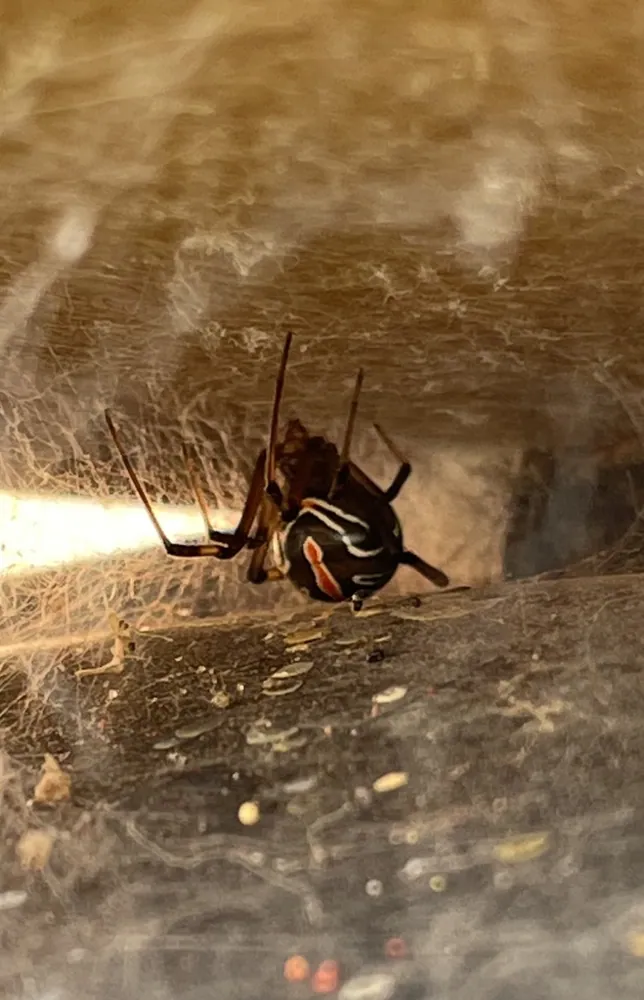
 Sɛdeɛ wobɛhunu no
- The female is about 14–16 mm long and black, often with an hourglass-shaped mark on the lower abdomen.1
- The hourglass mark is usually red, but it can be yellow and, very rarely, white.1
- The male is about half the female's length and is generally beige, with lighter striping on the abdomen.1
- Its webs are irregular or tangled, with no obvious overall pattern.1
Wɔtaa fa no sɛ: It was once described as a subspecies of Latrodectus mactans and is closely related to the northern species Latrodectus variolus.1
Bɔre ahoɔden
Bɔre fi ne se mu ba bere a ɔka.
Ne bɔre yɛ dɛn?
The female's venom contains a neurotoxin called α-latrotoxin, which attacks the nerves. In humans, its symptoms include pain, nausea, vomiting, goosebumps and localised sweating.1
Ne asiane ma nnipa te sɛn?
Asiane ma nnipa: Ɛyɛ denSɛ ɛka wo a, kɔ dɔkota nkyɛn. Ɛntaa nkum obi koraa.Historical reports gave fatality rates between 0.5% and 12%. However, recent studies have not been able to confirm any deaths from the U.S. species of Latrodectus, including zero deaths among 23,409 documented bites from 2000 through 2008.1
Ɛyɛ dɛn bere a ehu aka no?
Juveniles and females can fling a sticky ball of silk at predators, which can stop most of them.1
 Sɛ ɛka a
- Hohoro baabi a ɛkaa no na fa ice pack hyɛ so ma yaw no. Hwehwɛ dɔkota mmoa sɛ yaw no mu yɛ den, ɛtrɛtrɛw anaa onipa no ho ntɔ no a.
Di kan frɛ wo ahohiahia nɔma (112, 000, 911). Yei yɛ mmoa a ɛdi kan ho akwankyerɛ, ɛnyɛ dɔkota afotuo. Mmoa a ɛdi kan ho nsɛm titiriw
 Hwɛ wo ho so
- Mfa wo nsa nka wiram aboa biara, nkyere no na mfa no nni agorɔ, sɛ ɔyɛ ketewa mpo, na sɛ ɛte sɛ ɔrededa anaa wawu mpo a.
- Ma no kwan. Sɛ wohyia baako a, ma wo bo nnwo, san w'akyi brɛoo na ma ɔnkɔ ne kwan.
- Sɛ baako ka wo a: ma wo bo nnwo, tena dinn, frɛ wo ahohiahia nɔma (112, 000, 911) anaa kɔ ayaresabea ntɛm. Kae sɛdeɛ na ɛte, mfonini bɛboa.
Ɛnhwehwɛ wo sɛ ɛbɛpira wo. Ɛde ne bɔre kyere aduane anaa ɛbɔ ne ho ban, na ɛpɛ sɛ ɛhinta sene biribiara. Nsɛm pii fa ahobammɔ ho
Wiase mu baabi bɛn?
Ne kɛseɛ te sɛn?
Ne tenten te sɛn?
 ɛyɛ tiaa sen wo nsateaa ketewa
Western black widow kɛseɛ te sɛn sɛ wode toto WO ho a?
Akontabuo kɛkɛ wɔ wo browser mu. Wɔnkora hwee, na wɔmfa hwee nkɔ baabiara.
Ne ntɛm te sɛn?


Nsɛm
When prey hits a gumfoot thread, the thread breaks and creates tension that pulls the line and prey up to the spider.1
This spider is an opportunistic cannibal, and it may eat other members of its own kind when prey is scarce, when it is very hungry, or in self-defence.1
The silk is strongly sticky, and its strength is similar to that of silk from orb-weaving spiders.1
Males can be preferred by females based on the webs, with well-fed females chosen over starved ones.1
Males may mate several times during their relatively short lives.1
Atosɛm sɛefoɔ
Atosɛm: A black widow bite is usually deadly.
Nokorɛ: Recent studies have not confirmed any deaths from the U.S. species of Latrodectus, including zero deaths among 23,409 documented bites from 2000 through 2008.1
Baabi a nsɛm no fi
- Latrodectus hesperus (Wikipedia (CC BY-SA 4.0))
- Latrodectus hesperus (iNaturalist): din ne nkyekyɛmu.
- Venom Wiki: asiane gyinabea, kɛseɛ a ɛtaa yɛ ne ntɛm susuo no yɛ yɛn ankasa deɛ. Hwɛ sɛdeɛ yɛbu no: Sɛdeɛ yɛkyerɛ asiane gyinabea.
Nsɛm biara a ɛwɔ kratafa yi so wɔ nɔma a ɛkyerɛ ne fibea. Sɛ yɛfom biribi a, kafra, yɛyɛ mmoa ho akɔnnɔfoɔ, ɛnyɛ nyansahu nwoma. Ka kyerɛ yɛn wɔ [email protected] na yɛbɛsiesie.
 Ɔkɔm de akekantwerɛ no! Onipa baako na ɔyɛ Venom Wiki: ɛyɛ kwa, dawurubɔ nni so na biribiara nni so a ɛdi w'akyi. Akyɛdeɛ ketewa bi boa ma ɛkɔ so tena internet so.Ma akekantwere no aduane
 Brown recluse
 Southern black widow
 Northern black widow
 Bold jumping spider
 Golden silk orb-weaver
 Central American wandering spider
 Terciopelo
 Eastern coral snake
 Eastern diamondback rattlesnake
 Eyelash viper
 Timber rattlesnake
 Western diamondback rattlesnake