
 Abibirem
 Asia
Asia Yuropu
 Amerika Anaafoɔ
 Australia ne Oceania
 Antarctica
 Pacific Po
 Atlantic Po
 India Po
 Arctic Po
 Mediterranean Po
 Po Kɔkɔɔ
 Caribbean Po
 Coral Po
 China Anaafoɔ Po
 Philippine Po
 Andaman Po
 Atifi Po
 Timor ne Arafura Po
 Bengal Ɛpo Ano
 California Ɛpo Ano
Ringed caecilian
 Ka
KaThe ringed caecilian is a legless-looking amphibian that lives mostly underground in South America. It is one of the few amphibians known to feed its young with a milk-like liquid, which makes it a remarkable animal to learn about. It is also one of the caecilians with the widest known spread across the continent.1
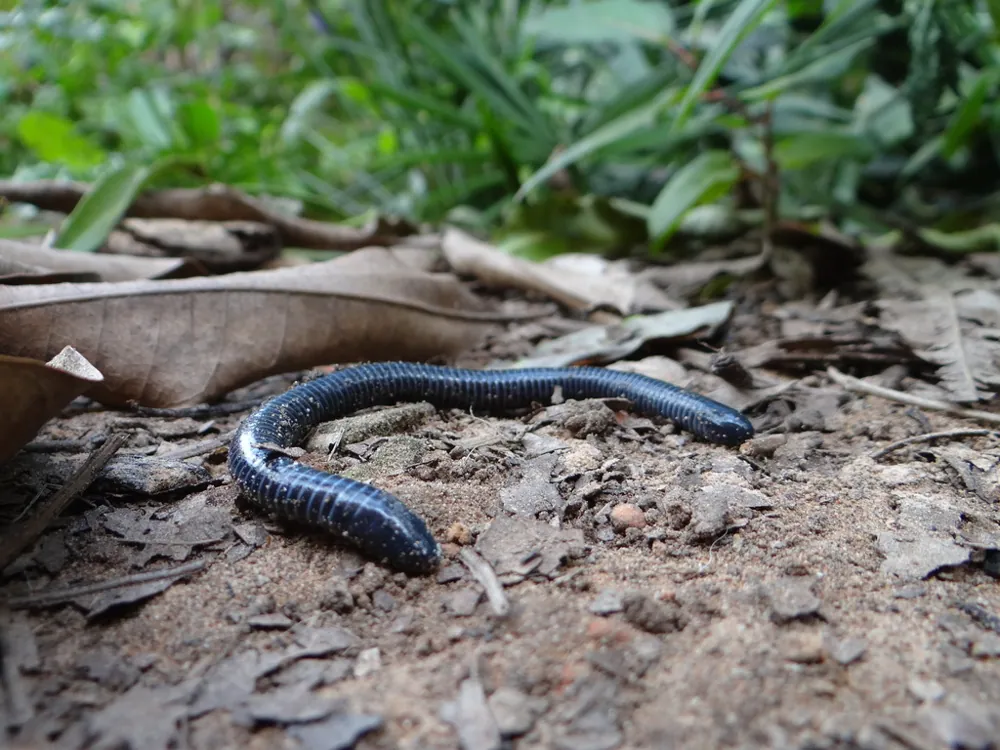
 Sɛdeɛ wobɛhunu no
Bɔre ahoɔden
Bɔre fi ne se mu ba bere a ɔka.
Ne bɔre yɛ dɛn?
This animal is not venomous. Glands in the tail region are packed with noxious chemicals, similar to the poison glands of toads and newts.1
Ne asiane ma nnipa te sɛn?
Asiane ma nnipa: Ɛnyɛ denƐte sɛ wowa wɔ anaa ɛnnu saa. Ɛkame ayɛ sɛ ɛnni asiane ma nnipa. Sɛ ɛka a
- Sɛ obi de ne nsa aka bi a: hohoro ne nsa yie na mfa nsa nka ani anaa ano. Sɛ abofra anaa fie aboa bi taforɔɔ bi anaa ɔdii bi a: frɛ awuduro ho mmoa adwumayɛbea (poison centre) anaa wo ahohiahia nɔma.
Di kan frɛ wo ahohiahia nɔma (112, 000, 911). Yei yɛ mmoa a ɛdi kan ho akwankyerɛ, ɛnyɛ dɔkota afotuo. Mmoa a ɛdi kan ho nsɛm titiriw
 Hwɛ wo ho so
- Mfa wo nsa nka wiram aboa biara, nkyere no na mfa no nni agorɔ, sɛ ɔyɛ ketewa mpo, na sɛ ɛte sɛ ɔrededa anaa wawu mpo a.
- Ma no kwan. Sɛ wohyia baako a, ma wo bo nnwo, san w'akyi brɛoo na ma ɔnkɔ ne kwan.
- Sɛ baako ka wo a: ma wo bo nnwo, tena dinn, frɛ wo ahohiahia nɔma (112, 000, 911) anaa kɔ ayaresabea ntɛm. Kae sɛdeɛ na ɛte, mfonini bɛboa.
Ɛnhwehwɛ wo sɛ ɛbɛpira wo. Ɛde ne bɔre kyere aduane anaa ɛbɔ ne ho ban, na ɛpɛ sɛ ɛhinta sene biribiara. Nsɛm pii fa ahobammɔ ho
Wiase mu baabi bɛn?
Ne kɛseɛ te sɛn?
Ne tenten te sɛn?
 ne tenten te sɛ kwadu 2,5 a wɔde to ntoatoasoɔ mu
 ne tenten te sɛ agodeɛ blɔk 14 a wɔde to ntoatoasoɔ mu
Ringed caecilian kɛseɛ te sɛn sɛ wode toto WO ho a?
Akontabuo kɛkɛ wɔ wo browser mu. Wɔnkora hwee, na wɔmfa hwee nkɔ baabiara.
Ne ntɛm te sɛn?


Nsɛm
Mothers and young share an unusual feeding habit: the young scrape off the mother's outer skin in one feeding session of about seven minutes, then the mother rests for three days while she grows a new skin layer.1
Hatchlings make high-pitched clicking sounds when they approach their mothers for milk, a behaviour unique among amphibians.1
Glands on its head produce a slippery mucus that may help it burrow.1
Ma bɔre ho animdefoɔ
- Nyansahu din
- Siphonops annulatus
- Kuo
- Apɔtorɔwa a wɔn ho yɛ awuduro, apɔtorɔ ne newt
- Abusua
- Siphonopidae2
- Nhyehyɛeɛ (Order)
- Gymnophiona
- Asaase akɛseɛ
- Amerika Anaafoɔ
- Mmofra nketewa
- Eggs are laid between November and December. The hatchlings feed on their mother's outer skin and on a milk-like liquid she produces.1
- Asiane ma nnipa
- 1 / 5: Ɛnyɛ den3
Baabi a nsɛm no fi
- Siphonops annulatus (Wikipedia (CC BY-SA 4.0))
- Siphonops annulatus (iNaturalist): din ne nkyekyɛmu.
- Venom Wiki: asiane gyinabea, kɛseɛ a ɛtaa yɛ ne ntɛm susuo no yɛ yɛn ankasa deɛ. Hwɛ sɛdeɛ yɛbu no: Sɛdeɛ yɛkyerɛ asiane gyinabea.
Nsɛm biara a ɛwɔ kratafa yi so wɔ nɔma a ɛkyerɛ ne fibea. Sɛ yɛfom biribi a, kafra, yɛyɛ mmoa ho akɔnnɔfoɔ, ɛnyɛ nyansahu nwoma. Ka kyerɛ yɛn wɔ [email protected] na yɛbɛsiesie.
 Ɔkɔm de akekantwerɛ no! Onipa baako na ɔyɛ Venom Wiki: ɛyɛ kwa, dawurubɔ nni so na biribiara nni so a ɛdi w'akyi. Akyɛdeɛ ketewa bi boa ma ɛkɔ so tena internet so.Ma akekantwere no aduane
Pii fi kuo korɔ no mu: Apɔtorɔwa a wɔn ho yɛ awuduro, apɔtorɔ ne newt
 Golden poison frogApɔtorɔwa a wɔn ho yɛ awuduro, apɔtorɔ ne newtƐkumMfa wo nsa nka
 Cane toadApɔtorɔwa a wɔn ho yɛ awuduro, apɔtorɔ ne newtƐhia dɔkotaMfa wo nsa nka
 Dyeing poison dart frogApɔtorɔwa a wɔn ho yɛ awuduro, apɔtorɔ ne newtƐyɛ yaw kɛkɛMfa wo nsa nka
 Black-legged poison frogApɔtorɔwa a wɔn ho yɛ awuduro, apɔtorɔ ne newtƐtumi kumMfa wo nsa nka
 Bruno's casque-headed frogApɔtorɔwa a wɔn ho yɛ awuduro, apɔtorɔ ne newtƐhia dɔkotaMfa wo nsa nka
 Harlequin poison frogApɔtorɔwa a wɔn ho yɛ awuduro, apɔtorɔ ne newtƐhia dɔkotaMfa wo nsa nka
 Terciopelo
 Brazilian wandering spider
 Eyelash viper
 Golden lancehead
 South American bushmaster
 Peruvian giant centipede