
 Abibirem
 Asia
Asia Yuropu
 Amerika Anaafoɔ
 Australia ne Oceania
 Antarctica
 Pacific Po
 Atlantic Po
 India Po
 Arctic Po
 Mediterranean Po
 Po Kɔkɔɔ
 Caribbean Po
 Coral Po
 China Anaafoɔ Po
 Philippine Po
 Andaman Po
 Atifi Po
 Timor ne Arafura Po
 Bengal Ɛpo Ano
 California Ɛpo Ano
Southern tree-dwelling funnel-web spider
 Ka
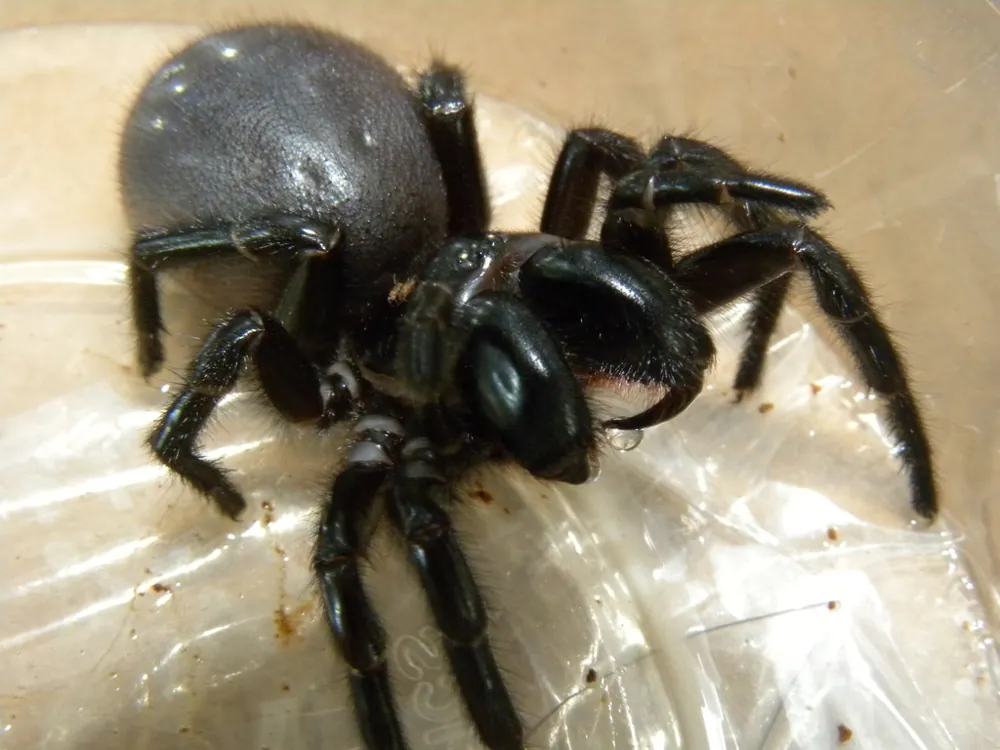
KaThis is a funnel-web spider that spends most of its life in trees. It lives in eastern Australia, and its venom is strong enough that its bites are treated as serious medical emergencies. It is one of only two Australian funnel-web species that mostly live in trees.1
 Sɛdeɛ wobɛhunu no
Bɔre ahoɔden
Bɔre fi ne se mu ba bere a ɔka.
Ne bɔre yɛ dɛn?
Its venom contains a peptide called Hc3a, a small protein molecule. It does not contain atraxotoxin or atraxin, which are found in the Sydney funnel-web, yet its symptoms are very similar. Symptoms can begin within 15 to 20 minutes and include heavy sweating, high blood pressure, a fast heart rate, nausea, vomiting and pain at the bite site. Fluid can build up in the lungs early on (pulmonary oedema).1
Ne asiane ma nnipa te sɛn?
Asiane ma nnipa: Asiane kɛseɛ womƐtumi kum onipa a wɔnhwɛ no yareɛ.Three out of four recorded bites caused severe symptoms. This is a higher proportion than the Sydney funnel-web spider.1
 Asɛmpa: dɔkotafoɔ wɔ aduro (antivenom) anaa ayaresa ma yei.1
 Sɛ ɛka a
- Applying pressure and a tourniquet can significantly delay the onset of symptoms and is a critical part of managing a bite from an Australian funnel-web spider. The venom can be successfully treated with antivenom made for the Sydney funnel-web spider.1
- Hohoro baabi a ɛkaa no na dwo. Hwehwɛ dɔkota mmoa sɛ yaw no mu yɛ den anaa onipa no ho ntɔ no a.
- Wɔ Australia, ananse tuntum kɛseɛ biara ka no, hwɛ no sɛ funnel-web ka: Pressure immobilisation: fa elastic bandage a ɛyɛ den kyekyere baabi a ɛkaa no so, na afei kyekyere kɔ soro wɔ nsa anaa nan no nyinaa so, fa splint kyekyere ho, na ma onipa no ntena dinn koraa kosi sɛ mmoa bɛba.
Di kan frɛ wo ahohiahia nɔma (112, 000, 911). Yei yɛ mmoa a ɛdi kan ho akwankyerɛ, ɛnyɛ dɔkota afotuo. Mmoa a ɛdi kan ho nsɛm titiriw
 Hwɛ wo ho so
- Mfa wo nsa nka wiram aboa biara, nkyere no na mfa no nni agorɔ, sɛ ɔyɛ ketewa mpo, na sɛ ɛte sɛ ɔrededa anaa wawu mpo a.
- Ma no kwan. Sɛ wohyia baako a, ma wo bo nnwo, san w'akyi brɛoo na ma ɔnkɔ ne kwan.
- Sɛ baako ka wo a: ma wo bo nnwo, tena dinn, frɛ wo ahohiahia nɔma (112, 000, 911) anaa kɔ ayaresabea ntɛm. Kae sɛdeɛ na ɛte, mfonini bɛboa.
Ɛnhwehwɛ wo sɛ ɛbɛpira wo. Ɛde ne bɔre kyere aduane anaa ɛbɔ ne ho ban, na ɛpɛ sɛ ɛhinta sene biribiara. Nsɛm pii fa ahobammɔ ho
Wiase mu baabi bɛn?
Ne kɛseɛ te sɛn?
Ne tenten te sɛn?
 ne tenten te sɛ agodeɛ blɔk 2 a wɔde to ntoatoasoɔ mu
 ɛbɛtumi atu mita 100 wɔ anibu 260 mu (onipa a ɔwɔ ntɛm sen biara hia 9.6)
Southern tree-dwelling funnel-web spider kɛseɛ te sɛn sɛ wode toto WO ho a?
Akontabuo kɛkɛ wɔ wo browser mu. Wɔnkora hwee, na wɔmfa hwee nkɔ baabiara.
Ne ntɛm te sɛn?


Nsɛm
Three out of four recorded bites from this spider caused severe symptoms, a higher share than the Sydney funnel-web spider.1
Symptoms can start within 15 to 20 minutes of a bite.1
Its venom does not contain atraxotoxin or atraxin, yet its symptoms are very similar to those of the Sydney funnel-web.1
It is one of only two Australian funnel-web species that live mainly in trees, the other being the northern tree-dwelling funnel-web (Hadronyche formidabilis).1
Genetic analysis shows that this spider has spread through parts of southeastern New South Wales quite recently and rapidly.1
The type specimen, a female collected in Sydney, was destroyed in World War II bombing, so a neotype was chosen in 2010 and is kept at the Australian Museum in Sydney.1
Baabi a nsɛm no fi
- Hadronyche cerberea (Wikipedia (CC BY-SA 4.0))
- Hadronyche cerberea (iNaturalist): din ne nkyekyɛmu.
- Venom Wiki: asiane gyinabea, kɛseɛ a ɛtaa yɛ ne ntɛm susuo no yɛ yɛn ankasa deɛ. Hwɛ sɛdeɛ yɛbu no: Sɛdeɛ yɛkyerɛ asiane gyinabea.
Nsɛm biara a ɛwɔ kratafa yi so wɔ nɔma a ɛkyerɛ ne fibea. Sɛ yɛfom biribi a, kafra, yɛyɛ mmoa ho akɔnnɔfoɔ, ɛnyɛ nyansahu nwoma. Ka kyerɛ yɛn wɔ [email protected] na yɛbɛsiesie.
 Ɔkɔm de akekantwerɛ no! Onipa baako na ɔyɛ Venom Wiki: ɛyɛ kwa, dawurubɔ nni so na biribiara nni so a ɛdi w'akyi. Akyɛdeɛ ketewa bi boa ma ɛkɔ so tena internet so.Ma akekantwere no aduane
Pii fi kuo korɔ no mu: Tarantula ne funnel-web
 Sydney funnel-web spiderTarantula ne funnel-webƐkum
 Northern tree-dwelling funnel-web spiderTarantula ne funnel-webƐkum
 Red-headed mouse spiderTarantula ne funnel-webƐhia dɔkota
 Queensland whistling tarantulaTarantula ne funnel-webƐyɛ yaw kɛkɛ
 Blue Mountains funnel-web spiderTarantula ne funnel-webƐtumi kum
 Darling Downs funnel-web spiderTarantula ne funnel-webƐtumi kum
 Coastal taipan
 Common death adder
 Eastern brown snake
 Taipan a ɔwɔ Australia mfinimfini
 Ɔwɔ a ɔte sɛ ɔsebɔ (Tiger snake)
 Redback spider