
 Abibirem
 Asia
Asia Yuropu
 Amerika Anaafoɔ
 Australia ne Oceania
 Antarctica
 Pacific Po
 Atlantic Po
 India Po
 Arctic Po
 Mediterranean Po
 Po Kɔkɔɔ
 Caribbean Po
 Coral Po
 China Anaafoɔ Po
 Philippine Po
 Andaman Po
 Atifi Po
 Timor ne Arafura Po
 Bengal Ɛpo Ano
 California Ɛpo Ano
Spiny dogfish
 Nsɔe a bɔre wom
The spiny dogfish is a small, well-known shark with a sharp spine in front of each of its two back fins. It lives in shallow and offshore waters in most parts of the world, especially cooler seas, and it is hunted heavily for food. Its spines are its main form of defence.1



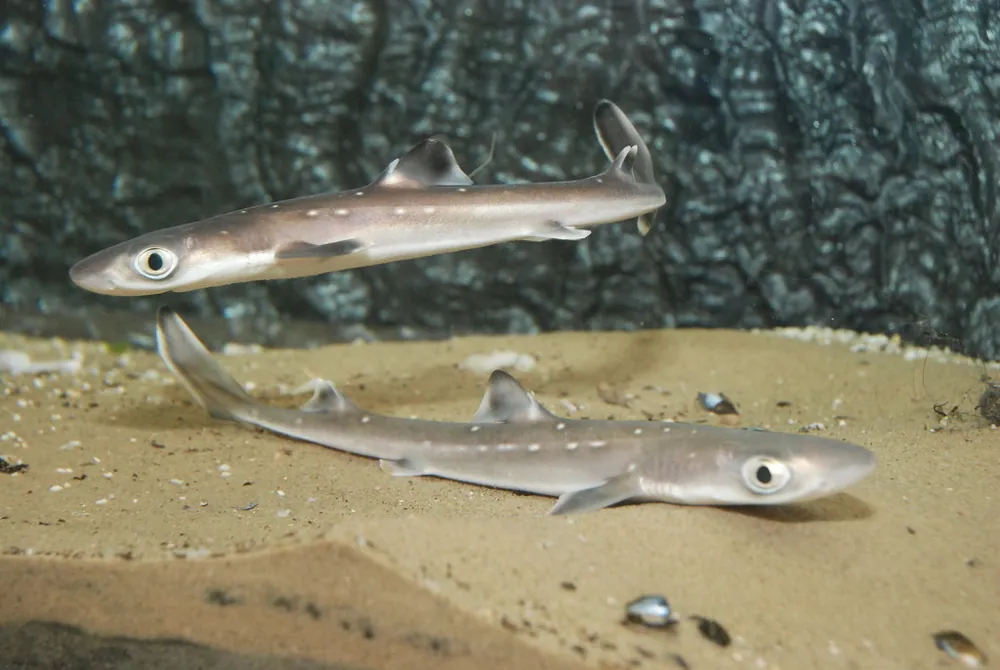
 Sɛdeɛ wobɛhunu no
- Two spines, one in front of each dorsal (back) fin.1
- No anal fin on the underside.1
- White spots along its back.1
- Greyish brown on both sexes, with countershading (darker on top, paler underneath).1
- Asymmetrical tail lobes, forming a heterocercal tail (the upper lobe is larger).1
Wɔtaa fa no sɛ: Several shark species share the names dogfish, spurdog and piked dogfish. Spiny dogfish are told apart by having two spines, one in front of each dorsal fin, and no anal fin.1
Bɔre ahoɔden
Nsɔe a ano yɛ nnam na ɛkura bɔre no. Sɛ wotiatia so anaa wosɔ mu a, ɛyɛ yaw.
Ne bɔre yɛ dɛn?
Its dorsal spines secrete a mild venom. The spines are driven into an attacker when the shark arches its back.1
Ne asiane ma nnipa te sɛn?
Asiane ma nnipa: Ɛyɛ yawƐtumi yɛ yaw paa, nanso ɛkame ayɛ sɛ ɛnyɛ asiane kɛseɛ da.Ɛyɛ dɛn bere a ehu aka no?
If it is caught, it arches its back to pierce its captor with the spines near its dorsal fins.1
 Sɛ ne nsɔe hyɛ wo mu a
- Fa kuro no hyɛ nsuo hyew mu, ɛnyɛ hyew sene deɛ onipa no betumi agyina a ɛnhye no (fa wo ankasa wo nsa sɔ hwɛ), simma 30 kɔsi 90. Hwehwɛ dɔkota mmoa, titiriw ma stonefish ne stingray.
Di kan frɛ wo ahohiahia nɔma (112, 000, 911). Yei yɛ mmoa a ɛdi kan ho akwankyerɛ, ɛnyɛ dɔkota afotuo. Mmoa a ɛdi kan ho nsɛm titiriw
 Hwɛ wo ho so
- Mfa wo nsa nka wiram aboa biara, nkyere no na mfa no nni agorɔ, sɛ ɔyɛ ketewa mpo, na sɛ ɛte sɛ ɔrededa anaa wawu mpo a.
- Ma no kwan. Sɛ wohyia baako a, ma wo bo nnwo, san w'akyi brɛoo na ma ɔnkɔ ne kwan.
- Sɛ ne nsɔe hyɛ wo mu a: ma wo bo nnwo, tena dinn, frɛ wo ahohiahia nɔma (112, 000, 911) anaa kɔ ayaresabea ntɛm. Kae sɛdeɛ na ɛte, mfonini bɛboa.
Ɛnhwehwɛ wo sɛ ɛbɛpira wo. Ɛde ne bɔre kyere aduane anaa ɛbɔ ne ho ban, na ɛpɛ sɛ ɛhinta sene biribiara. Nsɛm pii fa ahobammɔ ho
Wiase mu baabi bɛn?
Ne kɛseɛ te sɛn?
Ne tenten te sɛn?
 ne tenten te sɛ fie agyinamoa 1,5 a wɔde hwene ne dua to ntoatoasoɔ mu
 ne tenten te sɛ kwadu 5 a wɔde to ntoatoasoɔ mu
 ɛbɛtumi aguare aguare tare kɛseɛ tenten (50 m) wɔ anibu 9 mu
Spiny dogfish kɛseɛ te sɛn sɛ wode toto WO ho a?
Akontabuo kɛkɛ wɔ wo browser mu. Wɔnkora hwee, na wɔmfa hwee nkɔ baabiara.
Ne ntɛm te sɛn?

Nsɛm
Dogfish sharks have one of the longest pregnancies of any organism, lasting around 18 to 24 months.1
Spiny dogfish hunt in packs that can range up into the thousands.1
In England, dogfish are sold in fish and chip shops as 'huss', and used to be sold as 'rock salmon' until that term was outlawed.1
Spiny dogfish are popular dissection specimens in high schools and universities because they are easy to get and have small, cartilaginous skulls.1
Squalus acanthias fossils from the Miocene of Denmark and the Netherlands date from about 11 million years ago.1
Males are identified by a pair of modified pelvic fins called claspers, which they use to transfer sperm to the female.1
Atosɛm sɛefoɔ
Atosɛm: All animals called dogfish or spurdog are the same species.
Nokorɛ: These common names can apply to several species. Spiny dogfish are identified by their two spines, one in front of each dorsal fin, and by having no anal fin.1
Ma bɔre ho animdefoɔ
- Nyansahu din
- Squalus acanthias
- Kuo
- Apataa a wɔwɔ bɔre
- Abusua
- Squalidae2
- Nhyehyɛeɛ (Order)
- Squaliformes
- Asaase akɛseɛ
- Atlantic Po, Pacific Po, India Po, Mediterranean Po, Anaafoɔ Po, Arctic Po, Antarctica, Atifi Po, Po akɛseɛ
- Mmofra nketewa
- The eggs develop inside the mother and the pups are born alive, with about 5 to 6 in each litter; gestation can last from around 18 to 24 months, one of the longest of any organism.1
- Sɛdeɛ ɔte wɔ kwaem
- Vulnerable globally; Critically endangered in the Northeast Atlantic1
- Asiane ma nnipa
- 2 / 5: Ɛyɛ yaw3
Baabi a nsɛm no fi
- Spiny dogfish (Wikipedia (CC BY-SA 4.0))
- Squalus acanthias (iNaturalist): din ne nkyekyɛmu.
- Venom Wiki: asiane gyinabea, kɛseɛ a ɛtaa yɛ ne ntɛm susuo no yɛ yɛn ankasa deɛ. Hwɛ sɛdeɛ yɛbu no: Sɛdeɛ yɛkyerɛ asiane gyinabea.
Nsɛm biara a ɛwɔ kratafa yi so wɔ nɔma a ɛkyerɛ ne fibea. Sɛ yɛfom biribi a, kafra, yɛyɛ mmoa ho akɔnnɔfoɔ, ɛnyɛ nyansahu nwoma. Ka kyerɛ yɛn wɔ [email protected] na yɛbɛsiesie.
 Ɔkɔm de akekantwerɛ no! Onipa baako na ɔyɛ Venom Wiki: ɛyɛ kwa, dawurubɔ nni so na biribiara nni so a ɛdi w'akyi. Akyɛdeɛ ketewa bi boa ma ɛkɔ so tena internet so.Ma akekantwere no aduane
Pii fi kuo korɔ no mu: Apataa a wɔwɔ bɔre
 Reef stonefishApataa a wɔwɔ bɔreƐtumi kumMfa wo nsa nka
 Red lionfishApataa a wɔwɔ bɔreƐhia dɔkotaMfa wo nsa nka
 Estuarine stonefishApataa a wɔwɔ bɔreƐtumi kumMfa wo nsa nka
 Short-tail stingrayApataa a wɔwɔ bɔreƐtumi kum
 Striped eel catfishApataa a wɔwɔ bɔreƐtumi kumMfa wo nsa nka
 Bluespotted ribbontail rayApataa a wɔwɔ bɔreƐhia dɔkota
Ɔte nso wɔ: Atlantic Po
 Hawksbill sea turtleMmoa afoforɔ a wɔn ho yɛ awuduroƐtumi kum
 Portuguese man o' warJellyfish ne ɛpo mu mmoa a wɔwɔƐhia dɔkotaMfa wo nsa nka
 Blue sea dragonCone snails ne octopusƐyɛ yaw kɛkɛ
 Greenland sharkMmoa afoforɔ a wɔn ho yɛ awuduroƐyɛ yaw kɛkɛ
 Lion's mane jellyfishJellyfish ne ɛpo mu mmoa a wɔwɔƐyɛ yaw kɛkɛMfa wo nsa nka
 Common octopusCone snails ne octopusƐnni asiane