
 Abibirem
 Asia
Asia Yuropu
 Amerika Anaafoɔ
 Australia ne Oceania
 Antarctica
 Pacific Po
 Atlantic Po
 India Po
 Arctic Po
 Mediterranean Po
 Po Kɔkɔɔ
 Caribbean Po
 Coral Po
 China Anaafoɔ Po
 Philippine Po
 Andaman Po
 Atifi Po
 Timor ne Arafura Po
 Bengal Ɛpo Ano
 California Ɛpo Ano
Spotted eagle ray
 Ɛwɔ
ƐwɔThe spotted eagle ray is a flat, disc-shaped fish with dark blue or black skin covered in white spots and a snout shaped like a duck's bill. It lives in warm coastal waters, often near coral reefs and bays. It is known for leaping out of the water, sometimes onto boats.1



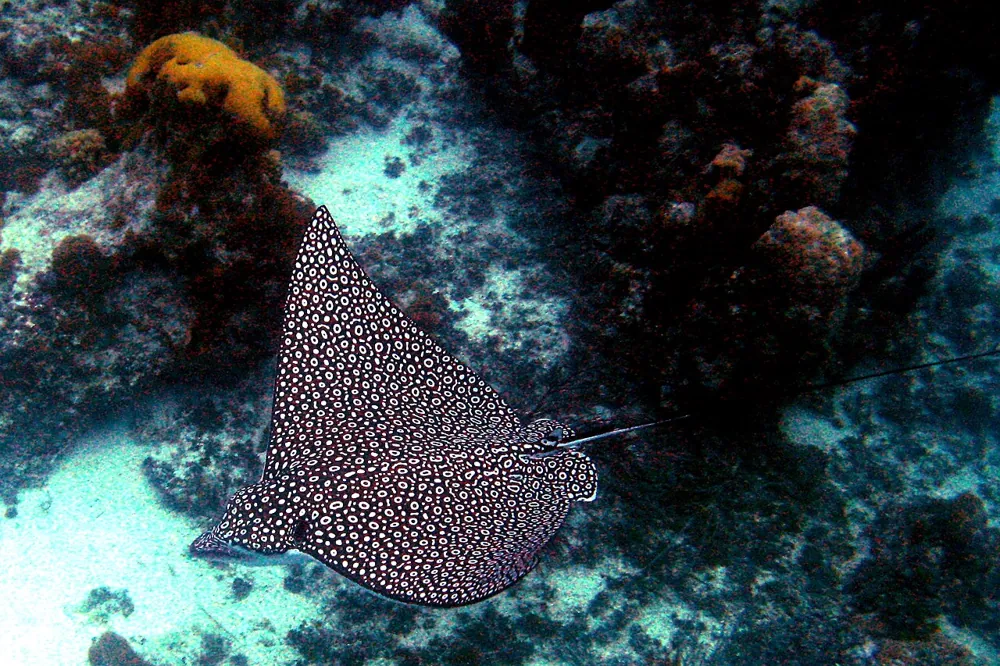
 Sɛdeɛ wobɛhunu no
Bɔre ahoɔden
Bɔre fi ne dua ano nsɔe (stinger) mu ba.
Ne asiane ma nnipa te sɛn?
Asiane ma nnipa: Ɛyɛ yawƐtumi yɛ yaw paa, nanso ɛkame ayɛ sɛ ɛnyɛ asiane kɛseɛ da.Spotted eagle rays are shy and generally avoid human contact, so they do not pose a significant threat to people. There have been several reports of them leaping onto boats and landing on people. In one incident in the Florida Keys, a woman died.1
Ɛyɛ dɛn bere a ehu aka no?
When threatened, it can leap out of the water, and it avoids human contact.1
 Sɛ ɛwɔ a
- Fa kuro no hyɛ nsuo hyew mu, ɛnyɛ hyew sene deɛ onipa no betumi agyina a ɛnhye no (fa wo ankasa wo nsa sɔ hwɛ), simma 30 kɔsi 90. Hwehwɛ dɔkota mmoa, titiriw ma stonefish ne stingray.
Di kan frɛ wo ahohiahia nɔma (112, 000, 911). Yei yɛ mmoa a ɛdi kan ho akwankyerɛ, ɛnyɛ dɔkota afotuo. Mmoa a ɛdi kan ho nsɛm titiriw
 Hwɛ wo ho so
- Mfa wo nsa nka wiram aboa biara, nkyere no na mfa no nni agorɔ, sɛ ɔyɛ ketewa mpo, na sɛ ɛte sɛ ɔrededa anaa wawu mpo a.
- Ma no kwan. Sɛ wohyia baako a, ma wo bo nnwo, san w'akyi brɛoo na ma ɔnkɔ ne kwan.
- Sɛ baako wɔ wo a: ma wo bo nnwo, tena dinn, frɛ wo ahohiahia nɔma (112, 000, 911) anaa kɔ ayaresabea ntɛm. Kae sɛdeɛ na ɛte, mfonini bɛboa.
Ɛnhwehwɛ wo sɛ ɛbɛpira wo. Ɛde ne bɔre kyere aduane anaa ɛbɔ ne ho ban, na ɛpɛ sɛ ɛhinta sene biribiara. Nsɛm pii fa ahobammɔ ho
Wiase mu baabi bɛn?
Ne kɛseɛ te sɛn?
Ne tenten te sɛn?
Ne mu duru te sɛn?
 ne tenten te sɛ nkraman 5 a wɔde hwene ne dua to ntoatoasoɔ mu
 ne tenten te sɛ kwadu 28 a wɔde to ntoatoasoɔ mu
 ɛbɛtumi aguare aguare tare kɛseɛ tenten (50 m) wɔ anibu 6 mu
Spotted eagle ray kɛseɛ te sɛn sɛ wode toto WO ho a?
Akontabuo kɛkɛ wɔ wo browser mu. Wɔnkora hwee, na wɔmfa hwee nkɔ baabiara.
Ne ntɛm te sɛn?


Nsɛm
The largest spotted eagle rays have a wingspan of up to 3 metres and can weigh 230 kilograms.1
When digging for food, a cloud of sand surrounds the ray and sand is blown out through its gills.1
Sharks such as the tiger shark, bull shark and great hammerhead hunt spotted eagle rays. Sharks have also been seen following females during birth to eat the newborn pups.1
Spotted eagle rays are most often seen alone, but they sometimes swim in groups of 6 or more.1
The Great Barrier Reef protects this ray, and in Florida it is illegal to fish for, land, buy or trade it.1
Newborn pups have discs measuring 17 to 35 centimetres across, and they mature in 4 to 6 years.1
Atosɛm sɛefoɔ
Atosɛm: Spotted eagle rays are a major danger to people.
Nokorɛ: They are shy and generally avoid human contact, so they do not pose a significant threat to humans. Leaping onto boats is rare but has caused harm.1
Ma bɔre ho animdefoɔ
- Nyansahu din
- Aetobatus narinari
- Kuo
- Apataa a wɔwɔ bɔre
- Abusua
- Aetobatidae2
- Nhyehyɛeɛ (Order)
- Myliobatiformes
- Asaase akɛseɛ
- Atlantic Po, Pacific Po, India Po, Caribbean Po, Mexico Ɛpo Ano, Po Kɔkɔɔ, Timor ne Arafura Po, Bengal Ɛpo Ano, California Ɛpo Ano, Po akɛseɛ
- Mmofra nketewa
- They give birth to live young. The eggs hatch inside the mother after a gestation period of one year, and she gives birth to a maximum of four pups.1
- Sɛdeɛ ɔte wɔ kwaem
- Near Threatened1
- Asiane ma nnipa
- 2 / 5: Ɛyɛ yaw3
Baabi a nsɛm no fi
- Spotted eagle ray (Wikipedia (CC BY-SA 4.0))
- Aetobatus narinari (iNaturalist): din ne nkyekyɛmu.
- Venom Wiki: asiane gyinabea, kɛseɛ a ɛtaa yɛ ne ntɛm susuo no yɛ yɛn ankasa deɛ. Hwɛ sɛdeɛ yɛbu no: Sɛdeɛ yɛkyerɛ asiane gyinabea.
Nsɛm biara a ɛwɔ kratafa yi so wɔ nɔma a ɛkyerɛ ne fibea. Sɛ yɛfom biribi a, kafra, yɛyɛ mmoa ho akɔnnɔfoɔ, ɛnyɛ nyansahu nwoma. Ka kyerɛ yɛn wɔ [email protected] na yɛbɛsiesie.
 Ɔkɔm de akekantwerɛ no! Onipa baako na ɔyɛ Venom Wiki: ɛyɛ kwa, dawurubɔ nni so na biribiara nni so a ɛdi w'akyi. Akyɛdeɛ ketewa bi boa ma ɛkɔ so tena internet so.Ma akekantwere no aduane
Pii fi kuo korɔ no mu: Apataa a wɔwɔ bɔre
 Reef stonefishApataa a wɔwɔ bɔreƐtumi kumMfa wo nsa nka
 Red lionfishApataa a wɔwɔ bɔreƐhia dɔkotaMfa wo nsa nka
 Estuarine stonefishApataa a wɔwɔ bɔreƐtumi kumMfa wo nsa nka
 Short-tail stingrayApataa a wɔwɔ bɔreƐtumi kum
 Striped eel catfishApataa a wɔwɔ bɔreƐtumi kumMfa wo nsa nka
 Bluespotted ribbontail rayApataa a wɔwɔ bɔreƐhia dɔkota
Ɔte nso wɔ: Atlantic Po
 Hawksbill sea turtleMmoa afoforɔ a wɔn ho yɛ awuduroƐtumi kum
 Portuguese man o' warJellyfish ne ɛpo mu mmoa a wɔwɔƐhia dɔkotaMfa wo nsa nka
 Blue sea dragonCone snails ne octopusƐyɛ yaw kɛkɛ
 Greenland sharkMmoa afoforɔ a wɔn ho yɛ awuduroƐyɛ yaw kɛkɛ
 Lion's mane jellyfishJellyfish ne ɛpo mu mmoa a wɔwɔƐyɛ yaw kɛkɛMfa wo nsa nka
 Common octopusCone snails ne octopusƐnni asiane