
 Abibirem
 Asia
Asia Yuropu
 Amerika Anaafoɔ
 Australia ne Oceania
 Antarctica
 Pacific Po
 Atlantic Po
 India Po
 Arctic Po
 Mediterranean Po
 Po Kɔkɔɔ
 Caribbean Po
 Coral Po
 China Anaafoɔ Po
 Philippine Po
 Andaman Po
 Atifi Po
 Timor ne Arafura Po
 Bengal Ɛpo Ano
 California Ɛpo Ano
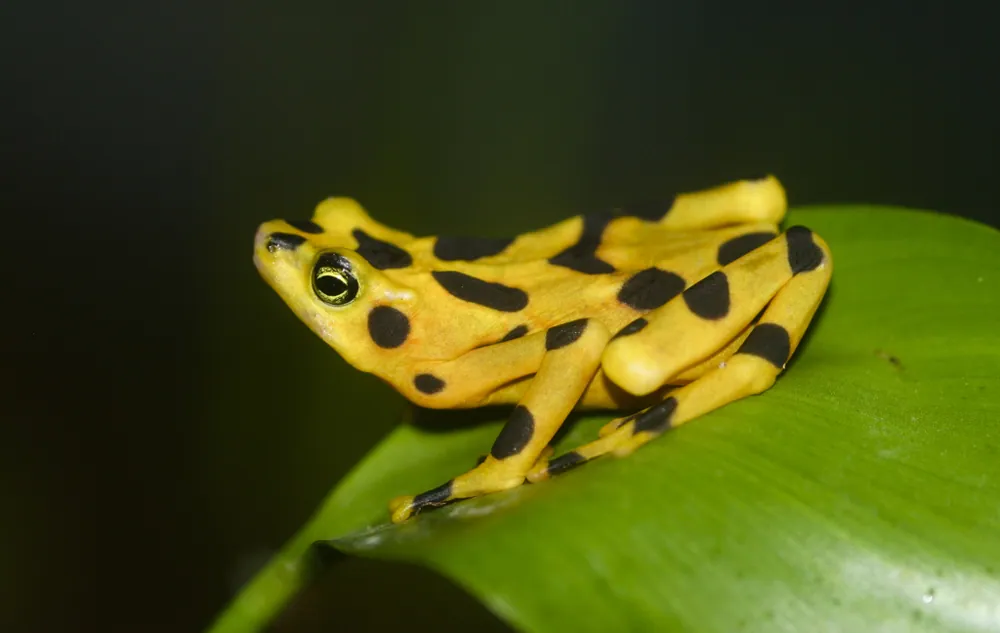
Variable harlequin toad
 Awuduro wɔ ne honam muƆdi: MmoawaNe ho yɛ awuduro, onni bɔre
The variable harlequin toad is a small, brightly coloured toad from the forests of Central America. It lives on rocks and in crevices beside streams. It is critically endangered, which means it is at very high risk of disappearing from the wild.1
 Sɛdeɛ wobɛhunu no
Awuduro ahoɔden
Ne honam yɛ awuduro. Ɛyɛ asiane sɛ wode wo nsa bɛka, wobɛtaforɔ anaa wobɛdi.
Ne ho awuduro yɛ dɛn?
This animal is poisonous rather than venomous, so it does not bite or sting. Its skin contains tetrodotoxin, a potent neurotoxin (a poison that attacks the nerves).1
Ne asiane ma nnipa te sɛn?
Asiane ma nnipa: Ɛyɛ yawƐtumi yɛ yaw paa, nanso ɛkame ayɛ sɛ ɛnyɛ asiane kɛseɛ da.Ɛyɛ dɛn bere a ehu aka no?
Its bright, conspicuous colours warn predators that its skin is toxic.1
 Sɛ obi de ne nsa ka anaa ɔdi a
- Sɛ obi de ne nsa aka bi a: hohoro ne nsa yie na mfa nsa nka ani anaa ano. Sɛ abofra anaa fie aboa bi taforɔɔ bi anaa ɔdii bi a: frɛ awuduro ho mmoa adwumayɛbea (poison centre) anaa wo ahohiahia nɔma.
Di kan frɛ wo ahohiahia nɔma (112, 000, 911). Yei yɛ mmoa a ɛdi kan ho akwankyerɛ, ɛnyɛ dɔkota afotuo. Mmoa a ɛdi kan ho nsɛm titiriw
 Hwɛ wo ho so
- Mfa wo nsa nka wiram aboa biara, nkyere no na mfa no nni agorɔ, sɛ ɔyɛ ketewa mpo, na sɛ ɛte sɛ ɔrededa anaa wawu mpo a.
- Ma no kwan. Sɛ wohyia baako a, ma wo bo nnwo, san w'akyi brɛoo na ma ɔnkɔ ne kwan.
- Sɛ wode wo nsa kaa no anaa wodii a: mfa wo nsa ntwitwi w'ani anaa w'ano, hohoro wo nsa na hwehwɛ dɔkota mmoa.
Ɛnhwehwɛ wo sɛ ɛbɛpira wo. Ne ho awuduro no wɔ hɔ sɛdeɛ ɛbɛyɛ a biribiara renni no. Nsɛm pii fa ahobammɔ ho
Wiase mu baabi bɛn?
Ne kɛseɛ te sɛn?
Ne tenten te sɛn?
 ne tenten bɛyɛ sɛ paper clip
 ɛbɛtumi atu mita 100 wɔ anibu 180 mu (onipa a ɔwɔ ntɛm sen biara hia 9.6)
Variable harlequin toad kɛseɛ te sɛn sɛ wode toto WO ho a?
Akontabuo kɛkɛ wɔ wo browser mu. Wɔnkora hwee, na wɔmfa hwee nkɔ baabiara.
Ne ntɛm te sɛn?


Nsɛm
Its only known predator is a parasitic fly, Notochaeta bufonivora. The fly lays larvae on the frog's thigh, and the larvae burrow inside and eat the frog from within.1
A census between 1990 and 1992 near Monteverde, Costa Rica, found zero individuals where the population had once peaked at 751 adults.1
By 1996 it was believed to be extinct throughout Costa Rica, but a 2019 assessment found two subpopulations in the country.1
It was rediscovered near Quepos, Costa Rica, in 2003.1
The chytrid fungus Batrachochytrium dendrobatidis can spread between individuals through shed skin cells and harms the skin, which affects breathing and the balance of water and salts in the body.1
In March 2021 the species was bred in captivity outside Panama for the first time.1
Baabi a nsɛm no fi
- Atelopus varius (Wikipedia (CC BY-SA 4.0))
- Atelopus varius (iNaturalist): din ne nkyekyɛmu.
- Venom Wiki: asiane gyinabea, kɛseɛ a ɛtaa yɛ ne ntɛm susuo no yɛ yɛn ankasa deɛ. Hwɛ sɛdeɛ yɛbu no: Sɛdeɛ yɛkyerɛ asiane gyinabea.
Nsɛm biara a ɛwɔ kratafa yi so wɔ nɔma a ɛkyerɛ ne fibea. Sɛ yɛfom biribi a, kafra, yɛyɛ mmoa ho akɔnnɔfoɔ, ɛnyɛ nyansahu nwoma. Ka kyerɛ yɛn wɔ [email protected] na yɛbɛsiesie.
 Ɔkɔm de akekantwerɛ no! Onipa baako na ɔyɛ Venom Wiki: ɛyɛ kwa, dawurubɔ nni so na biribiara nni so a ɛdi w'akyi. Akyɛdeɛ ketewa bi boa ma ɛkɔ so tena internet so.Ma akekantwere no aduane
Pii fi kuo korɔ no mu: Apɔtorɔwa a wɔn ho yɛ awuduro, apɔtorɔ ne newt
 Cane toadApɔtorɔwa a wɔn ho yɛ awuduro, apɔtorɔ ne newtƐhia dɔkotaMfa wo nsa nka
 Strawberry poison-dart frogApɔtorɔwa a wɔn ho yɛ awuduro, apɔtorɔ ne newtƐyɛ yaw kɛkɛMfa wo nsa nka
 California newtApɔtorɔwa a wɔn ho yɛ awuduro, apɔtorɔ ne newtƐtumi kumMfa wo nsa nka
 Rough-skinned newtApɔtorɔwa a wɔn ho yɛ awuduro, apɔtorɔ ne newtƐtumi kumMfa wo nsa nka
 Colorado River toadApɔtorɔwa a wɔn ho yɛ awuduro, apɔtorɔ ne newtƐhia dɔkotaMfa wo nsa nka
 Panamanian golden frogApɔtorɔwa a wɔn ho yɛ awuduro, apɔtorɔ ne newtƐhia dɔkotaMfa wo nsa nka
 Terciopelo
 Eastern coral snake
 Eastern diamondback rattlesnake
 Eyelash viper
 Timber rattlesnake
 Western diamondback rattlesnake