
 Abibirem
 Asia
Asia Yuropu
 Amerika Anaafoɔ
 Australia ne Oceania
 Antarctica
 Pacific Po
 Atlantic Po
 India Po
 Arctic Po
 Mediterranean Po
 Po Kɔkɔɔ
 Caribbean Po
 Coral Po
 China Anaafoɔ Po
 Philippine Po
 Andaman Po
 Atifi Po
 Timor ne Arafura Po
 Bengal Ɛpo Ano
 California Ɛpo Ano
Western massasauga
 Ka
KaThe western massasauga is a small, venomous rattlesnake. It lives on the grassy plains and deserts of the southwestern United States and northern Mexico. Its rattle is higher pitched than those of bigger rattlesnakes, so it can be easy to miss as a warning.1



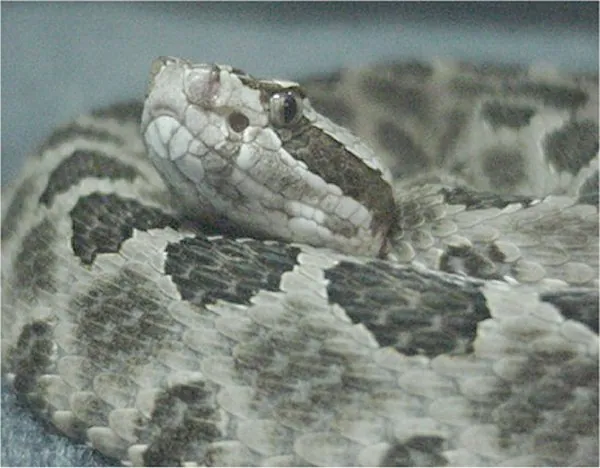
 Sɛdeɛ wobɛhunu no
- Dark brown blotches stand out strongly against a tan-grey or light grey background.1
- The belly is light, with a few dark markings.1
- Adults range from 35 to 91 cm in total length, tail included.1
- It has a rattle, but it is higher pitched than the rattles of larger rattlesnakes.1
Wɔtaa fa no sɛ: Its colour pattern is similar to that of the eastern massasauga, but paler. The dark brown blotches contrast more strongly with its light ground colour.1
Bɔre ahoɔden
Bɔre fi ne se mu ba bere a ɔka.
Ne bɔre yɛ dɛn?
Its venom is a powerful hemotoxin, which damages blood and tissue. It can cause swelling, necrosis (death of body tissue) and severe pain. Its yield is low, so each bite delivers less venom than a larger rattlesnake's bite would.1
Ne asiane ma nnipa te sɛn?
Asiane ma nnipa: Ɛyɛ denSɛ ɛka wo a, kɔ dɔkota nkyɛn. Ɛntaa nkum obi koraa.Its bite is less severe than that of larger rattlesnakes because it delivers less venom. Even so, the bite can be fatal if it is not treated.1
 Asɛmpa: dɔkotafoɔ wɔ aduro (antivenom) anaa ayaresa ma yei.1
Ɛyɛ dɛn bere a ehu aka no?
Its rattle is not a reliable warning, because its high pitch is easy to miss.1
 Sɛ ɛka a
- Treatment should be sought immediately for any venomous snake bite. The antivenin CroFab is not specific to this snake, but it can be used to treat severe envenomation from massasaugas.1
- Ma onipa no ntena dinn na ne bo nnwo, ma nsa anaa nan a ɛkaa no no nna pɛpɛɛpɛ ne ne koma (ɛnkɔ soro, ɛnsiane fam), yi kawa ne nneɛma a ɛkyere no den, na kɔ ayaresabea ntɛm.
Di kan frɛ wo ahohiahia nɔma (112, 000, 911). Yei yɛ mmoa a ɛdi kan ho akwankyerɛ, ɛnyɛ dɔkota afotuo. Mmoa a ɛdi kan ho nsɛm titiriw
 Hwɛ wo ho so
- Mfa wo nsa nka wiram aboa biara, nkyere no na mfa no nni agorɔ, sɛ ɔyɛ ketewa mpo, na sɛ ɛte sɛ ɔrededa anaa wawu mpo a.
- Ma no kwan. Sɛ wohyia baako a, ma wo bo nnwo, san w'akyi brɛoo na ma ɔnkɔ ne kwan.
- Sɛ baako ka wo a: ma wo bo nnwo, tena dinn, frɛ wo ahohiahia nɔma (112, 000, 911) anaa kɔ ayaresabea ntɛm. Kae sɛdeɛ na ɛte, mfonini bɛboa.
Ɛnhwehwɛ wo sɛ ɛbɛpira wo. Ɛde ne bɔre kyere aduane anaa ɛbɔ ne ho ban, na ɛpɛ sɛ ɛhinta sene biribiara. Nsɛm pii fa ahobammɔ ho
Wiase mu baabi bɛn?
Ne kɛseɛ te sɛn?
Ne tenten te sɛn?
 ne tenten te sɛ fie agyinamoa 2 a wɔde hwene ne dua to ntoatoasoɔ mu
 ne tenten te sɛ kwadu 5 a wɔde to ntoatoasoɔ mu
 ɛbɛtumi atu mita 100 wɔ anibu 110 mu (onipa a ɔwɔ ntɛm sen biara hia 9.6)
Western massasauga kɛseɛ te sɛn sɛ wode toto WO ho a?
Akontabuo kɛkɛ wɔ wo browser mu. Wɔnkora hwee, na wɔmfa hwee nkɔ baabiara.
Ne ntɛm te sɛn?


Nsɛm
Its venom is as potent as that of larger rattlesnakes, but its low yield greatly reduces the harm it can do.1
It is nicknamed the buzztail because of its high-pitched rattle.1
It is mainly active at night and is considered mild-mannered and sluggish, especially in summer, when it is sometimes found basking.1
It was once considered a subspecies of the eastern massasauga.1
Atosɛm sɛefoɔ
Atosɛm: A rattle always gives a clear warning before a rattlesnake bites.
Nokorɛ: The western massasauga's rattle is higher pitched than those of larger rattlesnakes, so it should not be relied on as a warning.1
Baabi a nsɛm no fi
- Sistrurus tergeminus (Wikipedia (CC BY-SA 4.0))
- Sistrurus tergeminus (iNaturalist): din ne nkyekyɛmu.
- Venom Wiki: asiane gyinabea, kɛseɛ a ɛtaa yɛ ne ntɛm susuo no yɛ yɛn ankasa deɛ. Hwɛ sɛdeɛ yɛbu no: Sɛdeɛ yɛkyerɛ asiane gyinabea.
Nsɛm biara a ɛwɔ kratafa yi so wɔ nɔma a ɛkyerɛ ne fibea. Sɛ yɛfom biribi a, kafra, yɛyɛ mmoa ho akɔnnɔfoɔ, ɛnyɛ nyansahu nwoma. Ka kyerɛ yɛn wɔ [email protected] na yɛbɛsiesie.
 Ɔkɔm de akekantwerɛ no! Onipa baako na ɔyɛ Venom Wiki: ɛyɛ kwa, dawurubɔ nni so na biribiara nni so a ɛdi w'akyi. Akyɛdeɛ ketewa bi boa ma ɛkɔ so tena internet so.Ma akekantwere no aduane
 Eastern diamondback rattlesnake
 Timber rattlesnake
 Western diamondback rattlesnake
 Sidewinder
 Mojave rattlesnake
 Aruba rattlesnake
 Terciopelo
 Eastern coral snake
 Eyelash viper
 Arizona bark scorpion
 Brown recluse
 Cane toad