
 Abibirem
 Asia
Asia Yuropu
 Amerika Anaafoɔ
 Australia ne Oceania
 Antarctica
 Pacific Po
 Atlantic Po
 India Po
 Arctic Po
 Mediterranean Po
 Po Kɔkɔɔ
 Caribbean Po
 Coral Po
 China Anaafoɔ Po
 Philippine Po
 Andaman Po
 Atifi Po
 Timor ne Arafura Po
 Bengal Ɛpo Ano
 California Ɛpo Ano
Woodlouse spider
 Ka
KaThe woodlouse spider is a small spider that hunts woodlice, the small grey creatures that curl up when touched. It lives in warm places under logs, stones and plant pots, and it is now found on almost every continent except Antarctica. It is a skilled hunter with large fangs, but it is not known to be a health risk to people.1



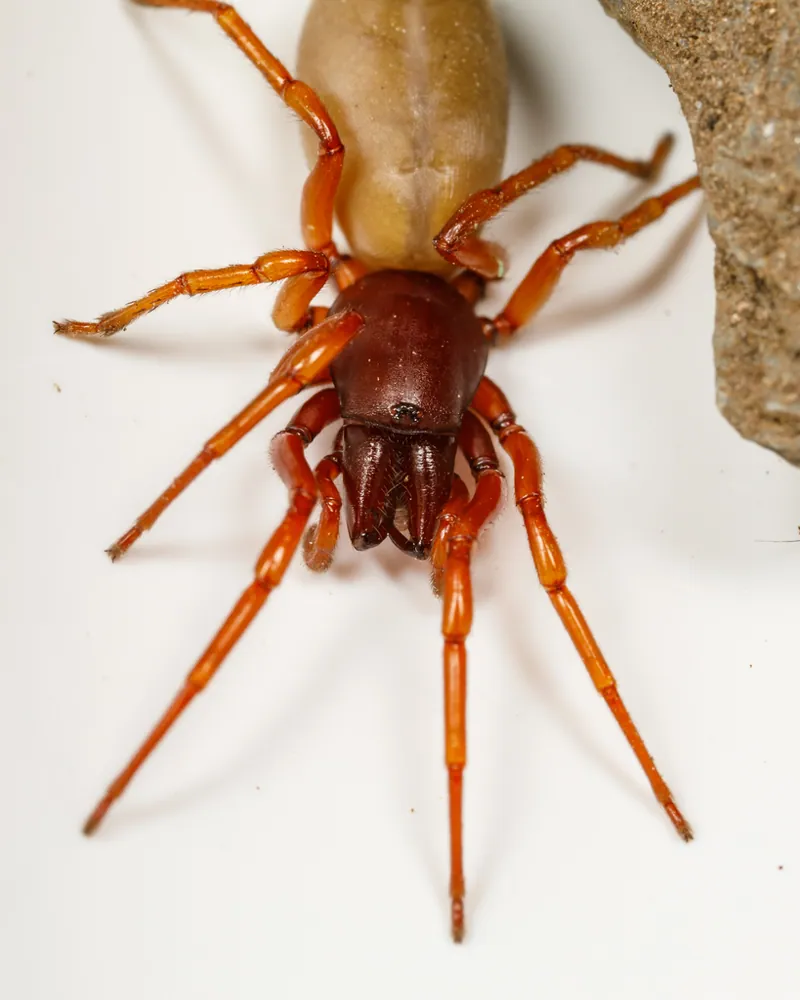
 Sɛdeɛ wobɛhunu no
- Six eyes.1
- A tawny orange to dark red head and chest section (cephalothorax) and legs.1
- A shiny, pale beige to yellow-brown abdomen, which can be dark grey and sometimes very shiny.1
- Very large fangs (chelicerae) for a spider of its size.1
- Adult females are 11 to 15 mm long, and males are 9 to 10 mm long.1
Wɔtaa fa no sɛ: The woodlouse spider can be hard to tell apart from Dysdera erythrina, which is much less common. D. erythrina is not usually found near human homes, so location can help.1
Bɔre ahoɔden
Bɔre fi ne se mu ba bere a ɔka.
Ne bɔre yɛ dɛn?
It injects venom through its fangs to subdue its prey. In people, bites have been known to cause localised itching at the bite site.1
Ne asiane ma nnipa te sɛn?
Asiane ma nnipa: Ɛnyɛ denƐte sɛ wowa wɔ anaa ɛnnu saa. Ɛkame ayɛ sɛ ɛnni asiane ma nnipa.It is a dangerous predator for woodlice but is not known to be a health hazard to humans or smaller animals. It has been known to bite people if handled. Verified bites have caused no major medical problems.1
 Sɛ ɛka a
- Hohoro baabi a ɛkaa no na fa ice pack hyɛ so ma yaw no. Hwehwɛ dɔkota mmoa sɛ yaw no mu yɛ den, ɛtrɛtrɛw anaa onipa no ho ntɔ no a.
Di kan frɛ wo ahohiahia nɔma (112, 000, 911). Yei yɛ mmoa a ɛdi kan ho akwankyerɛ, ɛnyɛ dɔkota afotuo. Mmoa a ɛdi kan ho nsɛm titiriw
 Hwɛ wo ho so
- Mfa wo nsa nka wiram aboa biara, nkyere no na mfa no nni agorɔ, sɛ ɔyɛ ketewa mpo, na sɛ ɛte sɛ ɔrededa anaa wawu mpo a.
- Ma no kwan. Sɛ wohyia baako a, ma wo bo nnwo, san w'akyi brɛoo na ma ɔnkɔ ne kwan.
- Sɛ baako ka wo a: ma wo bo nnwo, tena dinn, frɛ wo ahohiahia nɔma (112, 000, 911) anaa kɔ ayaresabea ntɛm. Kae sɛdeɛ na ɛte, mfonini bɛboa.
Ɛnhwehwɛ wo sɛ ɛbɛpira wo. Ɛde ne bɔre kyere aduane anaa ɛbɔ ne ho ban, na ɛpɛ sɛ ɛhinta sene biribiara. Nsɛm pii fa ahobammɔ ho
Wiase mu baabi bɛn?
Ne kɛseɛ te sɛn?
Ne tenten te sɛn?
 ɛyɛ tiaa sen wo nsateaa ketewa
Woodlouse spider kɛseɛ te sɛn sɛ wode toto WO ho a?
Akontabuo kɛkɛ wɔ wo browser mu. Wɔnkora hwee, na wɔmfa hwee nkɔ baabiara.
Ne ntɛm te sɛn?


Nsɛm
It is an unusually dominant predator for its size because of its large fangs and wide gape.1
It often dominates and sometimes kills other spiders and centipedes.1
Courtship is typically aggressive, and mates can be injured by each other's large fangs.1
It hunts at night and does not spin a web. Instead, it searches warm places for prey.1
Although it began in the Mediterranean, it is now found on several continents, including Australia and New Zealand.1
Atosɛm sɛefoɔ
Atosɛm: Woodlouse spiders are dangerous to people.
Nokorɛ: They are not known to be a health hazard to humans. They can bite if handled, but verified bites have not caused major medical problems.1
Baabi a nsɛm no fi
- Woodlouse spider (Wikipedia (CC BY-SA 4.0))
- Dysdera crocata (iNaturalist): din ne nkyekyɛmu.
- Venom Wiki: asiane gyinabea, kɛseɛ a ɛtaa yɛ ne ntɛm susuo no yɛ yɛn ankasa deɛ. Hwɛ sɛdeɛ yɛbu no: Sɛdeɛ yɛkyerɛ asiane gyinabea.
Nsɛm biara a ɛwɔ kratafa yi so wɔ nɔma a ɛkyerɛ ne fibea. Sɛ yɛfom biribi a, kafra, yɛyɛ mmoa ho akɔnnɔfoɔ, ɛnyɛ nyansahu nwoma. Ka kyerɛ yɛn wɔ [email protected] na yɛbɛsiesie.
 Ɔkɔm de akekantwerɛ no! Onipa baako na ɔyɛ Venom Wiki: ɛyɛ kwa, dawurubɔ nni so na biribiara nni so a ɛdi w'akyi. Akyɛdeɛ ketewa bi boa ma ɛkɔ so tena internet so.Ma akekantwere no aduane
Pii fi kuo korɔ no mu: Ananse
 Mediterranean black widow
 Diving bell spider
 European yellow sac spider
 Noble false widow
 Tarantula wolf spider
 Daddy long-legs spider
Ɔte nso wɔ: Yuropu
 Common European adderViper ne adderƐhia dɔkota
 Spanish flyMmoa afoforɔ a wɔn ho yɛ awuduroƐhia dɔkotaMfa wo nsa nka
 Common waspWowa, kotokurodu ne kotokurodu akɛseɛƐyɛ yaw kɛkɛ
 European hornetWowa, kotokurodu ne kotokurodu akɛseɛƐyɛ yaw kɛkɛ
 Fire salamanderApɔtorɔwa a wɔn ho yɛ awuduro, apɔtorɔ ne newtƐyɛ yaw kɛkɛMfa wo nsa nka
 Western honey beeWowa, kotokurodu ne kotokurodu akɛseɛƐyɛ yaw kɛkɛ