
 Bitten or stung?
 All animals
 Pick a continent
 Africa
 Asia
 Europe
 South America
 Australia & Oceania
 Antarctica
 Pacific Ocean
 Atlantic Ocean
 Indian Ocean
 Arctic Ocean
 Mediterranean Sea
 Red Sea
 Caribbean Sea
 Coral Sea
 South China Sea
 Philippine Sea
 Andaman Sea
 North Sea
 Timor & Arafura Sea
 Bay of Bengal
 Gulf of California
 Games
 Venom battle
 Animal race
 Field notebook
 Venom TOP lists
 Stay safe
 Surprise me

Barking spider
 Bites
The barking spider is a tarantula that lives in the dry deserts of Australia. It spends most of its life in a burrow underground, and it can make a whistling sound when it feels threatened. It is venomous and uses its bite to catch prey.1
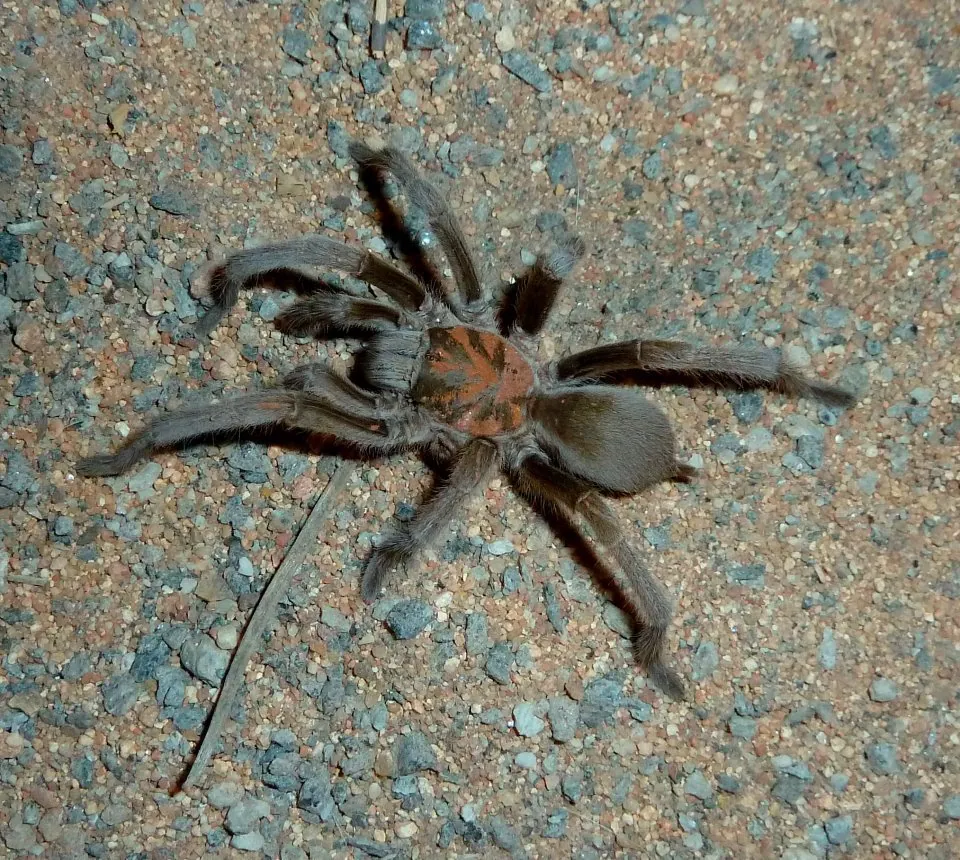
 How to recognise it
Venom power
Venom comes out through its fangs or teeth when it bites.
How dangerous is it to people?
Danger to people: PainfulIt can really hurt, but it is almost never serious.What does it do when it is scared?
When disturbed or threatened, it makes a whistling sound, which is produced by stridulation (rubbing body parts together).1
 If it bites
Call your emergency number at once if the person has trouble breathing, swelling of the face or throat, or feels faint.
- In Australia, treat any big black spider bite as a funnel-web bite: Pressure immobilisation: wrap a firm elastic bandage over the bite and then up the whole limb, splint it, and keep the person completely still until help arrives.
- Be ready to give rescue breaths or CPR if breathing gets weak or stops.
This is general first aid guidance, not medical advice. Based on the first aid guidelines of the World Health Organization and the Australian Resuscitation Council. Facts come from public sources and may contain mistakes. When in doubt, always get medical help. First aid basics
 Stay safe
- Never touch, catch or tease a wild animal, even a small one, and even if it looks asleep or dead.
- Give it space. If you meet one, stay calm, step back slowly and let it go its own way.
- If it hurts you: wash the spot, stay calm and get medical help if the pain is strong or spreads, or the person feels unwell.
It is not out to get you. It uses its venom to catch food or to protect itself, and it would much rather hide. More about staying safe
Where in the world?
How big is it?
How long is it?
 as long as 2 bank cards end to end
 could cover 100 metres in 200 seconds (the fastest human needs 9.6)
How big is Barking spider compared to you?
Just maths in your browser. Nothing is saved or sent anywhere.
How fast is it?


Facts
Its name comes from the whistling sound it makes when it feels threatened, even though it is not a barking animal.1
Its feet have thick tufts of fine hairs that help it grip and climb steep desert rocks.1
It breathes with a gill-like lung that needs humid conditions to work.1
It has strong claws that help it dig burrows and stay cool in the heat.1
Owls, dingoes and feral cats all prey on it, even though it lives in the desert.1
Where the facts come from
- Selenocosmia stirlingi (Wikipedia (CC BY-SA 4.0))
- Selenocosmia stirlingi (iNaturalist): names and classification.
- Venom Wiki: the danger level, the typical size and the speed guess are our own. See how we work them out: How we rate danger.
Every fact on this page has a number that points to its source. If we got something wrong, sorry, we are animal fans, not a science journal. Tell us at [email protected] and we will fix it.
Get the Venom Wiki app
Every creature, every picture and the games in your pocket, even without internet.


 Support Venom Wiki Venom Wiki is a one-man project: free, with no ads and no cookies. A small tip helps keep it online.Feed the scorpion
More from the same group: Tarantulas & funnel-webs
 Sydney funnel-web spiderTarantulas & funnel-websDeadly
 Northern tree-dwelling funnel-web spiderTarantulas & funnel-websDeadly
 Red-headed mouse spiderTarantulas & funnel-websNeeds a doctor
 Queensland whistling tarantulaTarantulas & funnel-websPainful
 Blue Mountains funnel-web spiderTarantulas & funnel-websCan kill
 Darling Downs funnel-web spiderTarantulas & funnel-websCan kill
 Coastal taipan
 Common death adder
 Eastern brown snake
 Inland taipan
 Tiger snake
 Cane toad