
 Bitten or stung?
 All animals
 Pick a continent
 Africa
 Asia
 Europe
 South America
 Australia & Oceania
 Antarctica
 Pacific Ocean
 Atlantic Ocean
 Indian Ocean
 Arctic Ocean
 Mediterranean Sea
 Red Sea
 Caribbean Sea
 Coral Sea
 South China Sea
 Philippine Sea
 Andaman Sea
 North Sea
 Timor & Arafura Sea
 Bay of Bengal
 Gulf of California
 Games
 Venom battle
 Animal race
 Field notebook
 Venom TOP lists
 Stay safe
 Surprise me

Transvaal thick-tailed scorpion
 If it stings
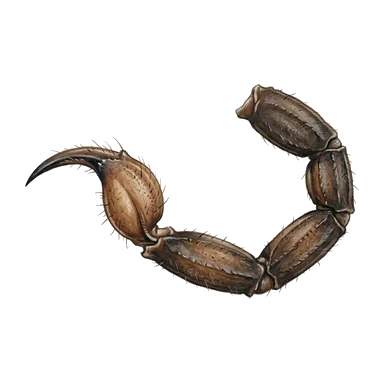 Stings
The Transvaal thick-tailed scorpion is a dark brown or black scorpion with a thick tail. It lives in dry, semi-arid parts of southern Africa. It matters because it is a medically significant scorpion that can sting and can also spray venom.1
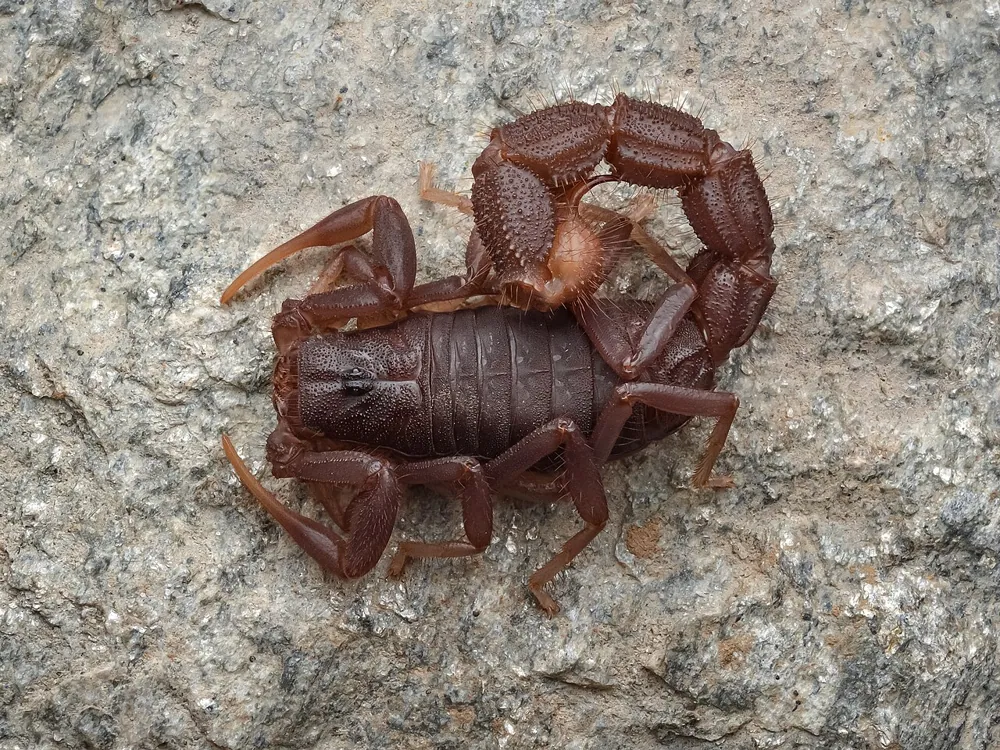
 How to recognise it
- Dark brown or black in colour1
- Grows to 90 to 110 mm long1
- Thin pincers and a thickened tail1
- The sting segment is as wide as the rest of the tail1
- Mostly active at night1
Often confused with: It resembles P. villosus, its close relative. P. villosus is hairier, is less strictly nocturnal and lives further west.1
Venom power
Venom comes out through a stinger.
What does its venom do?
Its venom contains kurtoxin, and a related toxin called parabutoxin has been isolated from it. Parabutoxin is a potassium channel inhibitor, which means it blocks channels that the body uses to control nerve and muscle signals. The first droplet of venom is different from the rest and is called "pre-venom".1
How dangerous is it to people?
Danger to people: Very dangerousIt can kill a person who gets no treatment.It is described as a dangerous, medically significant scorpion. It can both sting and spray its venom.1
 Good news: doctors have a medicine (antivenom) or a treatment for this.1
What does it do when it is scared?
It can sting and spray its venom when threatened.1
If it stings
Always call your emergency number first (for example 112 in Europe, 911 in North America, 000 in Australia).
- Call the emergency number at once and get to hospital, especially if a child is stung. Keep the person calm and still, and put a cold pack on the sting for pain. This scorpion can also spray venom, so if it gets in the eyes, rinse them with lots of clean water. Do not cut, suck or use a tourniquet.1
- Cool the sting with an ice pack and keep the person still. Get medical help fast, especially for children: some scorpions are deadly to kids.
This is general first aid guidance, not medical advice. Based on the first aid guidelines of the World Health Organization and the Australian Resuscitation Council. Facts come from public sources and may contain mistakes. When in doubt, always get medical help. First aid basics
 Stay safe
- Never touch, catch or tease a wild animal, even a small one, and even if it looks asleep or dead.
- Give it space. If you meet one, stay calm, step back slowly and let it go its own way.
- If one stings you: stay calm, keep still, call your emergency number (for example 112 in Europe, 911 in North America, 000 in Australia) or get to a hospital fast. Remember what it looked like, a photo helps.
It is not out to get you. It uses its venom to catch food or to protect itself, and it would much rather hide. More about staying safe
Where in the world?
How big is it?
How long is it?
 about as long as a bank card
 could cover 100 metres in 160 seconds (the fastest human needs 9.6)
How big is Transvaal thick-tailed scorpion compared to you?
Just maths in your browser. Nothing is saved or sent anywhere.
How fast is it?


Facts
It can spray its venom as well as sting.1
The first droplet of its venom is different from the rest and is called "pre-venom".1
A toxin called parabutoxin has been isolated from its venom.1
Its tail is thickened, and the sting segment is as wide as the rest of the tail.1
It is nocturnal and rests in a shallow burrow under rocks during the day.1
Where the facts come from
- Parabuthus transvaalicus (Wikipedia (CC BY-SA 4.0))
- Parabuthus transvaalicus (iNaturalist): names and classification.
- Venom Wiki: the danger level, the typical size and the speed guess are our own. See how we work them out: How we rate danger.
Every fact on this page has a number that points to its source. If we got something wrong, sorry, we are animal fans, not a science journal. Tell us at [email protected] and we will fix it.
Get the Venom Wiki app
Every creature, every picture and the games in your pocket, even without internet.


 Support Venom Wiki Venom Wiki is a one-man project: free, with no ads and no cookies. A small tip helps keep it online.Feed the scorpion
 Deathstalker
 Fat-tailed scorpion
 Emperor scorpion
 Arabian fat-tailed scorpion
 European yellow-tailed scorpion
 Flat rock scorpion
 Black mamba
 Egyptian cobra
 Puff adder
 Boomslang
 Gaboon viper
 Western honey bee
