
 Bitten or stung?
 All animals
 Pick a continent
 Africa
 Asia
 Europe
 South America
 Australia & Oceania
 Antarctica
 Pacific Ocean
 Atlantic Ocean
 Indian Ocean
 Arctic Ocean
 Mediterranean Sea
 Red Sea
 Caribbean Sea
 Coral Sea
 South China Sea
 Philippine Sea
 Andaman Sea
 North Sea
 Timor & Arafura Sea
 Bay of Bengal
 Gulf of California
 Games
 Venom battle
 Animal race
 Field notebook
 Venom TOP lists
 Stay safe
 Surprise me

Dyeing poison dart frog
 Poison in its skin
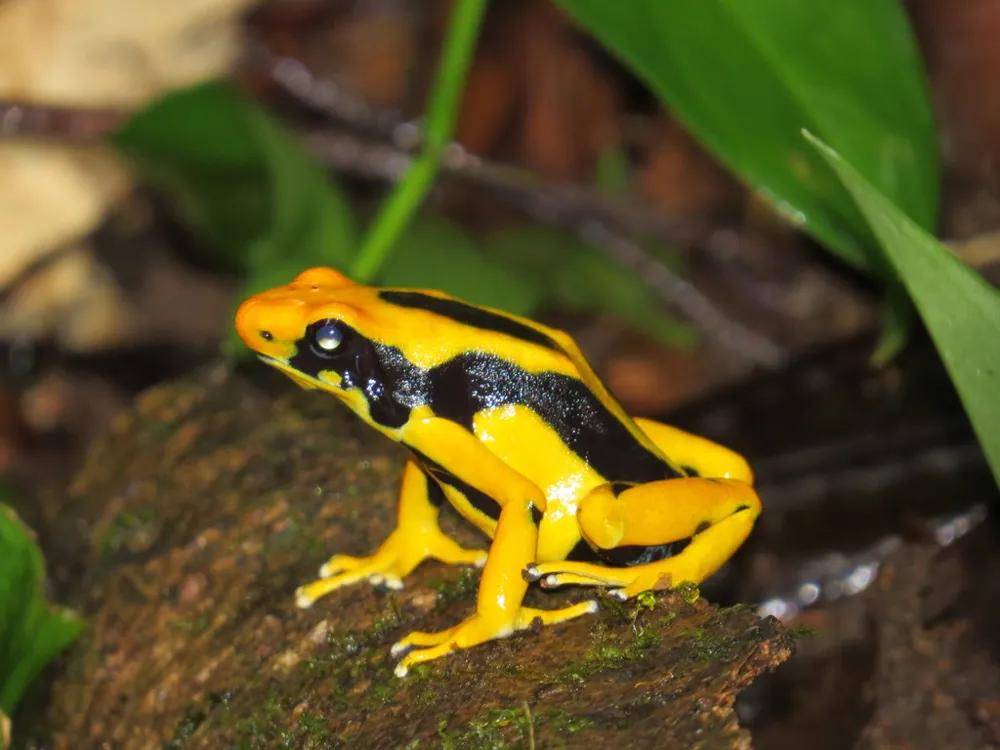
The dyeing poison dart frog is a small, brightly marked frog from the rainforests of north-eastern South America. It is one of the largest poison dart frogs and one of the most colourful, with more than 30 recognised colour forms. Its skin contains toxins, so it is a frog to admire from a distance.1
 How to recognise it
- The body is mostly black, with an irregular pattern of yellow or whitish stripes along the back, upper flanks and head.1
- The lower flanks, belly and throat have irregular blue stripes, and the legs are blue with small black specks.1
- The blue ranges from pale sky blue to royal, cobalt or navy blue, and some colour forms are mostly yellow, mostly blue or mostly whitish.1
- Adults usually measure around 5 cm from snout to vent. Females have circular toe discs and arched backs, while males are smaller and more slender, with heart-shaped toe discs and curved backs.1
Poison power
Its skin is poisonous. It is dangerous to touch, lick or eat.
What does its poison do?
Its skin secretions contain alkaloids, which are toxic chemicals that interfere with nerve and muscle tissue. They can cause pain, cramping and stiffness, and in severe cases locomotor difficulties, convulsions, paralysis or death. In a reported case in Brazil, two men who handled the frog felt numbness within about 20 minutes, and the symptoms had gone after 40 minutes.1
How dangerous is it to people?
Danger to people: PainfulIt can really hurt, but it is almost never serious.The frog is toxic if eaten, and its skin toxins can affect anyone who handles it. In a reported case, two adult male photographers in the Brazilian Amazon both had mild numbness that passed within 40 minutes. Their symptoms could have been worse with longer contact or if there had been a wound where they touched the frog.1
What does it do when it is scared?
Its bright colours warn predators that its skin secretions are unpleasant, and predators that bite it tend to link the colours with the pain.1
 If someone touched or ate it
Call your emergency number at once if the person has trouble breathing, swelling of the face or throat, or feels faint.
- If someone touched one: wash the hands well and do not touch the eyes or mouth. If a child or pet licked or ate one: call your poison centre or emergency number.
This is general first aid guidance, not medical advice. Based on the first aid guidelines of the World Health Organization and the Australian Resuscitation Council. Facts come from public sources and may contain mistakes. When in doubt, always get medical help. First aid basics
 Stay safe
- Never touch, catch or tease a wild animal, even a small one, and even if it looks asleep or dead.
- Give it space. If you meet one, stay calm, step back slowly and let it go its own way.
- If you touched or ate it: do not rub your eyes or mouth, wash your hands and get medical help.
It is not out to get you. Its poison is only there so that nothing eats it. More about staying safe
Where in the world?
How big is it?
How long is it?
 about as long as a bank card
 could cover 100 metres in 92 seconds (the fastest human needs 9.6)
How big is Dyeing poison dart frog compared to you?
Just maths in your browser. Nothing is saved or sent anywhere.
How fast is it?


Facts
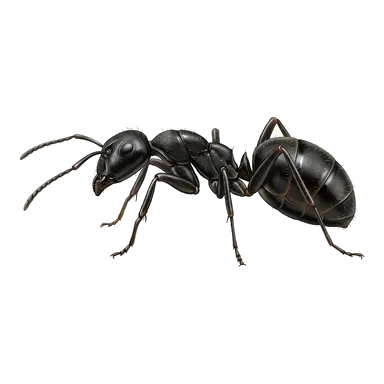
It does not make its own poison. It gets the alkaloids from the ants and mites it eats.1
More than 30 colour forms, or morphs, have been recognised, and most are tied to a particular place.1
It is among the largest and most variably coloured of all poison dart frogs.1
Despite the huge variation in colour, the genetic differences between its populations are very small.1
It often lives in canopy gaps in the Amazon rainforest, where fallen trees hold water for its tadpoles.1
Myth buster
Myth: The name tinctorius refers to the frog's many colours.
Truth: The name comes from legends of indigenous tribes who said they used frog poisons to make green parrot feathers change colour.1
Where the facts come from
- Dyeing poison dart frog (Wikipedia (CC BY-SA 4.0))
- Dendrobates tinctorius (iNaturalist): names and classification.
- Venom Wiki: the danger level, the typical size and the speed guess are our own. See how we work them out: How we rate danger.
Every fact on this page has a number that points to its source. If we got something wrong, sorry, we are animal fans, not a science journal. Tell us at [email protected] and we will fix it.
Get the Venom Wiki app
Every creature, every picture and the games in your pocket, even without internet.


 Support Venom Wiki Venom Wiki is a one-man project: free, with no ads and no cookies. A small tip helps keep it online.Feed the scorpion
More from the same group: Poison frogs, toads & newts
 Golden poison frogPoison frogs, toads & newtsDeadlyDo not touch
 Cane toadPoison frogs, toads & newtsNeeds a doctorDo not touch
 Black-legged poison frogPoison frogs, toads & newtsCan killDo not touch
 Harlequin poison frogPoison frogs, toads & newtsNeeds a doctorDo not touch
 Bruno's casque-headed frogPoison frogs, toads & newtsPainfulDo not touch
 Giant leaf frogPoison frogs, toads & newtsPainfulDo not touch
 Terciopelo
 Brazilian wandering spider
 Golden lancehead
 South American bushmaster
 Eyelash viper
 Peruvian giant centipede