
 Bitten or stung?
 All animals
 Pick a continent
 Africa
 Asia
 Europe
 South America
 Australia & Oceania
 Antarctica
 Pacific Ocean
 Atlantic Ocean
 Indian Ocean
 Arctic Ocean
 Mediterranean Sea
 Red Sea
 Caribbean Sea
 Coral Sea
 South China Sea
 Philippine Sea
 Andaman Sea
 North Sea
 Timor & Arafura Sea
 Bay of Bengal
 Gulf of California
 Games
 Venom battle
 Animal race
 Field notebook
 Venom TOP lists
 Stay safe
 Surprise me

Garden tiger moth
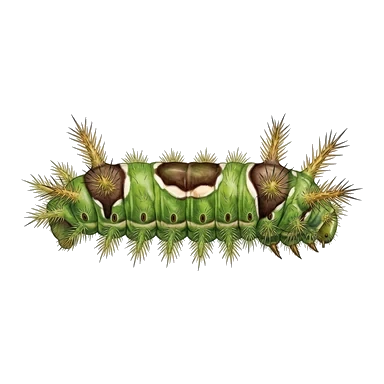 Stinging hairs
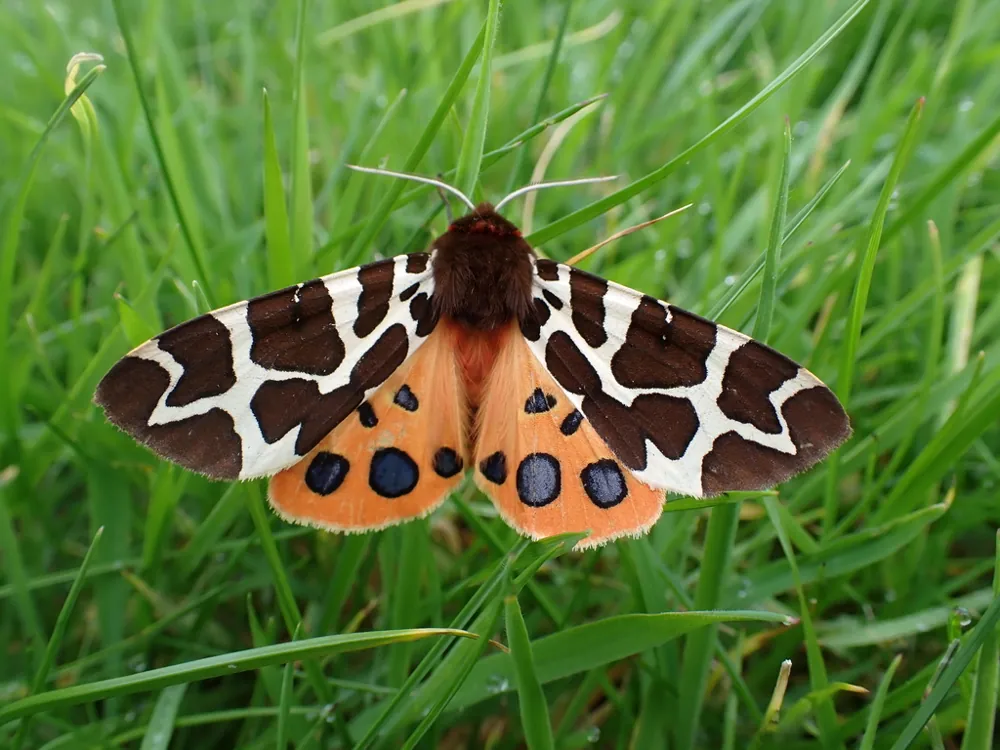
The garden tiger moth is a moth with bold patterned wings that warn predators it is unsafe to eat. It lives in cool, temperate parts of the northern United States, Canada, Europe and Asia. Its caterpillars are known as 'woolly bears' because of their fuzzy look.1
 How to recognise it
- Adults have a wingspan of 4.5 to 6.5 cm.1
- The front wings are brown with a white pattern, which is sometimes missing.1
- The back wings are orange with dark blue dots that have black outlines.1
- The moth often hides its orange hindwings under its brown forewings when resting.1
- Caterpillars are fuzzy and can grow up to 6 cm long.1
Venom power
Tiny hairs or bristles break off in the skin and sting.
What does its venom do?
This moth does not inject venom. Its body fluids are poisonous and contain neurotoxic choline esters, which are nerve-affecting chemicals that interfere with the acetylcholine receptor. The full effects of these toxins are not yet known. Caterpillars have hollow hairs that often contain irritating compounds.1
How dangerous is it to people?
Danger to people: MildLike a bee sting or less. Basically harmless to people, unless the person is allergic.What does it do when it is scared?
When threatened, adults can spray an irritating compound from glands that are exposed at that moment, and their bright wing patterns warn predators.1
 If you touch its hairs
Call your emergency number at once if the person has trouble breathing, swelling of the face or throat, or feels faint.
- For stinging caterpillar hairs: lift them off with sticky tape, then wash the skin. Do not rub.
This is general first aid guidance, not medical advice. Based on the first aid guidelines of the World Health Organization and the Australian Resuscitation Council. Facts come from public sources and may contain mistakes. When in doubt, always get medical help. First aid basics
 Stay safe
- Never touch, catch or tease a wild animal, even a small one, and even if it looks asleep or dead.
- Give it space. If you meet one, stay calm, step back slowly and let it go its own way.
- If it hurts you: wash the spot, stay calm and get medical help if the pain is strong or spreads, or the person feels unwell.
It is not out to get you. It uses its venom to catch food or to protect itself, and it would much rather hide. More about staying safe
Where in the world?
How big is it?
How long is it?
 about as long as a bank card
 slower than a garden snail
How big is Garden tiger moth compared to you?
Just maths in your browser. Nothing is saved or sent anywhere.
How fast is it?

Facts
Adults can make rasping sounds with their wings and high-pitched squeaks that people can hear, and bats tend to avoid them.1
Caterpillars can break down the toxins in their host plants and reuse them in altered form for their own protection.1
The French entomologist Oberthür described about 500 different wing pattern and colour variants.1
Adults are mostly active at night, from June to September.1
For venom experts
- Scientific name
- Arctia caja
- Group
- Caterpillars & bugs
- Also called
- Garden Tiger, Great Tiger Moth1
- Family
- Erebidae2
- Order
- Lepidoptera
- Continents
- Europe, Asia, North America
- Babies
- Eggs are laid on the surfaces of leaves, and the caterpillars hatch and begin feeding soon after.1
- How it is doing in the wild
- Protected in the UK under the Biodiversity Action Plan, after its UK numbers fell by 89% over 30 years1
- Danger to people
- 1 / 5: Mild3
Where the facts come from
- Garden tiger moth (Wikipedia (CC BY-SA 4.0))
- Arctia caja (iNaturalist): names and classification.
- Venom Wiki: the danger level, the typical size and the speed guess are our own. See how we work them out: How we rate danger.
Every fact on this page has a number that points to its source. If we got something wrong, sorry, we are animal fans, not a science journal. Tell us at [email protected] and we will fix it.
Get the Venom Wiki app
Every creature, every picture and the games in your pocket, even without internet.


 Support Venom Wiki Venom Wiki is a one-man project: free, with no ads and no cookies. A small tip helps keep it online.Feed the scorpion
More from the same group: Caterpillars & bugs
 Giant water bugCaterpillars & bugsPainful
 Oak processionaryCaterpillars & bugsPainfulDo not touch
 Pine processionaryCaterpillars & bugsPainfulDo not touch
 Puss caterpillarCaterpillars & bugsPainfulDo not touch
 Saddleback caterpillarCaterpillars & bugsPainfulDo not touch
 Wheel bugCaterpillars & bugsPainful
 Common European adder
 Spanish fly
 Common wasp
 European hornet
 Fire salamander
 Western honey bee