
 Bitten or stung?
 All animals
 Pick a continent
 Africa
 Asia
 Europe
 South America
 Australia & Oceania
 Antarctica
 Pacific Ocean
 Atlantic Ocean
 Indian Ocean
 Arctic Ocean
 Mediterranean Sea
 Red Sea
 Caribbean Sea
 Coral Sea
 South China Sea
 Philippine Sea
 Andaman Sea
 North Sea
 Timor & Arafura Sea
 Bay of Bengal
 Gulf of California
 Games
 Venom battle
 Animal race
 Field notebook
 Venom TOP lists
 Stay safe
 Surprise me

Giant silkworm moth caterpillar
 If you touch its hairsDanger to people: Very dangerousIt can kill a person who gets no treatment.
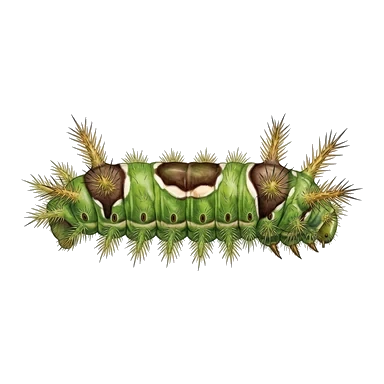 Stinging hairs
This is the caterpillar of a large moth from South America, the giant silk moth. The caterpillar is famous for its venom, which is one of the most dangerous of any caterpillar. It lives in southern Brazil and nearby countries, and it has caused many deaths.1
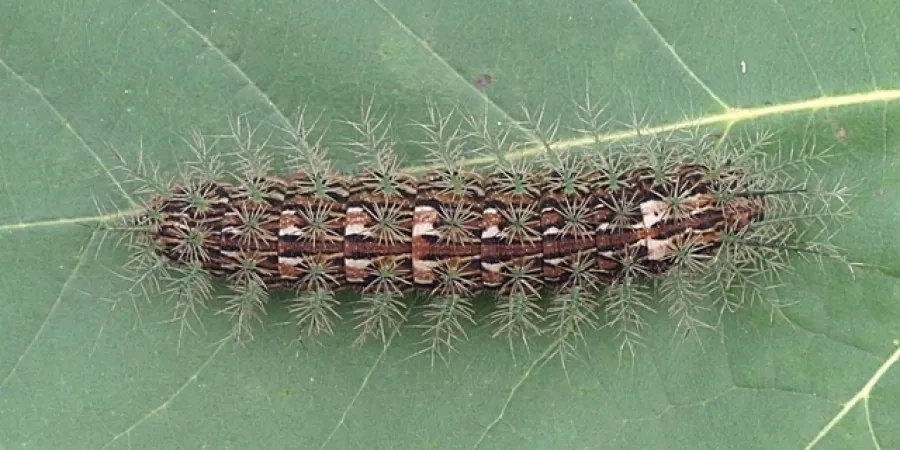
 How to recognise it
Venom power
Tiny hairs or bristles break off in the skin and sting.
What does its venom do?
The venom is held in sacs at the base of each spine and flows through the hollow spines into the wound. It causes disseminated intravascular coagulation, which stops the blood from clotting and leads to bleeding into the tissues and internal organs. After an initial phase of headache, fever, vomiting and malaise, a severe bleeding disorder can develop after about 24 hours.1
How dangerous is it to people?
Danger to people: Very dangerousIt can kill a person who gets no treatment.It has caused deaths, mostly in southern Brazil. Most caterpillar stings are mild, but a sting from this one can cause life-threatening bleeding, sometimes a day or more after the sting. Children and young people are stung most often.1
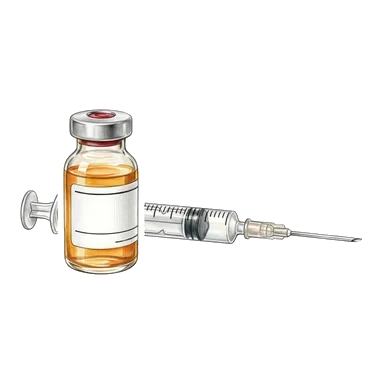 Good news: doctors have a medicine (antivenom) or a treatment for this.1
What does it do when it is scared?
Its body is covered in hairs and spines that break off easily and inject venom into anything that touches them.1
If you touch its hairs
Always call your emergency number first (for example 112 in Europe, 911 in North America, 000 in Australia).
- Do not touch the caterpillar again and gently wash the skin with soap and water. Go to hospital straight away, even if you feel fine, because serious bleeding can start a day later. Take the caterpillar or a photo with you if it is safe. Doctors can give a special antivenom made in Brazil.1
- For stinging caterpillar hairs: lift them off with sticky tape, then wash the skin. Do not rub.
This is general first aid guidance, not medical advice. Based on the first aid guidelines of the World Health Organization and the Australian Resuscitation Council. Facts come from public sources and may contain mistakes. When in doubt, always get medical help. First aid basics
 Stay safe
- Never touch, catch or tease a wild animal, even a small one, and even if it looks asleep or dead.
- Give it space. If you meet one, stay calm, step back slowly and let it go its own way.
- If you touch its hairs: stay calm, keep still, call your emergency number (for example 112 in Europe, 911 in North America, 000 in Australia) or get to a hospital fast. Remember what it looked like, a photo helps.
It is not out to get you. It uses its venom to catch food or to protect itself, and it would much rather hide. More about staying safe
Where in the world?
How big is it?
How long is it?
 about as long as a bank card
 slower than a garden snail
How big is Giant silkworm moth caterpillar compared to you?
Just maths in your browser. Nothing is saved or sent anywhere.
How fast is it?

Facts
Guinness World Records lists it as the most venomous caterpillar in the world.1
Before studies of Lonomia caterpillars, it was not known that caterpillars could produce enough toxin to kill a person.1
Its venom contains anti-clotting agents that have been studied for possible medical uses, including a component called Lopap.1
The first known epidemic happened in a farming community in Rio Grande do Sul, where victims had only handled leafy branches before their symptoms began.1
It is not the only dangerous one: several Lonomia species can cause severe bleeding.1
Myth buster
Myth: Caterpillars cannot produce toxins strong enough to kill a person.
Truth: This caterpillar's venom can kill. It has caused deaths, mostly in southern Brazil.1
Where the facts come from
- Lonomia obliqua (Wikipedia (CC BY-SA 4.0))
- Lonomia obliqua (iNaturalist): names and classification.
- Venom Wiki: the danger level, the typical size and the speed guess are our own. See how we work them out: How we rate danger.
Every fact on this page has a number that points to its source. If we got something wrong, sorry, we are animal fans, not a science journal. Tell us at [email protected] and we will fix it.
Get the Venom Wiki app
Every creature, every picture and the games in your pocket, even without internet.


 Support Venom Wiki Venom Wiki is a one-man project: free, with no ads and no cookies. A small tip helps keep it online.Feed the scorpion
More from the same group: Caterpillars & bugs
 Vinchuca kissing bugCaterpillars & bugsNeeds a doctor
 Venezuelan fire caterpillarCaterpillars & bugsCan killDo not touch
 Pararama caterpillarCaterpillars & bugsNeeds a doctorDo not touch
 Rhodnius kissing bugCaterpillars & bugsNeeds a doctor
 Yellowtail moth of the mangrovesCaterpillars & bugsPainfulDo not touch
 House pseudoscorpionCaterpillars & bugsMild
 Golden poison frog
 Terciopelo
 Brazilian wandering spider
 Golden lancehead
 South American bushmaster
 Cane toad