
 Bitten or stung?
 All animals
 Pick a continent
 Africa
 Asia
 Europe
 South America
 Australia & Oceania
 Antarctica
 Pacific Ocean
 Atlantic Ocean
 Indian Ocean
 Arctic Ocean
 Mediterranean Sea
 Red Sea
 Caribbean Sea
 Coral Sea
 South China Sea
 Philippine Sea
 Andaman Sea
 North Sea
 Timor & Arafura Sea
 Bay of Bengal
 Gulf of California
 Games
 Venom battle
 Animal race
 Field notebook
 Venom TOP lists
 Stay safe
 Surprise me

Hooded pitohui
 Poison in its skinEats: A bit of everythingTOP 50 · No. 7: FastestPoisonous, not venomous
The hooded pitohui is a songbird with reddish-brown and black feathers that lives in the forests of New Guinea. It is one of the few birds known to be poisonous, and its toxins are held in its skin and feathers, so it is best left alone.1
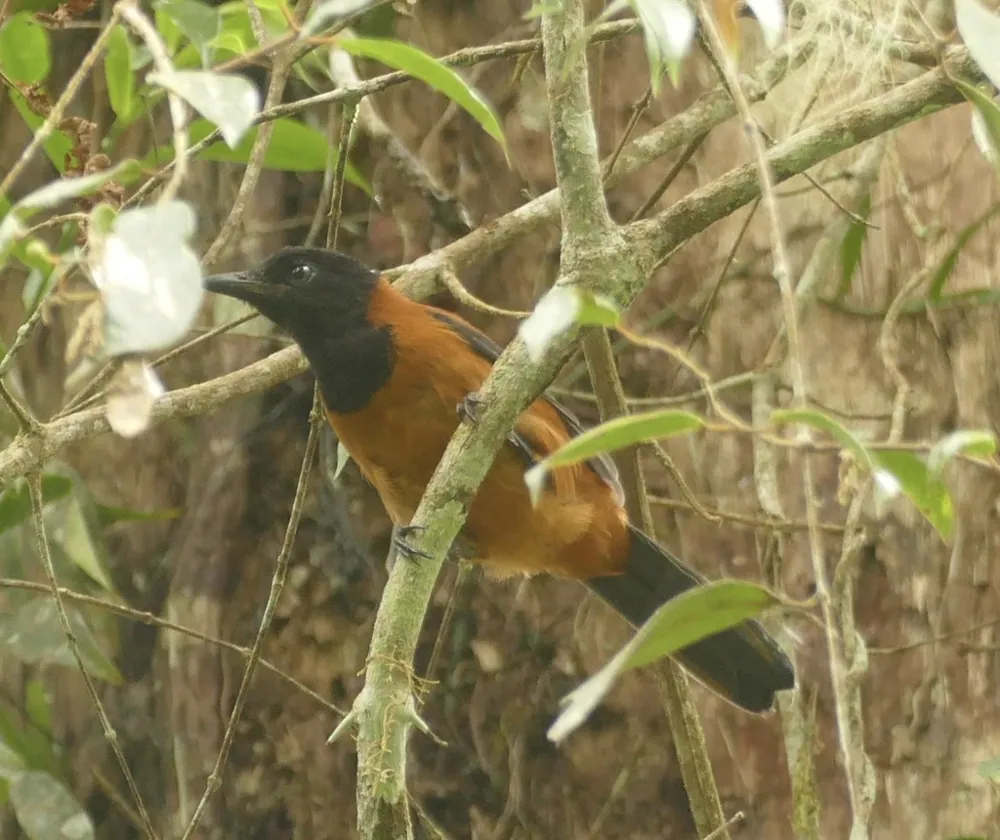
 How to recognise it
- Black upperwing, head, chin, throat, upper breast and tail1
- Rest of the plumage is reddish brown1
- Black bill and legs1
- Males and females look alike1
- Young birds look like adults, but their tail and wing feathers are tinged with brown1
Often confused with: Other pitohuis are also poisonous and share a similar plumage, which is an example of convergent evolution. The non-poisonous juvenile greater melampitta has plumage similar to the hooded pitohui, which is Batesian mimicry.1
Poison power
Its skin is poisonous. It is dangerous to touch, lick or eat.
What does its poison do?
This bird is poisonous rather than venomous. Its skin, feathers and other tissues contain batrachotoxin compounds, including homobatrachotoxin, which is a neurotoxin that attacks the nerves. In 1990, scientists preparing museum skins of this bird felt numbness and burning when handling them.1
How dangerous is it to people?
Danger to people: PainfulIt can really hurt, but it is almost never serious.Local hunters know the bird is toxic and avoid it. Harm is most likely from handling the skin or feathers, since the toxins are concentrated there.1
What does it do when it is scared?
Its toxins are thought to deter predators and to help protect it from feather lice and ticks. Its bright, contrasting plumage may warn predators that it is distasteful.1
 If someone touched or ate it
Call your emergency number at once if the person has trouble breathing, swelling of the face or throat, or feels faint.
- If someone ate it or has symptoms after eating it: call your emergency number or poison centre straight away.
This is general first aid guidance, not medical advice. Based on the first aid guidelines of the World Health Organization and the Australian Resuscitation Council. Facts come from public sources and may contain mistakes. When in doubt, always get medical help. First aid basics
 Stay safe
- Never touch, catch or tease a wild animal, even a small one, and even if it looks asleep or dead.
- Give it space. If you meet one, stay calm, step back slowly and let it go its own way.
- If you touched or ate it: do not rub your eyes or mouth, wash your hands and get medical help.
It is not out to get you. Its poison is only there so that nothing eats it. More about staying safe
Where in the world?
How big is it?
How long is it?
How heavy is it?

 as long as 2.5 bank cards end to end
 could fly across a whole football pitch in 9.5 seconds
How big is Hooded pitohui compared to you?
Just maths in your browser. Nothing is saved or sent anywhere.
How fast is it?


Facts
Batrachotoxins are among the most toxic compounds in nature by weight, about 250 times more toxic than strychnine.1
These toxins were first known only from poison dart frogs of Central and South America.1
The birds' toxicity varies by location and by individual, and some birds have been collected with no detectable toxins.1
It lives in family groups and often joins and even leads mixed-species foraging flocks.1
The bird's song is a variable set of three to seven whistles, which can slur up or down.1
Myth buster
Myth: The bird makes its own poison.
Truth: The bird does not make the toxin itself. It is thought to take the toxin from its diet, possibly from Choresine beetles that contain it.1
For venom experts
- Scientific name
- Pitohui dichrous
- Group
- Other poisonous animals
- Also called
- Black-headed pitohui, Lesser pitohui1
- Family
- Oriolidae2
- Order
- Passeriformes
- Continents
- Australia & Oceania
- Babies
- The species is a cooperative breeder, and family groups help protect the nest and feed the young.1
- How it is doing in the wild
- Common and not at risk of extinction, with stable numbers1
- Danger to people
- 2 / 5: Painful3
Where the facts come from
- Hooded pitohui (Wikipedia (CC BY-SA 4.0))
- Pitohui dichrous (iNaturalist): names and classification.
- Venom Wiki: the danger level, the typical size and the speed guess are our own. See how we work them out: How we rate danger.
Every fact on this page has a number that points to its source. If we got something wrong, sorry, we are animal fans, not a science journal. Tell us at [email protected] and we will fix it.
Get the Venom Wiki app
Every creature, every picture and the games in your pocket, even without internet.


 Support Venom Wiki Venom Wiki is a one-man project: free, with no ads and no cookies. A small tip helps keep it online.Feed the scorpion
More from the same group: Other poisonous animals
 Blue-capped ifritOther poisonous animalsMild
 Northern variable pitohuiOther poisonous animalsPainfulDo not touch
 Rufous-naped bellbirdOther poisonous animalsMild
 Japanese pufferfishOther poisonous animalsDeadly
 Hawksbill sea turtleOther poisonous animalsCan kill
 Spanish flyOther poisonous animalsNeeds a doctorDo not touch
 Coastal taipan
 Common death adder
 Eastern brown snake
 Inland taipan
 Sydney funnel-web spider
 Tiger snake