
 Bitten or stung?
 All animals
 Pick a continent
 Africa
 Asia
 Europe
 South America
 Australia & Oceania
 Antarctica
 Pacific Ocean
 Atlantic Ocean
 Indian Ocean
 Arctic Ocean
 Mediterranean Sea
 Red Sea
 Caribbean Sea
 Coral Sea
 South China Sea
 Philippine Sea
 Andaman Sea
 North Sea
 Timor & Arafura Sea
 Bay of Bengal
 Gulf of California
 Games
 Venom battle
 Animal race
 Field notebook
 Venom TOP lists
 Stay safe
 Surprise me

Lowland swamp viper
 Bites
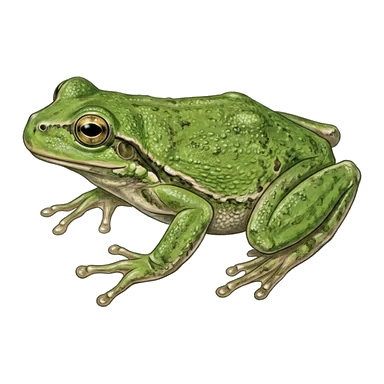
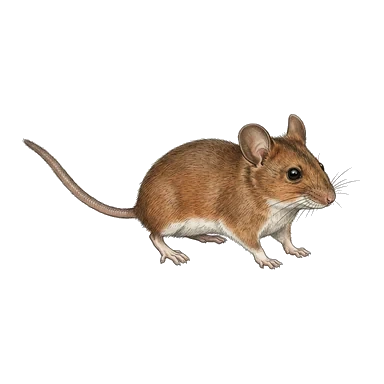
The lowland swamp viper is a small, venomous snake from East Africa. It lives in low, wet ground such as marshes and floodplains, where it hunts small frogs and toads. Its venom is strongly hemotoxic, meaning it damages the blood, so it is a snake to treat with respect.1
 How to recognise it
- Small snake, averaging 40 to 50 cm in total length, with a maximum of 61 cm.1
- Females are slightly larger than males.1
- The head is somewhat elongated, with small scales on top except for a pair of large supraocular scales (the scales above the eyes), which are almost twice as long as they are wide.1
- Young snakes and subadults have a partly prehensile tail (one that can grip), but this ability is reduced in adults.1
Venom power
Venom comes out through its fangs or teeth when it bites.
What does its venom do?
It is venomous, and its venom is hemotoxic, meaning it attacks the blood. In the earliest recorded survivor case, a 20 cm juvenile bit a 24-year-old through a single fang; the bite was painful but did not cause the strongly hemotoxic symptoms seen with related snakes. In a second case in 1996, the victim had severe haemolysis (red blood cells breaking down) and complete platelet destruction, and the liver and kidneys began to fail.1
How dangerous is it to people?
Danger to people: SeriousA bite needs a doctor. Deaths are very rare.Only two bites are documented. The 1996 victim nearly died from hemolytic-uremic syndrome, a condition where the blood and kidneys are damaged, but survived. The venom is very hemotoxic.1
 If it bites
Always call your emergency number first (for example 112 in Europe, 911 in North America, 000 in Australia).
- Call the emergency number and get to hospital fast, even if the bite seems mild, because blood and kidney damage can follow. Keep the person calm and still, keep the bitten limb still and remove rings or tight items. Do not cut, suck, use ice, a tourniquet or a tight bandage.1
- Keep the person still and calm, keep the bitten limb at heart level, remove rings and tight things, and get to a hospital fast.
This is general first aid guidance, not medical advice. Based on the first aid guidelines of the World Health Organization and the Australian Resuscitation Council. Facts come from public sources and may contain mistakes. When in doubt, always get medical help. First aid basics
 Stay safe
- Never touch, catch or tease a wild animal, even a small one, and even if it looks asleep or dead.
- Give it space. If you meet one, stay calm, step back slowly and let it go its own way.
- If one bites you: stay calm, keep still, call your emergency number (for example 112 in Europe, 911 in North America, 000 in Australia) or get to a hospital fast. Remember what it looked like, a photo helps.
It is not out to get you. It uses its venom to catch food or to protect itself, and it would much rather hide. More about staying safe
Where in the world?
How big is it?
How long is it?
 as long as 3 bananas end to end
 could cover 100 metres in 110 seconds (the fastest human needs 9.6)
How big is Lowland swamp viper compared to you?
Just maths in your browser. Nothing is saved or sent anywhere.
How fast is it?


Facts
Its venom is far more damaging to the blood than the venom of the earlier snakes it was grouped with, so it is now known to be very hemotoxic.1
Young snakes can grip with their tails, a skill that becomes weaker as they grow into adults.1
Its habitat overlaps with cattle grazing land, which is one reason people may meet it.1
Where the facts come from
- Proatheris (Wikipedia (CC BY-SA 4.0))
- Proatheris superciliaris (iNaturalist): names and classification.
- Venom Wiki: the danger level, the typical size and the speed guess are our own. See how we work them out: How we rate danger.
Every fact on this page has a number that points to its source. If we got something wrong, sorry, we are animal fans, not a science journal. Tell us at [email protected] and we will fix it.
Get the Venom Wiki app
Every creature, every picture and the games in your pocket, even without internet.


 Support Venom Wiki Venom Wiki is a one-man project: free, with no ads and no cookies. A small tip helps keep it online.Feed the scorpion
 Puff adder
 Gaboon viper
 Northeast African carpet viper
 West African carpet viper
 Rhinoceros viper
 West African Gaboon viper
 Black mamba
 Deathstalker
 Egyptian cobra
 Boomslang
 Fat-tailed scorpion
 Western honey bee