
 Bitten or stung?
 All animals
 Pick a continent
 Africa
 Asia
 Europe
 South America
 Australia & Oceania
 Antarctica
 Pacific Ocean
 Atlantic Ocean
 Indian Ocean
 Arctic Ocean
 Mediterranean Sea
 Red Sea
 Caribbean Sea
 Coral Sea
 South China Sea
 Philippine Sea
 Andaman Sea
 North Sea
 Timor & Arafura Sea
 Bay of Bengal
 Gulf of California
 Games
 Venom battle
 Animal race
 Field notebook
 Venom TOP lists
 Stay safe
 Surprise me

Moon jellyfish
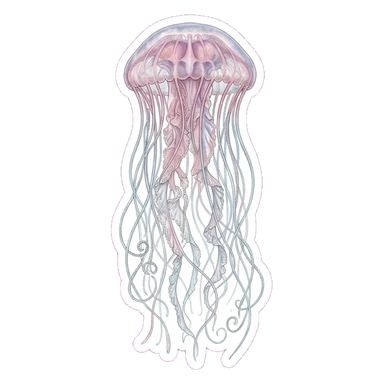 Stinging tentacles
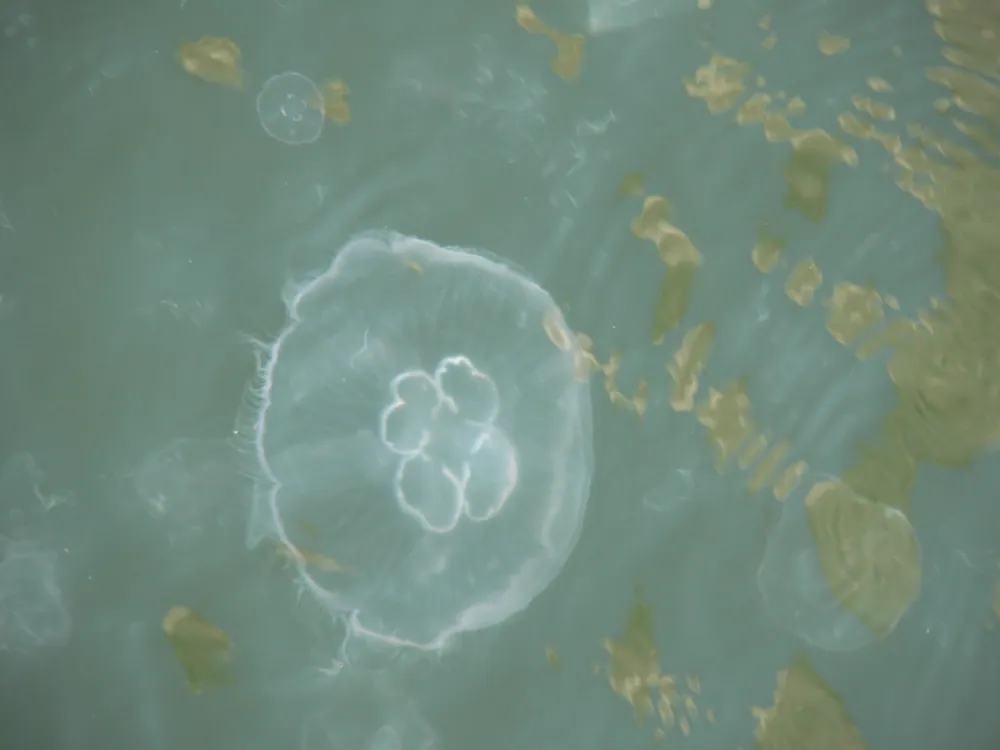
The moon jellyfish is a see-through jelly that drifts with the ocean currents. It lives in the North Atlantic, Argentina and parts of the northeastern United States. It is one of the best-known jellyfish, and it is not dangerous to people.1
 How to recognise it
- Almost entirely translucent, so it looks nearly see-through1
- Usually about 25 to 40 cm across1
- Four horseshoe-shaped gonads (reproductive organs) are easy to see through the top of the bell1
- Short, fine tentacles1
Often confused with: Most species in the genus Aurelia look very similar, and it is hard to tell them apart without genetic testing. Many older records of this jellyfish may actually describe one of its related species.1
Venom power
Thousands of tiny stinging cells fire when something touches them.
What does its venom do?
Its sting has a mild effect on humans. Most people have little or no reaction to it.1
How dangerous is it to people?
Danger to people: MildLike a bee sting or less. Basically harmless to people, unless the person is allergic.It is not dangerous to humans. Its sting is mild, and most people feel little or nothing.1
 If it stings
Call your emergency number at once if the person has trouble breathing, swelling of the face or throat, or feels faint.
- Get out of the water and pick off any tentacles (with gloves or a cloth).
- For tropical box jellyfish: pour vinegar on the stings for at least 30 seconds, call for help and be ready to do CPR. For bluebottles and most others: rinse with seawater, then hot water for the pain.
This is general first aid guidance, not medical advice. Based on the first aid guidelines of the World Health Organization and the Australian Resuscitation Council. Facts come from public sources and may contain mistakes. When in doubt, always get medical help. First aid basics
 Stay safe
- Never touch, catch or tease a wild animal, even a small one, and even if it looks asleep or dead.
- Give it space. If you meet one, stay calm, step back slowly and let it go its own way.
- If it hurts you: wash the spot, stay calm and get medical help if the pain is strong or spreads, or the person feels unwell.
It is not out to get you. It uses its venom to catch food or to protect itself, and it would much rather hide. More about staying safe
Where in the world?
How big is it?
How long is it?
 as long as 2 bananas end to end
 as long as 5 bank cards end to end
How big is Moon jellyfish compared to you?
Just maths in your browser. Nothing is saved or sent anywhere.
How fast is it?


Facts
The moon jellyfish is almost entirely translucent, so it is hard to see in the water.1
Its polyp stage can survive for months without food.1
Its reproduction changes with food supply: plenty of food means many small young, while little food means fewer, larger young that are more likely to survive.1
Before the 2020s, the species was thought to live almost everywhere in the world, but it has since been split into at least 28 species.1
For venom experts
- Scientific name
- Aurelia aurita
- Group
- Jellyfish & sea stingers
- Also called
- common jellyfish, moon jelly, northern moon jelly1
- Family
- Ulmaridae2
- Order
- Semaeostomeae
- Continents
- Arctic Ocean, Atlantic Ocean, Pacific Ocean, Indian Ocean, Southern Ocean, Mediterranean Sea, Red Sea, Caribbean Sea, Gulf of Mexico, South China Sea, North Sea, Timor & Arafura Sea, Bay of Bengal, Gulf of California, The oceans
- Babies
- It reproduces sexually as a free-swimming medusa, while the polyp stage reproduces asexually. When food is plentiful, it produces many small offspring, and when food is scarce, it produces fewer, larger offspring that survive better.1
- Danger to people
- 1 / 5: Mild3
Where the facts come from
- Aurelia aurita (Wikipedia (CC BY-SA 4.0))
- Aurelia aurita (iNaturalist): names and classification.
- Venom Wiki: the danger level, the typical size and the speed guess are our own. See how we work them out: How we rate danger.
Every fact on this page has a number that points to its source. If we got something wrong, sorry, we are animal fans, not a science journal. Tell us at [email protected] and we will fix it.
Get the Venom Wiki app
Every creature, every picture and the games in your pocket, even without internet.


 Support Venom Wiki Venom Wiki is a one-man project: free, with no ads and no cookies. A small tip helps keep it online.Feed the scorpion
More from the same group: Jellyfish & sea stingers
 Australian box jellyfishJellyfish & sea stingersDeadlyDo not touch
 Irukandji jellyfishJellyfish & sea stingersCan killDo not touch
 Portuguese man o' warJellyfish & sea stingersNeeds a doctorDo not touch
 Lion's mane jellyfishJellyfish & sea stingersPainfulDo not touch
 Common kingslayerJellyfish & sea stingersCan killDo not touch
 Hell's fire anemoneJellyfish & sea stingersNeeds a doctorDo not touch
 Greenland shark
 Spiny dogfish
 Bootlace worm