
 Bitten or stung?
 All animals
 Pick a continent
 Africa
 Asia
 Europe
 South America
 Australia & Oceania
 Antarctica
 Pacific Ocean
 Atlantic Ocean
 Indian Ocean
 Arctic Ocean
 Mediterranean Sea
 Red Sea
 Caribbean Sea
 Coral Sea
 South China Sea
 Philippine Sea
 Andaman Sea
 North Sea
 Timor & Arafura Sea
 Bay of Bengal
 Gulf of California
 Games
 Venom battle
 Animal race
 Field notebook
 Venom TOP lists
 Stay safe
 Surprise me
Australian box jellyfish
 If it stingsDanger to people: DeadlyOne of the most dangerous animals in the world.
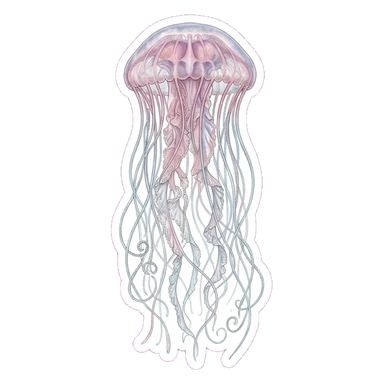 Stinging tentacles
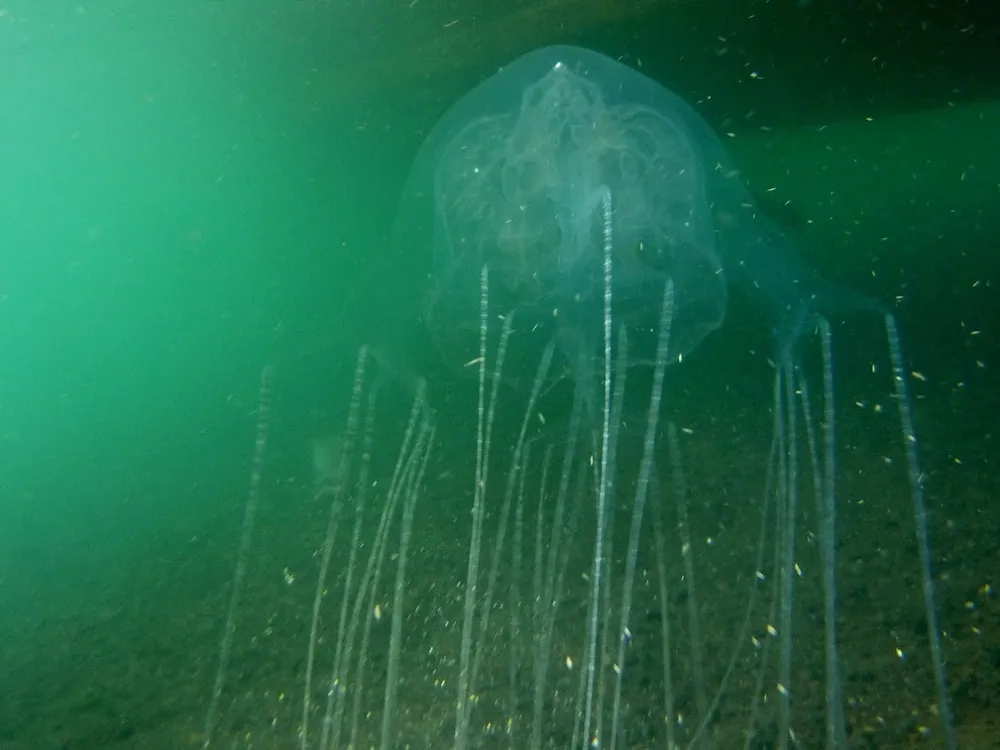
The Australian box jellyfish is one of the most venomous animals in the world. It lives in the warm coastal waters of northern Australia and nearby parts of Southeast Asia. Its sting can cause extreme pain and can be deadly, so it is important to know how to recognise it and what to do.1
 How to recognise it
- The bell is box-shaped and pale blue, with faint markings.1
- The bell is usually about 16 cm across and can reach 35 cm.1
- A cluster of 15 tentacles hangs from each of the four corners of the bell.1
- It is almost completely transparent, so it is very hard to see in the water.1
- When hunting, its tentacles can stretch to about 3 m long.1
Venom power
Thousands of tiny stinging cells fire when something touches them.
What does its venom do?
Its venom makes cells porous, so potassium leaks out of them. This causes hyperkalemia, a dangerous build-up of potassium in the blood, which can lead to heart and circulation failure. Stings cause excruciating pain and a burning feeling, and an untreated victim can die within two to five minutes.1
How dangerous is it to people?
Danger to people: DeadlyOne of the most dangerous animals in the world.At least 64 deaths have been recorded in Australia. Most deaths in recent decades have been children, because their smaller bodies are at higher risk. Most stings are mild, but one animal's venom is said to be enough to kill 60 adults.1
 Good news: doctors have a medicine (antivenom) or a treatment for this.1
If it stings
Always call your emergency number first (for example 112 in Europe, 911 in North America, 000 in Australia).
- Get out of the water. If the person is not breathing normally, start CPR at once: vinegar can wait. Otherwise pour household vinegar on the stings for at least 30 seconds first, and only then pick off any tentacles (with gloves or a cloth). Call for help and be ready to do CPR. Do not rub the stings.
- Get the person out of the water and call the emergency number (000 in Australia) at once. Pour plenty of vinegar over the sting for at least 30 seconds, then pick off any tentacles left on the skin. Start CPR if the person stops breathing. Do not rub the area, do not use fresh water and do not use a pressure bandage.1
This is general first aid guidance, not medical advice. Based on the first aid guidelines of the World Health Organization and the Australian Resuscitation Council. Facts come from public sources and may contain mistakes. When in doubt, always get medical help. First aid basics
 Stay safe
- Never touch, catch or tease a wild animal, even a small one, and even if it looks asleep or dead.
- Give it space. If you meet one, stay calm, step back slowly and let it go its own way.
- If one stings you: stay calm, keep still, call your emergency number (for example 112 in Europe, 911 in North America, 000 in Australia) or get to a hospital fast. Remember what it looked like, a photo helps.
It is not out to get you. It uses its venom to catch food or to protect itself, and it would much rather hide. More about staying safe
Where in the world?
How big is it?
How long is it?
 as long as 4 bank cards end to end
 could swim the length of a big swimming pool (50 m) in 26 seconds
How big is Australian box jellyfish compared to you?
Just maths in your browser. Nothing is saved or sent anywhere.
How fast is it?
Facts
It has four clusters of eyes with 24 eyes in total, even though it has no central nervous system.1
Its tentacles are covered with millions of stinging cells that fire microscopic darts carrying venom.1
Its only known predators are green sea turtles and leatherback turtles, whose thick skin protects them from its stings.1
It is attracted to blue light, which makes it stream out its tentacles, while black objects make it move away.1
From certain angles, its pale blue bell looks like a human head or skull.1
Its name, 'hand of death', comes from its four appendages, which look like hands.1
Myth buster
Myth: Pressure bandages are the best first aid for a box jellyfish sting.
Truth: Pressure bandages were used until 2005, but health authorities no longer recommend them because they can trigger more venom release. Household vinegar is the recommended treatment, and CPR comes first if the person is not breathing normally.1
For venom experts
- Scientific name
- Chironex fleckeri
- Group
- Jellyfish & sea stingers
- Also called
- Marine Stinger, Sea Wasp, Australian Box Jelly1
- Family
- Chirodropidae2
- Order
- Chirodropida
- Continents
- Indian Ocean, Pacific Ocean, Coral Sea, South China Sea, Philippine Sea, Timor & Arafura Sea, The oceans
- Babies
- It lays eggs, and fertilised eggs develop into tiny polyps that bud into new young jellyfish, which return to the ocean.1
- Danger to people
- 5 / 5: Deadly3
Where the facts come from
- Chironex fleckeri (Wikipedia (CC BY-SA 4.0))
- Chironex fleckeri (iNaturalist): names and classification.
- Venom Wiki: the danger level, the typical size and the speed guess are our own. See how we work them out: How we rate danger.
Every fact on this page has a number that points to its source. If we got something wrong, sorry, we are animal fans, not a science journal. Tell us at [email protected] and we will fix it.
Get the Venom Wiki app
Every creature, every picture and the games in your pocket, even without internet.


 Support Venom Wiki Venom Wiki is a one-man project: free, with no ads and no cookies. A small tip helps keep it online.Feed the scorpion
More from the same group: Jellyfish & sea stingers
 Irukandji jellyfishJellyfish & sea stingersCan killDo not touch
 Portuguese man o' warJellyfish & sea stingersNeeds a doctorDo not touch
 Lion's mane jellyfishJellyfish & sea stingersPainfulDo not touch
 Moon jellyfishJellyfish & sea stingersMild
 Common kingslayerJellyfish & sea stingersCan killDo not touch
 Hell's fire anemoneJellyfish & sea stingersNeeds a doctorDo not touch
Also lives in: Indian Ocean
 Geography coneCone snails & octopusesDeadly
 Greater blue-ringed octopusCone snails & octopusesDeadly
 Southern blue-ringed octopusCone snails & octopusesDeadly
 Hawksbill sea turtleOther poisonous animalsCan kill
 Reef stonefishVenomous fishCan killDo not touch
 Crown-of-thorns starfishUrchins, stars & wormsNeeds a doctorDo not touch