
 Bitten or stung?
 All animals
 Pick a continent
 Africa
 Asia
 Europe
 South America
 Australia & Oceania
 Antarctica
 Pacific Ocean
 Atlantic Ocean
 Indian Ocean
 Arctic Ocean
 Mediterranean Sea
 Red Sea
 Caribbean Sea
 Coral Sea
 South China Sea
 Philippine Sea
 Andaman Sea
 North Sea
 Timor & Arafura Sea
 Bay of Bengal
 Gulf of California
 Games
 Venom battle
 Animal race
 Field notebook
 Venom TOP lists
 Stay safe
 Surprise me

Redback spider
 Bites
The redback spider is a highly venomous spider. It is thought to come from Australia, but it now also lives in Southeast Asia, Japan and New Zealand. It often lives close to people, in warm, sheltered places in and around homes, so it matters a great deal for safety.1
 How to recognise it
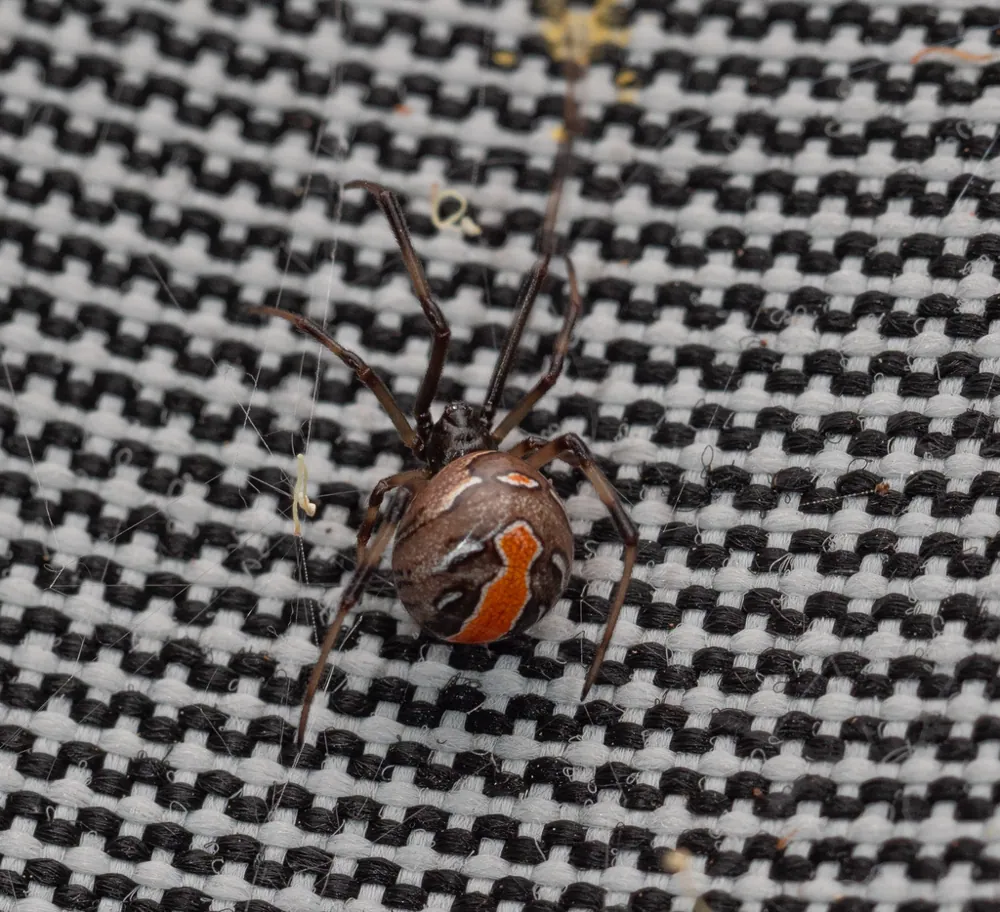
- The adult female has a round, shiny black body with a red stripe on the top of the abdomen.1
- Underneath, she has an hourglass-shaped red or orange streak.1
- The female's body is about 1 cm long, with slender legs.1
- The male is much smaller, 3 to 4 mm long, light brown with white markings on the upper abdomen and a pale hourglass marking underneath.1
- Its web is an irregular, untidy tangle of strong silk, usually in a warm, sheltered spot.1
Often confused with: The false redback spider (Steatoda capensis) has a similar build but is uniformly black or plum-coloured, and it has no red stripe on its abdomen.1
Venom power
Venom comes out through its fangs or teeth when it bites.
What does its venom do?
The venom is neurotoxic to vertebrates, meaning it attacks the nerves, and it causes a condition called latrodectism. Pain starts around the bite and typically becomes severe, spreading up the bitten limb and lasting for over 24 hours. Localised sweating in patches of skin is highly indicative of latrodectism, and nausea, vomiting, headache and agitation may indicate severe envenomation.1
How dangerous is it to people?
Danger to people: SeriousA bite needs a doctor. Deaths are very rare.The redback is one of the few spider species that can seriously harm humans. Because it often lives in buildings, it is responsible for a large number of serious spider bites in Australia.1
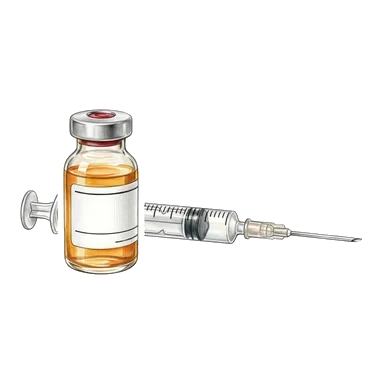 Good news: doctors have a medicine (antivenom) or a treatment for this.1
What does it do when it is scared?
Its bright scarlet markings may serve as a warning to potential predators.1
 If it bites
Always call your emergency number first (for example 112 in Europe, 911 in North America, 000 in Australia).
- Wash the bite and put an ice pack or cold pack on it to ease the pain. Do not use a pressure bandage. Get medical help, and call 000 (or the local emergency number) if a child is bitten, or if the pain is severe, spreads, or comes with sweating or vomiting.1
- Wash the bite and put an ice pack on it for the pain. Get medical help if the pain is strong, spreads or the person feels unwell.
This is general first aid guidance, not medical advice. Based on the first aid guidelines of the World Health Organization and the Australian Resuscitation Council. Facts come from public sources and may contain mistakes. When in doubt, always get medical help. First aid basics
 Stay safe
- Never touch, catch or tease a wild animal, even a small one, and even if it looks asleep or dead.
- Give it space. If you meet one, stay calm, step back slowly and let it go its own way.
- If one bites you: stay calm, keep still, call your emergency number (for example 112 in Europe, 911 in North America, 000 in Australia) or get to a hospital fast. Remember what it looked like, a photo helps.
It is not out to get you. It uses its venom to catch food or to protect itself, and it would much rather hide. More about staying safe
Where in the world?
How big is it?
How long is it?
 smaller than a fingernail
How big is Redback spider compared to you?
Just maths in your browser. Nothing is saved or sent anywhere.
How fast is it?


Facts
A male redback can successfully mate with a female katipō, a related New Zealand spider, producing hybrid offspring.1
Males often mate with a female who may then eat them, a behaviour called sexual cannibalism that many arachnids show while mating.1
In laboratory tests, redbacks survived an average of 100 days, and sometimes over 300 days, without food.1
After mating, a female can store sperm for up to two years and use it to fertilise several clutches of eggs.1
Spiderlings and larger females steal food from other spiders' webs, and spiderlings sometimes eat their less active siblings.1
For venom experts
- Scientific name
- Latrodectus hasselti
- Group
- Spiders
- Also called
- Australian black widow, red-striped spider, red-spot spider1
- Family
- Theridiidae2
- Order
- Araneae
- Continents
- Australia & Oceania, Asia
- Babies
- Each clutch averages 250 eggs, housed in a round white silken egg sac. Spiderlings hatch after about 8 days, though cooler temperatures can greatly slow this.1
- Lifespan
- about 3 years1
- Danger to people
- 3 / 5: Serious3
Where the facts come from
- Redback spider (Wikipedia (CC BY-SA 4.0))
- Latrodectus hasselti (iNaturalist): names and classification.
- Venom Wiki: the danger level, the typical size and the speed guess are our own. See how we work them out: How we rate danger.
Every fact on this page has a number that points to its source. If we got something wrong, sorry, we are animal fans, not a science journal. Tell us at [email protected] and we will fix it.
Get the Venom Wiki app
Every creature, every picture and the games in your pocket, even without internet.


 Support Venom Wiki Venom Wiki is a one-man project: free, with no ads and no cookies. A small tip helps keep it online.Feed the scorpion
 Katipo
 Mediterranean black widow
 Diving bell spider
 European yellow sac spider
 Noble false widow
 White-tailed spider
 Coastal taipan
 Common death adder
 Eastern brown snake
 Inland taipan
 Sydney funnel-web spider
 Tiger snake