
 Bitten or stung?
 All animals
 Pick a continent
 Africa
 Asia
 Europe
 South America
 Australia & Oceania
 Antarctica
 Pacific Ocean
 Atlantic Ocean
 Indian Ocean
 Arctic Ocean
 Mediterranean Sea
 Red Sea
 Caribbean Sea
 Coral Sea
 South China Sea
 Philippine Sea
 Andaman Sea
 North Sea
 Timor & Arafura Sea
 Bay of Bengal
 Gulf of California
 Games
 Venom battle
 Animal race
 Field notebook
 Venom TOP lists
 Stay safe
 Surprise me

Tomato frog
 Poison in its skin
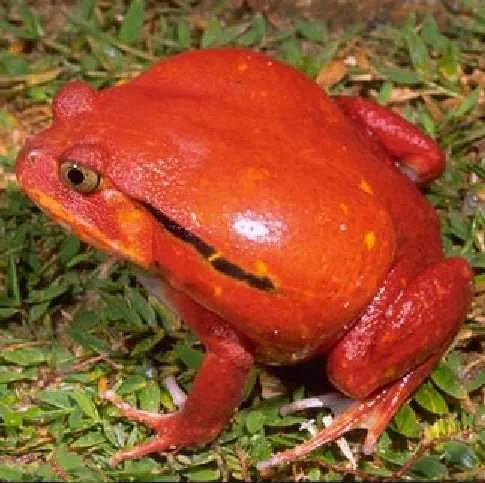
The tomato frog is a bright orange-red frog that lives only on the island of Madagascar. Its colour is a warning: its skin produces a sticky white substance that can cause an allergic reaction in people. It is also a species of conservation concern, because many have been taken for the pet trade.1
 How to recognise it
- Vibrant orange-red colour on the back1
- Females have brighter red or orange tones and a pale underside1
- Some individuals have black spots on the throat1
- Females are much larger than males1
Often confused with: The tomato frog is closely related to D. guineti, and the two are often confused. It is not yet clear how far the tomato frog's range extends, or whether it is a separate species or a variant of D. guineti.1
Poison power
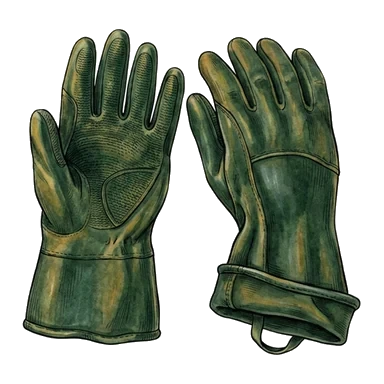
Its skin is poisonous. It is dangerous to touch, lick or eat.
What does its poison do?
The tomato frog is poisonous to touch rather than venomous, as it does not inject venom. A white substance secreted from its skin acts as a glue and can produce an allergic reaction in humans.1
How dangerous is it to people?
Danger to people: MildLike a bee sting or less. Basically harmless to people, unless the person is allergic.The skin secretion can cause an allergic reaction in people.1
What does it do when it is scared?
When threatened, it inflates its body to look larger, and its skin secretion acts as a sticky glue to deter predators.1
 If someone touched or ate it
Call your emergency number at once if the person has trouble breathing, swelling of the face or throat, or feels faint.
- If someone touched one: wash the hands well and do not touch the eyes or mouth. If a child or pet licked or ate one: call your poison centre or emergency number.
This is general first aid guidance, not medical advice. Based on the first aid guidelines of the World Health Organization and the Australian Resuscitation Council. Facts come from public sources and may contain mistakes. When in doubt, always get medical help. First aid basics
 Stay safe
- Never touch, catch or tease a wild animal, even a small one, and even if it looks asleep or dead.
- Give it space. If you meet one, stay calm, step back slowly and let it go its own way.
- If you touched or ate it: do not rub your eyes or mouth, wash your hands and get medical help.
It is not out to get you. Its poison is only there so that nothing eats it. More about staying safe
Where in the world?
How big is it?
How long is it?
How heavy is it?

 about as long as a bank card
 could cover 100 metres in 78 seconds (the fastest human needs 9.6)
How big is Tomato frog compared to you?
Just maths in your browser. Nothing is saved or sent anywhere.
How fast is it?


Facts
Females are much larger than males, reaching up to 230 g, while males reach only about 41 g.1
Each female can lay between 1,000 and 1,500 eggs at once, on the surface of the water.1
Tadpoles are only about 6 mm long when they hatch and feed by filter-feeding.1
Tadpoles turn into yellow juveniles about 45 days after the eggs were laid.1
For venom experts
- Scientific name
- Dyscophus antongilii
- Group
- Poison frogs, toads & newts
- Also called
- Madagascar tomato frog1
- Family
- Microhylidae2
- Order
- Anura
- Continents
- Africa
- Babies
- Females lay a clutch of 1,000 to 1,500 eggs on the water surface. The tadpoles hatch about 36 hours later.1
- How it is doing in the wild
- Least Concern (IUCN Red List)1
- Danger to people
- 1 / 5: Mild3
Where the facts come from
- Dyscophus antongilii (Wikipedia (CC BY-SA 4.0))
- Dyscophus antongilii (iNaturalist): names and classification.
- Venom Wiki: the danger level, the typical size and the speed guess are our own. See how we work them out: How we rate danger.
Every fact on this page has a number that points to its source. If we got something wrong, sorry, we are animal fans, not a science journal. Tell us at [email protected] and we will fix it.
Get the Venom Wiki app
Every creature, every picture and the games in your pocket, even without internet.


 Support Venom Wiki Venom Wiki is a one-man project: free, with no ads and no cookies. A small tip helps keep it online.Feed the scorpion
 Golden mantella
 Iberian ribbed newt
 African common toad
 Baron's mantella
 Blue-legged mantella
 Climbing mantella
 Black mamba
 Deathstalker
 Egyptian cobra
 Puff adder
 Boomslang
 Fat-tailed scorpion
