
 África
 Asia
Asia Europa
 Sudamérica
 Australia y Oceanía
 Antártida
 Océano Pacífico
 Océano Atlántico
 Océano Índico
 Océano Ártico
 Mar Mediterráneo
 Mar Rojo
 Mar Caribe
 Mar del Coral
 Mar de China Meridional
 Mar de Filipinas
 Mar de Andamán
 Mar del Norte
 Mar de Timor y de Arafura
 Golfo de Bengala
 Golfo de California
Western rattlesnake
 Mordeduras
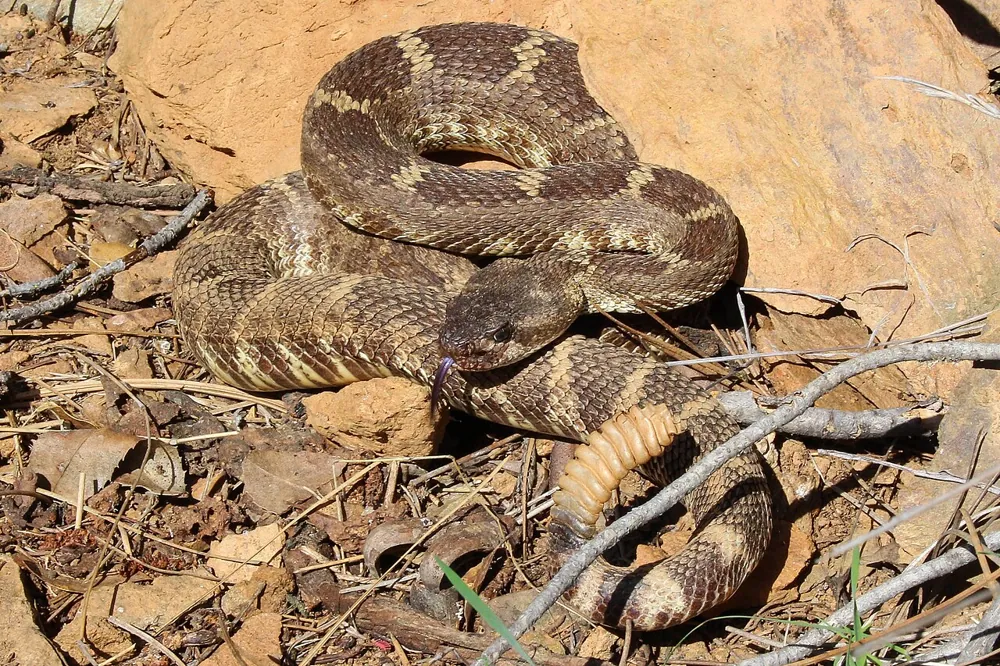
The Western rattlesnake is a venomous pit viper that lives across western North America, from the Baja California Peninsula in Mexico to the southern interior of British Columbia in Canada. It is one of only three rattlesnake species still found in Canada, which is why its populations there matter.1



 Cómo reconocerlo
- Ground colour is dark brown, dark grey, olive-brown, or sometimes black or pale yellowish.1
- Large dark blotches run along the back, with uneven white edges, and are wider than the gaps between them.1
- A dark brown stripe with a white border runs from the eye to the angle of the jaw.1
- The belly is pale yellow, usually with brown spots.1
- Juveniles have clearer patterns that fade as the snake matures. The last two tail rings, at the base of the tail, are usually black.1
Poder del veneno
El veneno sale por sus colmillos o dientes cuando muerde.
¿Qué hace su veneno?
Its venom is both hemotoxic, meaning it damages blood and tissue, and neurotoxic, meaning it affects the nerves. In prey, it can cause paralysis, which stops the animal escaping. In people it is linked with cardiovascular effects, internal bleeding and headaches.1
¿Qué peligro tiene para las personas?
Peligro para las personas: GraveUna mordedura necesita médico. Las muertes son muy raras. Si muerde
- Mantén a la persona quieta y tranquila, la extremidad mordida a la altura del corazón, quítale anillos y cosas apretadas y llévala rápido a un hospital.
Llama siempre primero a tu número de emergencias (112, 000, 911). Esto son pautas generales de primeros auxilios, no consejo médico. Primeros auxilios básicos
 Mantente a salvo
- Nunca toques, atrapes ni molestes a un animal salvaje, aunque sea pequeño y aunque parezca dormido o muerto.
- Déjale espacio. Si te encuentras uno, mantén la calma, retrocede despacio y deja que siga su camino.
- Si te muerde: mantén la calma, no te muevas, llama a tu número de emergencias (112, 000, 911) o ve rápido a un hospital. Recuerda cómo era, una foto ayuda.
No va a por ti. Usa su veneno para cazar o defenderse, y prefiere mil veces esconderse. Más sobre cómo protegerte
¿En qué parte del mundo?
¿Qué tamaño tiene?
¿Cuánto mide?
 mide como 3 gatos domésticos de la nariz a la cola
 mide como 9 plátanos puestos en fila
 podría recorrer 100 metros en 97 segundos (el humano más rápido necesita 9,6)
¿Qué tamaño tiene Western rattlesnake comparado contigo?
Solo cálculos en tu navegador. No se guarda ni se envía nada a ningún sitio.
¿Qué velocidad alcanza?


Datos
Its size depends on where it lives and on its diet. Snakes that eat lizards are much smaller than those that eat birds and mammals.1
The largest recorded Western rattlesnake measured 162.6 cm, but mainland adults often reach about 100 cm.1
It makes seasonal migrations between winter and summer habitats to follow its prey.1
Mating snakes are very sensitive to disturbance and quickly separate.1
Most females breed every two years, although about 10% breed in two years in a row.1
Para expertos en veneno
- Nombre científico
- Crotalus oreganus
- Grupo
- Serpientes de cascabel
- Familia
- Viperidae2
- Orden
- Squamata
- Continentes
- Norteamérica
- Crías
- It gives birth to live young, usually 3 to 8 per litter (1 to 15 is the range), in August or September. Newborns are about 19 to 28 cm long.1
- Cómo le va en la naturaleza
- Threatened in Canada (Schedule 1 federally threatened under Canada's Species at Risk Act). Previously listed as Least Concern on the IUCN Red List.1
- Peligro para las personas
- 3 / 5: Grave3
De dónde salen los datos
- Crotalus oreganus (Wikipedia (CC BY-SA 4.0))
- Crotalus oreganus (iNaturalist): nombres y clasificación.
- Venom Wiki: el nivel de peligro, el tamaño típico y la velocidad estimada son nuestros. Mira cómo los calculamos: Cómo valoramos el peligro.
Cada dato de esta página tiene un número que lleva a su fuente. Si nos hemos equivocado en algo, perdón, somos fans de los animales, no una revista científica. Escríbenos a [email protected] y lo arreglamos.
 ¡El escorpión tiene hambre! Venom Wiki es un proyecto de una sola persona: gratis, sin anuncios y sin rastreadores. Una pequeña propina ayuda a mantenerlo en línea.Alimenta al escorpión
Más del mismo grupo: Serpientes de cascabel
 Eastern diamondback rattlesnakeSerpientes de cascabelPuede matar
 Timber rattlesnakeSerpientes de cascabelPuede matar
 Western diamondback rattlesnakeSerpientes de cascabelPuede matar
 SidewinderSerpientes de cascabelNecesita médico
 Mojave rattlesnakeSerpientes de cascabelPuede matar
 Aruba rattlesnakeSerpientes de cascabelNecesita médico
 Terciopelo
 Eastern coral snake
 Eyelash viper
 Arizona bark scorpion
 Brown recluse
 Cane toad