
 Afrika
 Asia
Asia Europa
 Hego Amerika
 Australia eta Ozeania
 Antartika
 Ozeano Barea
 Ozeano Atlantikoa
 Ozeano Indikoa
 Ozeano Artikoa
 Mediterraneo itsasoa
 Itsaso Gorria
 Karibe itsasoa
 Koralen itsasoa
 Hego Txinako itsasoa
 Filipinetako itsasoa
 Andaman itsasoa
 Ipar itsasoa
 Timor eta Arafura itsasoak
 Bengalako golkoa
 Kaliforniako golkoa
Anthony's poison arrow frog
 Pozoia azalean
Anthony's poison arrow frog is a small, brightly marked frog that lives on the forest floor in southwestern Ecuador and northwestern Peru. It is poisonous rather than venomous: its skin carries a very strong toxin, so it should never be touched or handled. Scientists have used a chemical from this frog to study the nervous system.1
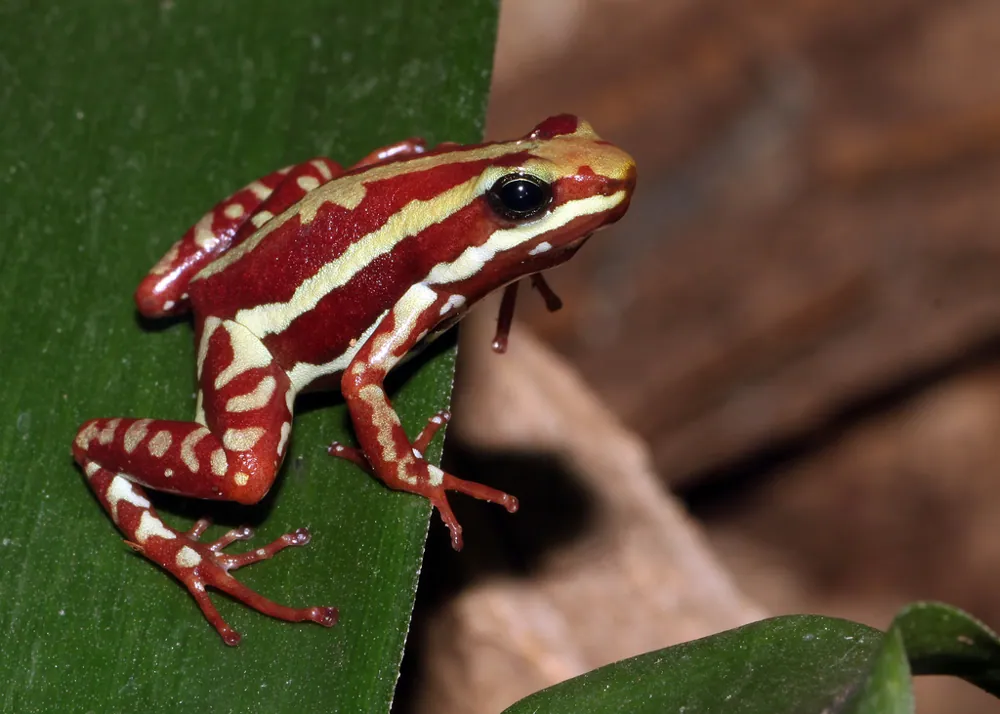
 Nola ezagutu
Pozoi-indarra
Bere azala toxikoa da. Arriskutsua da ukitzea, miazkatzea edo jatea.
Zer egiten du bere toxinak?
This frog is poisonous, not venomous. Its skin contains epibatidine, an extremely toxic substance similar to nicotine, which acts on the nerves. It is not used in medicine because it is too toxic for human use, and it is now used only for research.1
Zein arriskutsua da pertsonentzat?
Arriskua pertsonentzat: MingarriaBenetan min handia eman dezake, baina ia inoiz ez da larria.The frog's skin toxin is described as extremely toxic. Contact with the skin is the main concern, and the frog should not be handled.1
 Norbaitek ukitu edo jan badu
- Norbaitek bat ukitu badu: garbitu eskuak ondo eta ez ukitu begiak edo ahoa. Haur edo maskota batek bat miazkatu edo jan badu: deitu zure intoxikazio-zentrora edo larrialdi-zenbakira.
Deitu beti lehenik zure larrialdi-zenbakira (112, 000, 911). Lehen sorospenei buruzko orientabide orokorra da hau, ez mediku-aholkua. Lehen sorospenen oinarriak
 Egon seguru
- Ez ukitu, ez harrapatu eta ez zirikatu inoiz animalia basati bat, txikia izan arren, eta lo edo hilda dagoela badirudi ere.
- Utzi tartea. Bat aurkitzen baduzu, egon lasai, egin atzera poliki eta utzi bere bidetik joaten.
- Ukitu edo jan baduzu: ez igurtzi begiak edo ahoa, garbitu eskuak eta lortu mediku-laguntza.
Ez dabil zure atzetik. Pozoia ezerk jan ez dezan baino ez du. Seguru egoteari buruz gehiago
Munduko zein tokitan?
Zein handia da?
Zein luzea da?
 klip bat bezain luzea, gutxi gorabehera
 100 metro 110 segundotan egin litzake (gizakirik azkarrenak 9,6 behar ditu)
Zein handia da Anthony's poison arrow frog ZUREKIN alderatuta?
Matematika hutsa zure nabigatzailean. Ez da ezer gordetzen, ezta inora bidaltzen ere.
Zein azkarra da?


Datuak
Epibatidine, one of the most toxic substances found in this frog, was first derived from it and named after it.1
The toxin appears to come from the frog's diet, because frogs raised in captivity had none.1
The male, not the female, carries the tadpoles on his back to water.1
Frogs collected from different habitats had different levels of toxin.1
Pozoi-adituentzat
- Izen zientifikoa
- Epipedobates anthonyi
- Taldea
- Igel toxikoak, apoak eta uhandreak
- Familia
- Dendrobatidae2
- Ordena
- Anura
- Kontinenteak
- Hego Amerika
- Kumeak
- The female lays a clutch of 15 to 40 eggs on the ground among leaf litter. The male guards the eggs until they hatch in about two weeks, then carries the tadpoles on his back to a suitable water body, where they develop into frogs in about sixty days.1
- Nola dagoen naturan
- Near Threatened (IUCN and Peru); Least Concern in Ecuador1
- Arriskua pertsonentzat
- 2 / 5: Mingarria3
Datuak nondik datozen
- Anthony's poison arrow frog (Wikipedia (CC BY-SA 4.0))
- Epipedobates anthonyi (iNaturalist): izenak eta sailkapena.
- Venom Wiki: arrisku-maila, ohiko tamaina eta abiadura-kalkulua geureak dira. Ikusi nola kalkulatzen ditugun: Nola baloratzen dugun arriskua.
Orrialde honetako datu bakoitzak zenbaki bat du, bere iturrira eramaten zaituena. Zerbait gaizki badugu, barkatu, animalien zaleak gara, ez zientzia-aldizkari bat. Esaiguzu [email protected] helbidean eta konponduko dugu.
 Eskorpioia gose da! Venom Wiki pertsona bakar baten proiektua da: doakoa, iragarkirik eta jarraitzailerik gabe. Eskupeko txiki batek sarean mantentzen laguntzen du.Elikatu eskorpioia
Talde bereko gehiago: Igel toxikoak, apoak eta uhandreak
 Golden poison frogIgel toxikoak, apoak eta uhandreakHilgarriaEz ukitu
 Cane toadIgel toxikoak, apoak eta uhandreakMedikua behar duEz ukitu
 Dyeing poison dart frogIgel toxikoak, apoak eta uhandreakMin ematen du, besterik ezEz ukitu
 Black-legged poison frogIgel toxikoak, apoak eta uhandreakHil dezakeEz ukitu
 Bruno's casque-headed frogIgel toxikoak, apoak eta uhandreakMedikua behar duEz ukitu
 Harlequin poison frogIgel toxikoak, apoak eta uhandreakMedikua behar duEz ukitu
 Terciopelo
 Brazilian wandering spider
 Eyelash viper
 Golden lancehead
 South American bushmaster
 Peruvian giant centipede