
 Afrika
 Asia
Asia Europa
 Hego Amerika
 Australia eta Ozeania
 Antartika
 Ozeano Barea
 Ozeano Atlantikoa
 Ozeano Indikoa
 Ozeano Artikoa
 Mediterraneo itsasoa
 Itsaso Gorria
 Karibe itsasoa
 Koralen itsasoa
 Hego Txinako itsasoa
 Filipinetako itsasoa
 Andaman itsasoa
 Ipar itsasoa
 Timor eta Arafura itsasoak
 Bengalako golkoa
 Kaliforniako golkoa
Horseshoe pit viper
 Koska
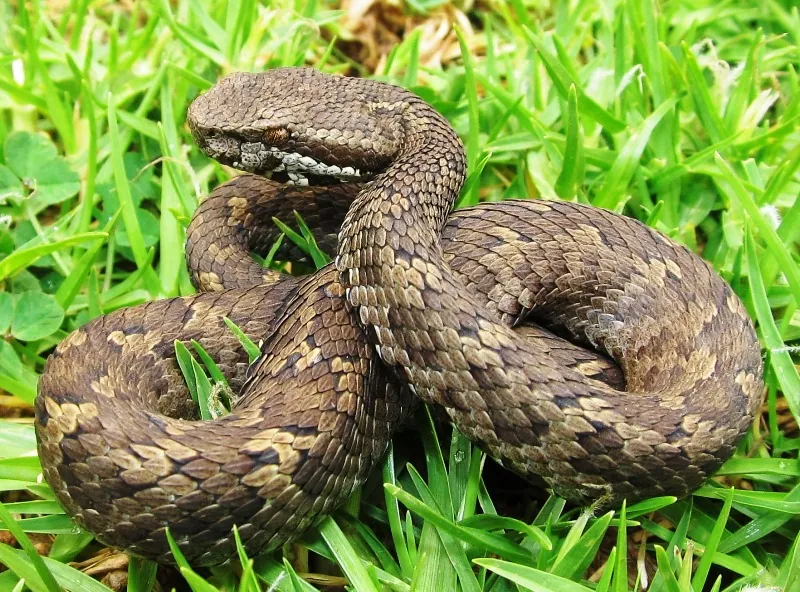
KoskaThe horseshoe pit viper is a venomous snake that lives only in the Western Ghats mountains of southern India. It has a pale horseshoe-shaped mark on the back of its neck, which gives it its common name. It is special because its natural range is very small, possibly the smallest of any pit viper confirmed from India.1



 Nola ezagutu
- A pale buff, horseshoe-shaped (inverted "U") mark on the nape of the neck.1
- Pale brownish or buff body with darker grey blotches and some white streaks.1
- Small internasal scales on the snout.1
- 21 rows of smooth or weakly keeled scales along the middle of the body.1
Askotan honekin nahasten da: It is often grouped with other pit vipers of peninsular India. It can be told apart by its small internasal scales, the second upper lip scale touching the loreal pit (the heat-sensing pit between eye and nostril), 21 rows of dorsal scales at midbody, and a single row of scales between the lip scales and the eye scales.1
Pozoi-ahalmena
Pozoia letaginetatik edo hortzetatik ateratzen da kosk egiten duenean.
Zein arriskutsua da pertsonentzat?
Arriskua pertsonentzat: LarriaKoska batek medikua behar du. Heriotzak oso arraroak dira. Kosk egiten badu
- Eutsi pertsona geldi eta lasai, eduki koska jasotako gorputz-adarra bihotzaren mailan, kendu eraztunak eta gauza estuak, eta joan ospitalera azkar.
Deitu beti lehenik zure larrialdi-zenbakira (112, 000, 911). Lehen sorospenei buruzko orientabide orokorra da hau, ez mediku-aholkua. Lehen sorospenen oinarriak
 Egon seguru
- Ez ukitu, ez harrapatu eta ez zirikatu inoiz animalia basati bat, txikia izan arren, eta lo edo hilda dagoela badirudi ere.
- Utzi tartea. Bat aurkitzen baduzu, egon lasai, egin atzera poliki eta utzi bere bidetik joaten.
- Batek kosk egiten badizu: egon lasai, egon geldi, deitu zure larrialdi-zenbakira (112, 000, 911) edo joan ospitalera azkar. Gogoratu nolakoa zen, argazki batek laguntzen du.
Ez dabil zure atzetik. Pozoia janaria harrapatzeko edo bere burua babesteko erabiltzen du, eta askoz nahiago du ezkutatu. Seguru egoteari buruz gehiago
Munduko zein tokitan?
Zein handia da?
Zein luzea da?
 2 banana bata bestearen atzetik jarrita bezain luzea
 12 eraikuntza-bloke ilaran jarrita bezain luzea
 100 metro 110 segundotan egin litzake (gizakirik azkarrenak 9,6 behar ditu)
Zein handia da Horseshoe pit viper ZUREKIN alderatuta?
Matematika hutsa zure nabigatzailean. Ez da ezer gordetzen, ezta inora bidaltzen ere.
Zein azkarra da?


Datuak
Mito-hauslea
Mitoa: The horseshoe pit viper is found across a wide area, including parts of the Eastern Ghats.
Egia: Early reports from outside the Western Ghats were misidentifications. The species is endemic to the Western Ghats, in Karnataka, Tamil Nadu and Kerala.1
Datuak nondik datozen
- Craspedocephalus strigatus (Wikipedia (CC BY-SA 4.0))
- Craspedocephalus strigatus (iNaturalist): izenak eta sailkapena.
- Venom Wiki: arrisku-maila, ohiko tamaina eta abiadura-kalkulua geureak dira. Ikusi nola kalkulatzen ditugun: Nola baloratzen dugun arriskua.
Orrialde honetako datu bakoitzak zenbaki bat du, bere iturrira eramaten zaituena. Zerbait gaizki badugu, barkatu, animalien zaleak gara, ez zientzia-aldizkari bat. Esaiguzu [email protected] helbidean eta konponduko dugu.
 Eskorpioia gose da! Venom Wiki pertsona bakar baten proiektua da: doakoa, iragarkirik eta jarraitzailerik gabe. Eskupeko txiki batek sarean mantentzen laguntzen du.Elikatu eskorpioia
 Brown spotted pit viper
 Habu
Habu Hump-nosed viper
 Hundred-pace viper
 Malayan pit viper
 Mamushi
 Deathstalker
 Indian cobra
 Indian saw-scaled viper
 King cobra
 Puff adder
 Russell's viper