
 Afrika
 Asia
Asia Europa
 Hego Amerika
 Australia eta Ozeania
 Antartika
 Ozeano Barea
 Ozeano Atlantikoa
 Ozeano Indikoa
 Ozeano Artikoa
 Mediterraneo itsasoa
 Itsaso Gorria
 Karibe itsasoa
 Koralen itsasoa
 Hego Txinako itsasoa
 Filipinetako itsasoa
 Andaman itsasoa
 Ipar itsasoa
 Timor eta Arafura itsasoak
 Bengalako golkoa
 Kaliforniako golkoa
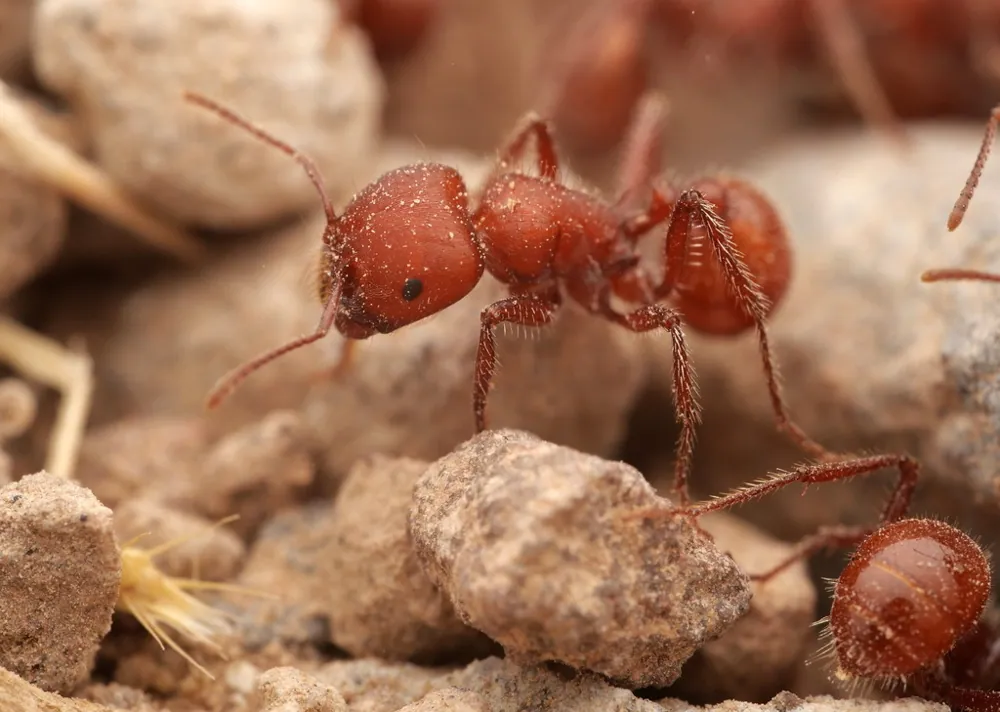
Red harvester ant
 Ziztadak
The red harvester ant is a large ant that lives in the dry, scrubby land of the southwestern United States. Its nests are dug underground, and the bare patches around them are easy to spot in open grassland. It matters because these ants gather seeds and help spread plants across the land.1


 Nola ezagutu
- Large ant, about 5 to 7 mm long1
- Mound is flat and broad, up to 100 mm high and 300 to 1,200 mm across1
- Bare ground with no plants, and small pebbles around the tunnel entrance1
- Three to eight trails lead out from the mound, like arms1
- Seed hulls are often scattered around the nest1
Askotan honekin nahasten da: Red harvester ants are often mistaken for fire ants. They are not closely related to any fire ant species, native or introduced.1
Pozoi-ahalmena
Pozoia ezten batetik ateratzen da.
Zein arriskutsua da pertsonentzat?
Arriskua pertsonentzat: MingarriaBenetan min handia eman dezake, baina ia inoiz ez da larria. Ziztatzen badu
- Garbitu eta hoztu ziztadak.
- Pertsonak arnasa hartzeko zailtasunak baditu, aurpegia edo eztarria hanpatuta baditu, edo zorabiatzen ari dela sentitzen badu, larrialdi alergikoa da: deitu zure larrialdi-zenbakira.
Deitu beti lehenik zure larrialdi-zenbakira (112, 000, 911). Lehen sorospenei buruzko orientabide orokorra da hau, ez mediku-aholkua. Lehen sorospenen oinarriak
 Egon seguru
- Ez ukitu, ez harrapatu eta ez zirikatu inoiz animalia basati bat, txikia izan arren, eta lo edo hilda dagoela badirudi ere.
- Utzi tartea. Bat aurkitzen baduzu, egon lasai, egin atzera poliki eta utzi bere bidetik joaten.
- Batek ziztatzen bazaitu: egon lasai, egon geldi, deitu zure larrialdi-zenbakira (112, 000, 911) edo joan ospitalera azkar. Gogoratu nolakoa zen, argazki batek laguntzen du.
Ez dabil zure atzetik. Pozoia janaria harrapatzeko edo bere burua babesteko erabiltzen du, eta askoz nahiago du ezkutatu. Seguru egoteari buruz gehiago
Munduko zein tokitan?
Zein handia da?
Zein luzea da?
 zure azazkalaren gainean esertzeko bezain txikia
Zein handia da Red harvester ant ZUREKIN alderatuta?
Matematika hutsa zure nabigatzailean. Ez da ezer gordetzen, ezta inora bidaltzen ere.
Zein azkarra da?


Datuak
Some queens have been known to live up to 30 years in the wild.1
Colonies have no central control. They adjust how much they forage using feedback from returning ants, which can take only seconds.1
Rival Novomessor cockerelli ants block nest entrances with sand and small rocks, delaying the red harvester ants' activity by one to three hours.1
Seeds are stored in the nest for months, and sometimes several years, so the colony has food during lean times.1
The plants benefit too. Ants carry seeds while foraging, which spreads the plants over a wider area.1
Ant foraging is guided by chemical signals, and foragers can travel up to 50 to 60 m from the nest.1
Mito-hauslea
Mitoa: Red harvester ants are fire ants.
Egia: They are often mistaken for fire ants but are not closely related to any fire ant species.1
Pozoi-adituentzat
- Izen zientifikoa
- Pogonomyrmex barbatus
- Taldea
- Inurriak
- Familia
- Formicidae2
- Ordena
- Hymenoptera
- Kontinenteak
- Ipar Amerika
- Kumeak
- A single queen starts each new colony by sealing herself in a soil nest and laying eggs. The first workers emerge over six to eight weeks.1
- Bizi-iraupena
- 30 urte inguru1
- Arriskua pertsonentzat
- 2 / 5: Mingarria3
Datuak nondik datozen
- Red harvester ant (Wikipedia (CC BY-SA 4.0))
- Pogonomyrmex barbatus (iNaturalist): izenak eta sailkapena.
- Venom Wiki: arrisku-maila, ohiko tamaina eta abiadura-kalkulua geureak dira. Ikusi nola kalkulatzen ditugun: Nola baloratzen dugun arriskua.
Orrialde honetako datu bakoitzak zenbaki bat du, bere iturrira eramaten zaituena. Zerbait gaizki badugu, barkatu, animalien zaleak gara, ez zientzia-aldizkari bat. Esaiguzu [email protected] helbidean eta konponduko dugu.
 Eskorpioia gose da! Venom Wiki pertsona bakar baten proiektua da: doakoa, iragarkirik eta jarraitzailerik gabe. Eskupeko txiki batek sarean mantentzen laguntzen du.Elikatu eskorpioia
 Bullet ant
 Army ant
 Maricopa harvester ant
 Trap-jaw ant
 Acacia ant
 California harvester ant
 Terciopelo
 Eastern coral snake
 Eastern diamondback rattlesnake
 Eyelash viper
 Timber rattlesnake
 Western diamondback rattlesnake