
 Afirik
 Aazi
Aazi Orop
Orop Amerik Sud
 Ostarali e Oseyani
 Antarktik
 Geeci Pasifik
 Geeci Atlantik
 Geeci Enndo
 Geeci Arktik
 Geeci Mediteraane
 Geeci Boɗeewi
 Geeci Karayib
 Geeci Korayl
 Geeci Siin Sud
 Geeci Filipiin
 Geeci Andaman
 Geeci Nord
 Geeci Timor e Arafura
 Gulf Bengal
 Gulf Kaliforni
Anthony's poison arrow frog
 Tooke nder nguru mum
Anthony's poison arrow frog is a small, brightly marked frog that lives on the forest floor in southwestern Ecuador and northwestern Peru. It is poisonous rather than venomous: its skin carries a very strong toxin, so it should never be touched or handled. Scientists have used a chemical from this frog to study the nervous system.1
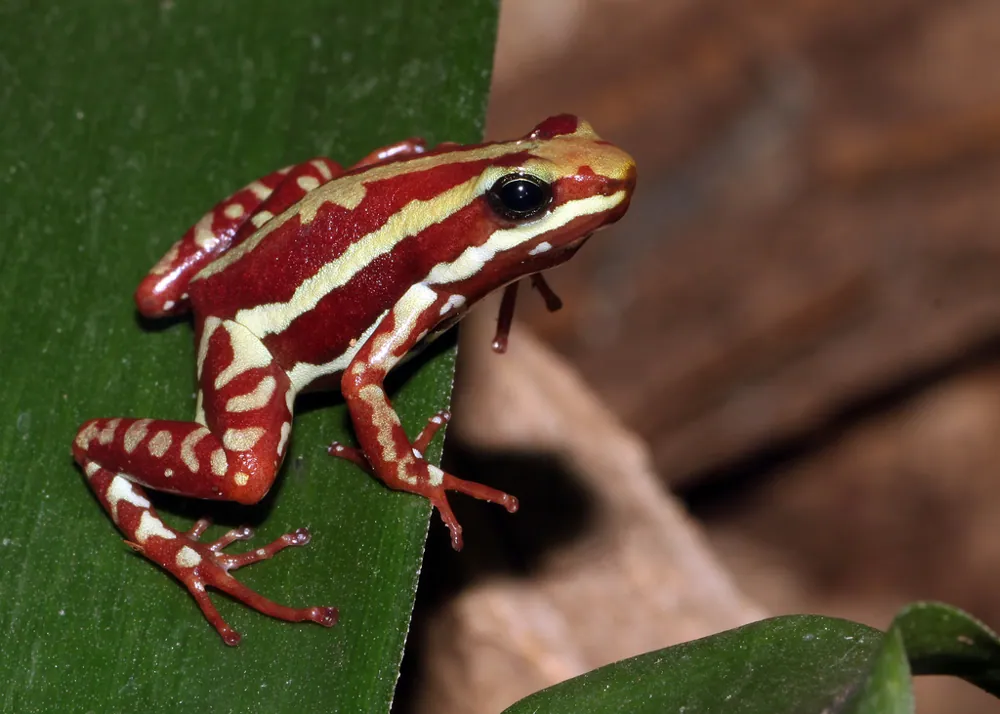
 Hono anndirtee ngal
Doole tooke
Nguru mum ko tooke. No musiiba meemugol ngal, meemugol ngal e ɗemngal walla ñaamugol ngal.
Ko honɗun tooke ɓanndu mum waɗata?
This frog is poisonous, not venomous. Its skin contains epibatidine, an extremely toxic substance similar to nicotine, which acts on the nerves. It is not used in medicine because it is too toxic for human use, and it is now used only for research.1
Hono musiiba mum heewiri e yimɓe?
Musiiba e yimɓe: MuusɗoNo waawi muusugol sanne, kono ko ɓadii kala tuma ɗum wonataa musiiba mawɗo.The frog's skin toxin is described as extremely toxic. Contact with the skin is the main concern, and the frog should not be handled.1
 Si neɗɗo meemii walla ñaamii ngal
- Si neɗɗo meemii gooto e majji: loot juuɗe ɗen no moƴƴi, wota meem gite walla hunuko. Si paykun walla kullal suudu meemii gooto e ɗemngal walla ñaamii gooto: noddu centre antipoison walla nimero ballal.
Adii fow noddu nimero ballal (112, 000, 911). Ɗum ko anndinal ballal adiingal, wanaa saaraangal doktoro. Ko adii nder ballal adiingal
 Reen hoore maa
- Wota a meem, wota a nanngu, wota a jalnu kullal ladde haa abada, hay si ko tokooso, hay si no yi'ee no ɗaanii walla maayii.
- Accu ngal nokku. Si a fotti e ngal, deeƴu, ruttu ɓaawo seeɗa seeɗa, accu ngal yaha laawol mum.
- Si a meemii walla a ñaamii ngal: wota a moomtu gite maa walla hunuko maa, loot juuɗe maa, heɓu ballal doktoro.
Ngal faalaaka gaañugol ma. Tooke mum woodi tun ngam wota huunde ñaam ngal. Ko ɓeydi fii reenugol hoore maa
Hoto nder aduna?
Hono mawniri?
Hono juutiri?
 juuti no ñippirde kayitaaje
 no waawi taccugol meeteruuji 100 nder segonde 110 (neɗɗo ɓurɗo yaawugol sokli 9,6)
Hono Anthony's poison arrow frog mawniri, si fooɗondiraama e AN?
Ko limoore tun nder navigateur maa. Alaa ko danndetee walla ko neldetee ka nokku woo.
Hono yaawiri?


Humpito
Epibatidine, one of the most toxic substances found in this frog, was first derived from it and named after it.1
The toxin appears to come from the frog's diet, because frogs raised in captivity had none.1
The male, not the female, carries the tadpoles on his back to water.1
Frogs collected from different habitats had different levels of toxin.1
Ngam ganduɓe tooke
- Innde ganndal
- Epipedobates anthonyi
- Fedde
- Paaɓe tooke, krapooji e tritonuuji
- Ɓesngu
- Dendrobatidae2
- Ordre
- Anura
- Leyɗe mawɗe
- Amerik Sud
- Ɓiɓɓe tokosɓe
- The female lays a clutch of 15 to 40 eggs on the ground among leaf litter. The male guards the eggs until they hatch in about two weeks, then carries the tadpoles on his back to a suitable water body, where they develop into frogs in about sixty days.1
- Hono ngal woniri nder ladde
- Near Threatened (IUCN and Peru); Least Concern in Ecuador1
- Musiiba e yimɓe
- 2 / 5: Muusɗo3
Ɗo humpitooji ɗin iwri
- Anthony's poison arrow frog (Wikipedia (CC BY-SA 4.0))
- Epipedobates anthonyi (iNaturalist): inɗe e ŋoordingol (classification).
- Venom Wiki: tolno musiiba, mawnugol aadaajo e miijo yaawugol ko amen. Ndaar no min ƴeewtirta ɗum: Hono min tolnirta musiiba.
Kala humpito nder ngoo hello no jogii limoore hollirnde iwdi mum. Si min juumii, yaafo, min ko yiɗɓe kulle, wanaa jaaynde ganndal. Haalan min e [email protected], min feewnitan.
 Yaare nden no weelaa! Venom Wiki ko golle neɗɗo gooto: ko yoɓetaake, alaa piiblisite, alaa reweteeɓe. Kopporde tokooso no walla heddingol ɗum e enternet.Ñaamnu yaare nden
Ko ɓeydi e fedde wootere: Paaɓe tooke, krapooji e tritonuuji
 Faaɓru tooke kaŋŋePaaɓe tooke, krapooji e tritonuujiWaroowoWota a meem
 Cane toadPaaɓe tooke, krapooji e tritonuujiNo sokli doktoroWota a meem
 Dyeing poison dart frogPaaɓe tooke, krapooji e tritonuujiNo muusi tunWota a meem
 Black-legged poison frogPaaɓe tooke, krapooji e tritonuujiNo waawi warugolWota a meem
 Bruno's casque-headed frogPaaɓe tooke, krapooji e tritonuujiNo sokli doktoroWota a meem
 Harlequin poison frogPaaɓe tooke, krapooji e tritonuujiNo sokli doktoroWota a meem
 Terciopelo
 Brazilian wandering spider
 Eyelash viper
 Golden lancehead
 South American bushmaster
 Peruvian giant centipede