
 Afirik
 Aazi
Aazi Orop
Orop Amerik Sud
 Ostarali e Oseyani
 Antarktik
 Geeci Pasifik
 Geeci Atlantik
 Geeci Enndo
 Geeci Arktik
 Geeci Mediteraane
 Geeci Boɗeewi
 Geeci Karayib
 Geeci Korayl
 Geeci Siin Sud
 Geeci Filipiin
 Geeci Andaman
 Geeci Nord
 Geeci Timor e Arafura
 Gulf Bengal
 Gulf Kaliforni
Common house spider
 Ŋatgol
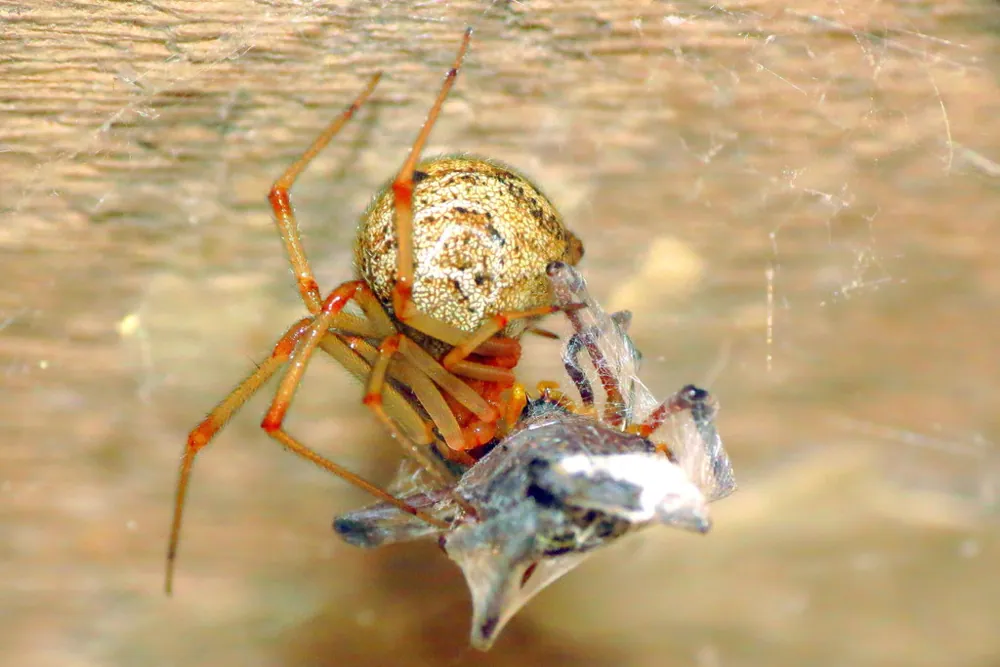
The common house spider is a small spider that lives in and around human homes. It spins messy three-dimensional webs in dark corners and catches household insects. It is found in many parts of the world, and its bite is not known to be dangerous to people.1



 Hono anndirtee ngal
- Its colour varies from tan to nearly black, often with patterns of different shades on the body.1
- Females are usually 5 to 6 mm long, and males are usually 3.8 to 4.7 mm long.1
- With legs outspread, it can measure 2.5 cm or more across.1
- Its webs are three-dimensional and built in dark corners.1
No jiibondiree e: Its body shape is similar to that of widow spiders. Males have a less bulbous (rounded) abdomen than females.1
Doole tooke ŋatgol
Tooke no yaltira ñiiƴe mum tuma ngal ŋatata.
Ko honɗun tooke mum waɗata (ŋatgol walla jukkugol)?
It has neurotoxic venom, which attacks the nerves. Its bites are less severe than those of other theridiids (a family of cobweb spiders).1
Hono musiiba mum heewiri e yimɓe?
Musiiba e yimɓe: SeeɗaNo jukkugol ñaaki walla ko ɓuri famɗugol. Ko ɓadii alaa musiiba e yimɓe.Its bites are not known to be dangerous to humans. It bites people only in self-defence, when it is grabbed and squeezed.1
Ko honɗun ngal waɗata si ngal hulii?
It runs to a secure hiding place when it senses movement, and if cornered it plays dead as a last resort.1
 Si no ŋata
- Loot nokku ŋataaɗo on, waɗ galaasi e dow mum ngam muusu. Heɓu ballal doktoro si muusu ngu no tiiɗi, no saakoo, walla neɗɗo on no yi'a o selliraali.
Adii fow noddu nimero ballal (112, 000, 911). Ɗum ko anndinal ballal adiingal, wanaa saaraangal doktoro. Ko adii nder ballal adiingal
 Reen hoore maa
- Wota a meem, wota a nanngu, wota a jalnu kullal ladde haa abada, hay si ko tokooso, hay si no yi'ee no ɗaanii walla maayii.
- Accu ngal nokku. Si a fotti e ngal, deeƴu, ruttu ɓaawo seeɗa seeɗa, accu ngal yaha laawol mum.
- Si gooto e majji ŋatii ma: deeƴu, wota a dillu, noddu nimero ballal (112, 000, 911) walla yahu lopitaan law. Jogo e hakkille no ngal nanndi, natal no walla.
Ngal faalaaka gaañugol ma. Ngal no huutora tooke mum ngam nanngugol ñaamdu walla reenugol hoore mum, ngal ɓuri yiɗugol suuɗaade. Ko ɓeydi fii reenugol hoore maa
Hoto nder aduna?
Hono mawniri?
Hono juutiri?
 tokooso no feewi haa no waawi joodagol e dow hoore hoɓɓere maa
Hono Common house spider mawniri, si fooɗondiraama e AN?
Ko limoore tun nder navigateur maa. Alaa ko danndetee walla ko neldetee ka nokku woo.
Hono yaawiri?


Humpito
The assassin bug Stenolemus lanipes apparently feeds only on its young, though it can also eat adults.1
When food dries out, it usually drops it to the floor to free up space in its web, rather than rebuilding the web.1
It has poor eyesight and cannot detect movement more than three to four inches away.1
Males and females often share the same web for long periods, though females sometimes fight when they meet.1
Bonnoowo fenaandeeji
Fenaande: Common house spiders are dangerous to people.
Goonga: Their venom is neurotoxic, but their bites are not known to be dangerous to humans. They bite only when grabbed and squeezed.1
Ngam ganduɓe tooke
- Innde ganndal
- Parasteatoda tepidariorum
- Fedde
- Araañeeji
- Ɓesngu
- Theridiidae2
- Ordre
- Araneae
- Leyɗe mawɗe
- Amerik Nord, Amerik Sud
- Ɓiɓɓe tokosɓe
- Females hang their spherical egg sacs in their webs, with clutches averaging 149 eggs. The young stay in the mother's web for several days after hatching.1
- Musiiba e yimɓe
- 1 / 5: Seeɗa3
Ɗo humpitooji ɗin iwri
- Parasteatoda tepidariorum (Wikipedia (CC BY-SA 4.0))
- Parasteatoda tepidariorum (iNaturalist): inɗe e ŋoordingol (classification).
- Venom Wiki: tolno musiiba, mawnugol aadaajo e miijo yaawugol ko amen. Ndaar no min ƴeewtirta ɗum: Hono min tolnirta musiiba.
Kala humpito nder ngoo hello no jogii limoore hollirnde iwdi mum. Si min juumii, yaafo, min ko yiɗɓe kulle, wanaa jaaynde ganndal. Haalan min e [email protected], min feewnitan.
 Yaare nden no weelaa! Venom Wiki ko golle neɗɗo gooto: ko yoɓetaake, alaa piiblisite, alaa reweteeɓe. Kopporde tokooso no walla heddingol ɗum e enternet.Ñaamnu yaare nden
 Brazilian wandering spider
 Brown recluse
 Southern black widow
 Amazon wandering spider
 Chilean recluse
 Northern black widow
 Terciopelo
 Eastern coral snake
 Eastern diamondback rattlesnake
 Eyelash viper
 Timber rattlesnake
 Western diamondback rattlesnake