
 Afirik
 Aazi
Aazi Orop
Orop Amerik Sud
 Ostarali e Oseyani
 Antarktik
 Geeci Pasifik
 Geeci Atlantik
 Geeci Enndo
 Geeci Arktik
 Geeci Mediteraane
 Geeci Boɗeewi
 Geeci Karayib
 Geeci Korayl
 Geeci Siin Sud
 Geeci Filipiin
 Geeci Andaman
 Geeci Nord
 Geeci Timor e Arafura
 Gulf Bengal
 Gulf Kaliforni
Masked hunter
 Ŋatgol
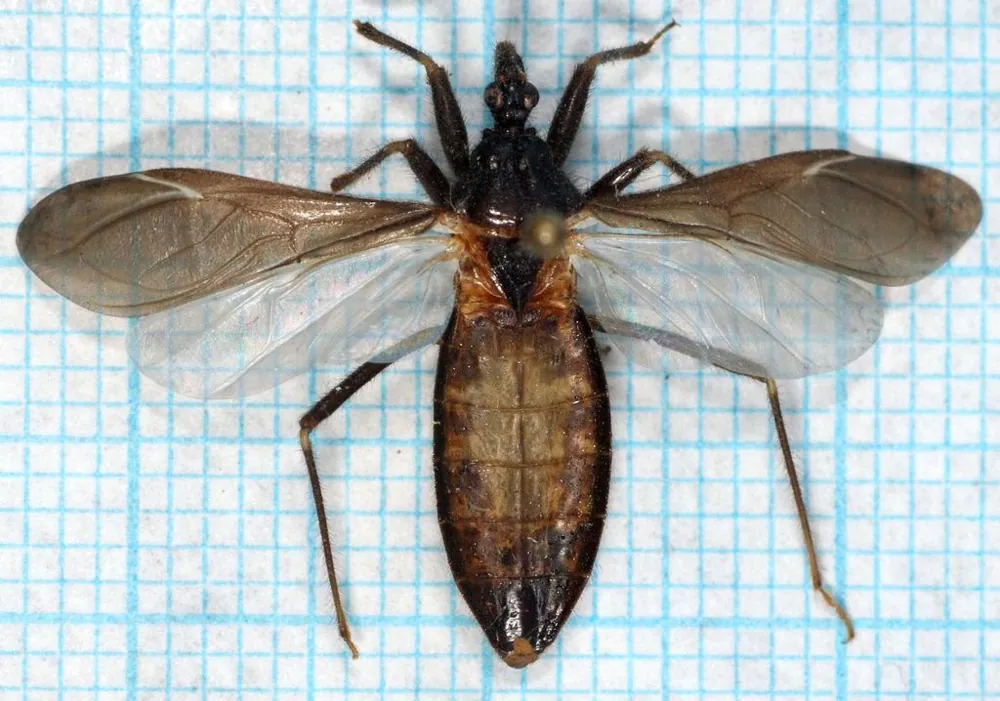
The masked hunter is a dark brown to black insect from the assassin bug family. It hunts small creatures such as bed bugs, woodlice and termites, and it is often found in homes. Its nymphs hide by covering their bodies with dust and debris.1

 Hono anndirtee ngal
- Adults are uniformly dark brown to black and measure 17–22 mm in length.1
- The head is elongated, with a short, three-segmented beak and long, slender antennae.1
- The abdomen is wide and extends beyond the wings in the middle, showing the edges of its abdominal segments.1
- Nymphs look like small adults but are often grey or light-coloured, because a sticky body coat collects dust, lint and small particles.1
No jiibondiree e: Masked hunters are sometimes mistaken for the kissing bug. Unlike the kissing bug, masked hunters do not carry Chagas disease.1
Doole tooke ŋatgol
Tooke no yaltira ñiiƴe mum tuma ngal ŋatata.
Hono musiiba mum heewiri e yimɓe?
Musiiba e yimɓe: MuusɗoNo waawi muusugol sanne, kono ko ɓadii kala tuma ɗum wonataa musiiba mawɗo.A handled or trapped masked hunter can deliver a rostral stab, which is painful and comparable to a bee's sting. The swelling can last for about a week. They do not feed on human blood.1
Ko honɗun ngal waɗata si ngal hulii?
When handled or trapped, it defends itself by delivering a stab with its beak.1
 Si no ŋata
- Ngam leɓɓe ngooɓuuli jukkooje: ittu ɗe e skotsi ɓataaɗo, refti loot nguru ngun. Wota a moomtu.
- Ngam ŋatgol: loot nokku on, ɓuuɓnu. Heɓu ballal doktoro si neɗɗo on no yi'a o selliraali, walla no ƴiiɗa ko newii.
Adii fow noddu nimero ballal (112, 000, 911). Ɗum ko anndinal ballal adiingal, wanaa saaraangal doktoro. Ko adii nder ballal adiingal
 Reen hoore maa
- Wota a meem, wota a nanngu, wota a jalnu kullal ladde haa abada, hay si ko tokooso, hay si no yi'ee no ɗaanii walla maayii.
- Accu ngal nokku. Si a fotti e ngal, deeƴu, ruttu ɓaawo seeɗa seeɗa, accu ngal yaha laawol mum.
- Si gooto e majji ŋatii ma: deeƴu, wota a dillu, noddu nimero ballal (112, 000, 911) walla yahu lopitaan law. Jogo e hakkille no ngal nanndi, natal no walla.
Ngal faalaaka gaañugol ma. Ngal no huutora tooke mum ngam nanngugol ñaamdu walla reenugol hoore mum, ngal ɓuri yiɗugol suuɗaade. Ko ɓeydi fii reenugol hoore maa
Hoto nder aduna?
Hono mawniri?
Hono juutiri?
 juuti no ñippirde kayitaaje
Hono Masked hunter mawniri, si fooɗondiraama e AN?
Ko limoore tun nder navigateur maa. Alaa ko danndetee walla ko neldetee ka nokku woo.
Hono yaawiri?


Humpito
Nymphs build two layers of camouflage on their bodies, an inner layer of fine particles and an outer layer of coarser ones, using their hind legs and a tarsal fan.1
Their sticky body coat catches dust, lint and other small particles, which hides them from both predators and prey.1
Because they hunt bed bugs, a masked hunter in the home can be a sign of a bed bug problem, and controlling the bed bugs usually deals with the hunters too.1
Masked hunters were probably introduced to North America by accident in the late 1800s to early 1900s. They were first found in Canada in 1905 and in the United States in 1917.1
Bonnoowo fenaandeeji
Fenaande: Masked hunters are kissing bugs and carry Chagas disease.
Goonga: Masked hunters are sometimes mistaken for kissing bugs, but they do not carry Chagas disease. Their stab is painful, but it does not spread that disease.1
Ɗo humpitooji ɗin iwri
- Reduvius personatus (Wikipedia (CC BY-SA 4.0))
- Reduvius personatus (iNaturalist): inɗe e ŋoordingol (classification).
- Venom Wiki: tolno musiiba, mawnugol aadaajo e miijo yaawugol ko amen. Ndaar no min ƴeewtirta ɗum: Hono min tolnirta musiiba.
Kala humpito nder ngoo hello no jogii limoore hollirnde iwdi mum. Si min juumii, yaafo, min ko yiɗɓe kulle, wanaa jaaynde ganndal. Haalan min e [email protected], min feewnitan.
 Yaare nden no weelaa! Venom Wiki ko golle neɗɗo gooto: ko yoɓetaake, alaa piiblisite, alaa reweteeɓe. Kopporde tokooso no walla heddingol ɗum e enternet.Ñaamnu yaare nden
Ko ɓeydi e fedde wootere: Ngooɓuuli e ɓuuɓuuli
 Oak processionaryNgooɓuuli e ɓuuɓuuliNo muusi tunWota a meem
 Pine processionaryNgooɓuuli e ɓuuɓuuliNo muusi tunWota a meem
 Common bombardier beetleNgooɓuuli e ɓuuɓuuliAlaa musiiba
 Asian giant water bugNgooɓuuli e ɓuuɓuuliNo muusi tun
 Blue-striped nettle grubNgooɓuuli e ɓuuɓuuliNo muusi tunWota a meem
 Brown-tail mothNgooɓuuli e ɓuuɓuuliNo muusi tunWota a meem
No hoɗi kadi nder: Orop
 Common European adderWipeeri e adderNo sokli doktoro
 Spanish flyKulle goɗɗe tookeeje ɓannduNo sokli doktoroWota a meem
 Common waspÑaaki, ɗuggi e ɗuggi mawɗiNo muusi tun
 European hornetÑaaki, ɗuggi e ɗuggi mawɗiNo muusi tun
 Fire salamanderPaaɓe tooke, krapooji e tritonuujiNo muusi tunWota a meem
 Western honey beeÑaaki, ɗuggi e ɗuggi mawɗiNo muusi tun