
 Afirik
 Aazi
Aazi Orop
Orop Amerik Sud
 Ostarali e Oseyani
 Antarktik
 Geeci Pasifik
 Geeci Atlantik
 Geeci Enndo
 Geeci Arktik
 Geeci Mediteraane
 Geeci Boɗeewi
 Geeci Karayib
 Geeci Korayl
 Geeci Siin Sud
 Geeci Filipiin
 Geeci Andaman
 Geeci Nord
 Geeci Timor e Arafura
 Gulf Bengal
 Gulf Kaliforni
Mexican fireleg tarantula
 Ŋatgol
The Mexican fireleg tarantula is a large, long-lived spider with bright orange and black colouring. It lives in dry scrubland in western Guerrero state, Mexico, where it hides in burrows. It is popular in the pet trade, which has put pressure on wild numbers.1



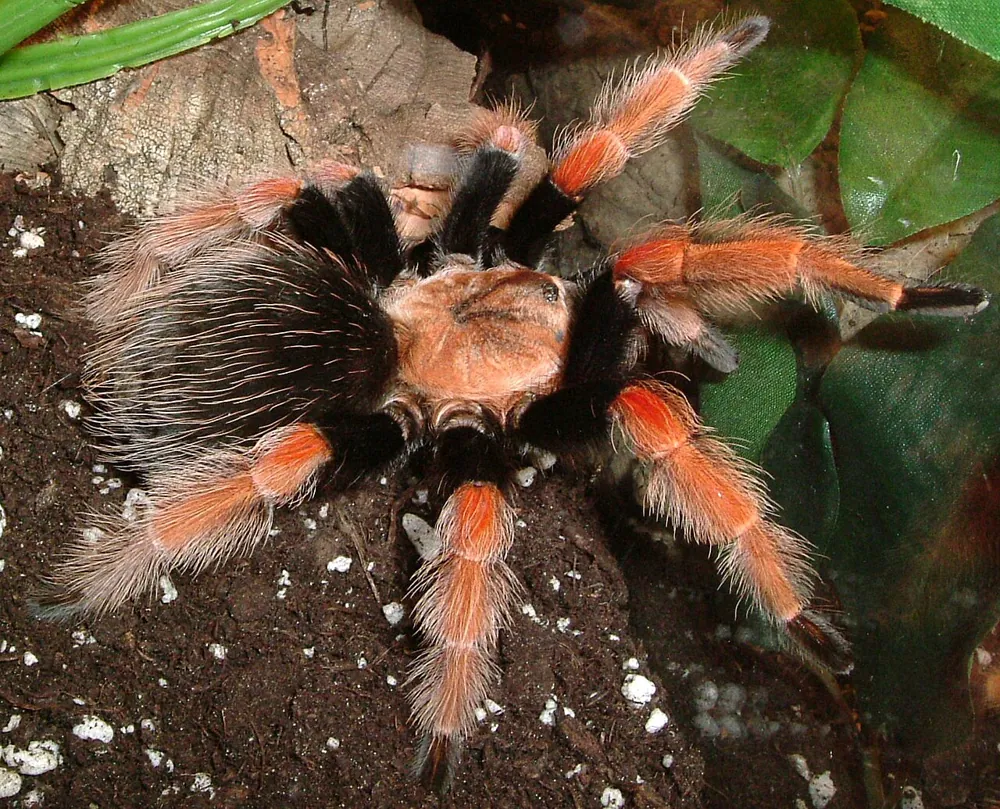
 Hono anndirtee ngal
- Dramatic orange and black colouring.1
- Orange carapace (the upper body shell) with a dark black band on the upper legs (femora).1
- Bright, fiery red knees (patellae) that fade to a paler orange further down the leg.1
- Black tips on the feet (tarsi).1
- Adults are 12.7 to 15.2 cm across, converted from 5 to 6 inches.1
No jiibondiree e: It resembles the Mexican redknee tarantula (Brachypelma hamorii). The main difference is the legs: the knees of the Mexican fireleg are bright red, while the joints of the redknee are orange.1
Doole tooke ŋatgol
Tooke no yaltira ñiiƴe mum tuma ngal ŋatata.
Hono musiiba mum heewiri e yimɓe?
Musiiba e yimɓe: SeeɗaNo jukkugol ñaaki walla ko ɓuri famɗugol. Ko ɓadii alaa musiiba e yimɓe.The spider is not particularly defensive. Its main defence is its urticating hairs, which it can flick when threatened. Some individuals may have a nervous temperament.1
Ko honɗun ngal waɗata si ngal hulii?
When it feels threatened, it flicks urticating hairs at the attacker.1
 Si no ŋata
- Loot nokku ŋataaɗo on, ɓuuɓnu. Heɓu ballal doktoro si muusu ngu no tiiɗi walla neɗɗo on no yi'a o selliraali.
Adii fow noddu nimero ballal (112, 000, 911). Ɗum ko anndinal ballal adiingal, wanaa saaraangal doktoro. Ko adii nder ballal adiingal
 Reen hoore maa
- Wota a meem, wota a nanngu, wota a jalnu kullal ladde haa abada, hay si ko tokooso, hay si no yi'ee no ɗaanii walla maayii.
- Accu ngal nokku. Si a fotti e ngal, deeƴu, ruttu ɓaawo seeɗa seeɗa, accu ngal yaha laawol mum.
- Si gooto e majji ŋatii ma: deeƴu, wota a dillu, noddu nimero ballal (112, 000, 911) walla yahu lopitaan law. Jogo e hakkille no ngal nanndi, natal no walla.
Ngal faalaaka gaañugol ma. Ngal no huutora tooke mum ngam nanngugol ñaamdu walla reenugol hoore mum, ngal ɓuri yiɗugol suuɗaade. Ko ɓeydi fii reenugol hoore maa
Hoto nder aduna?
Hono mawniri?
Hono juutiri?
 juuti no kaaɗe mahirɗe 5 e diisa gooto
 no waawi taccugol meeteruuji 100 nder segonde 210 (neɗɗo ɓurɗo yaawugol sokli 9,6)
Hono Mexican fireleg tarantula mawniri, si fooɗondiraama e AN?
Ko limoore tun nder navigateur maa. Alaa ko danndetee walla ko neldetee ka nokku woo.
Hono yaawiri?


Humpito
Tarantulas of this genus are long-lived. Females may live about ten years after reaching maturity, while males usually live only up to a year after their final moult.1
It is commonly kept as a pet and is regarded as suitable for beginners, which has led to heavy collection from the wild.1
It is mostly active after dark, but can sometimes be active during the day, especially in the morning and evening.1
Adults moult at the end of the dry season, between November and June. Males then begin searching for mates.1
Ngam ganduɓe tooke
- Innde ganndal
- Brachypelma boehmei
- Fedde
- Taranteeli e funnel-web
- Ɓesngu
- Theraphosidae2
- Ordre
- Araneae
- Leyɗe mawɗe
- Amerik Nord
- Ɓiɓɓe tokosɓe
- Mated females produce an egg sac. If it succeeds, the eggs generally hatch three to four weeks before the rainy season begins.1
- Hono ngal woniri nder ladde
- Listed on CITES Appendix II, which regulates international trade. Ongoing habitat destruction, illegal pet trade and high mortality before maturity are a considerable concern for its future.1
- Musiiba e yimɓe
- 1 / 5: Seeɗa3
Ɗo humpitooji ɗin iwri
- Brachypelma boehmei (Wikipedia (CC BY-SA 4.0))
- Brachypelma boehmei (iNaturalist): inɗe e ŋoordingol (classification).
- Venom Wiki: tolno musiiba, mawnugol aadaajo e miijo yaawugol ko amen. Ndaar no min ƴeewtirta ɗum: Hono min tolnirta musiiba.
Kala humpito nder ngoo hello no jogii limoore hollirnde iwdi mum. Si min juumii, yaafo, min ko yiɗɓe kulle, wanaa jaaynde ganndal. Haalan min e [email protected], min feewnitan.
 Yaare nden no weelaa! Venom Wiki ko golle neɗɗo gooto: ko yoɓetaake, alaa piiblisite, alaa reweteeɓe. Kopporde tokooso no walla heddingol ɗum e enternet.Ñaamnu yaare nden
Ko ɓeydi e fedde wootere: Taranteeli e funnel-web
 Mexican redknee tarantulaTaranteeli e funnel-webAlaa musiiba
 Arizona blond tarantulaTaranteeli e funnel-webAlaa musiiba
 Ravine trapdoor spiderTaranteeli e funnel-webAlaa musiiba
 Trinidad chevron tarantulaTaranteeli e funnel-webNo muusi tun
 Antilles pinktoe tarantulaTaranteeli e funnel-webAlaa musiiba
 California trapdoor spiderTaranteeli e funnel-webAlaa musiiba
 Terciopelo
 Eastern coral snake
 Eastern diamondback rattlesnake
 Eyelash viper
 Timber rattlesnake
 Western diamondback rattlesnake