
 Afirik
 Aazi
Aazi Orop
Orop Amerik Sud
 Ostarali e Oseyani
 Antarktik
 Geeci Pasifik
 Geeci Atlantik
 Geeci Enndo
 Geeci Arktik
 Geeci Mediteraane
 Geeci Boɗeewi
 Geeci Karayib
 Geeci Korayl
 Geeci Siin Sud
 Geeci Filipiin
 Geeci Andaman
 Geeci Nord
 Geeci Timor e Arafura
 Gulf Bengal
 Gulf Kaliforni
Southern house spider
 Ŋatgol
The southern house spider is a large spider that lives in the Americas, from the southern United States to Argentina. It is often mistaken for the brown recluse, but it is not aggressive and rarely bites. Its males wander around looking for mates, and both sexes can squeeze through very narrow cracks.1

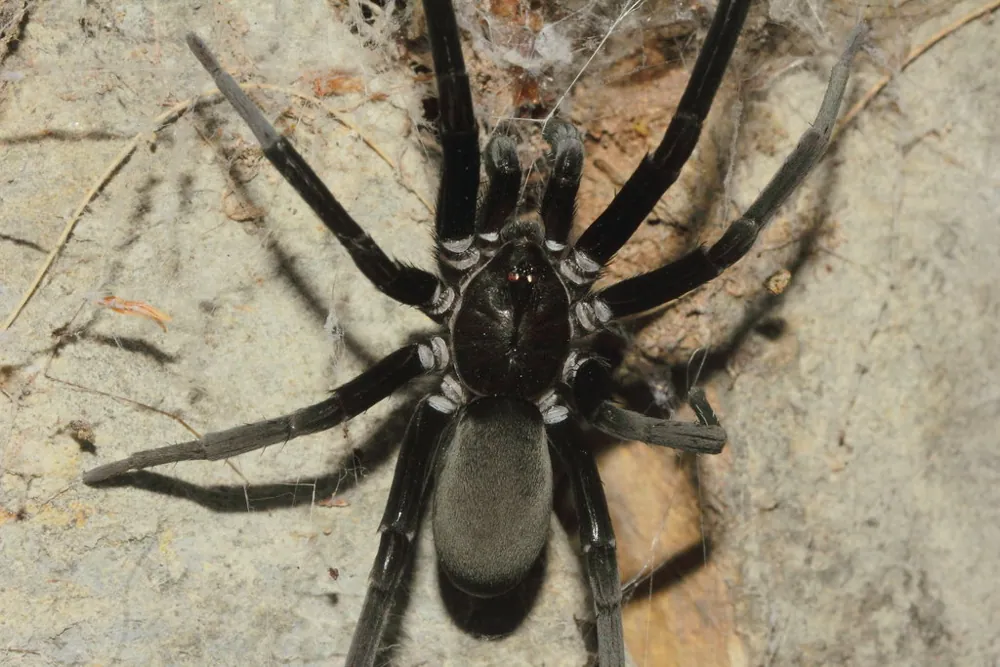
 Hono anndirtee ngal
- Females are dark brown or black and more compact in shape, with often larger, bulbous bodies.1
- Males have longer legs and unusually long, slender pedipalps (the leg-like feelers near the mouth).1
- Males lack the violin-shaped marking on the front part of the body that the brown recluse has.1
- The abdomen (rear part of the body) is covered in fine, velvety light grey hair.1
- Both sexes may grow to about 5.1 cm across with legs extended.1
No jiibondiree e: Males are often mistaken for the brown recluse because they have similar colours and body structure. Male southern house spiders are usually larger, have no violin shape on the front of the body, and have long, slender pedipalps.1
Doole tooke ŋatgol
Tooke no yaltira ñiiƴe mum tuma ngal ŋatata.
Hono musiiba mum heewiri e yimɓe?
Musiiba e yimɓe: SeeɗaNo jukkugol ñaaki walla ko ɓuri famɗugol. Ko ɓadii alaa musiiba e yimɓe.Males may seem aggressive, but they bite only when trapped. Their mouthparts are too small to easily get through human skin, so bites are unlikely to be harmful.1
Ko honɗun ngal waɗata si ngal hulii?
When it feels threatened, it instinctively plays dead, a tactic that works well against its common predators.1
 Si no ŋata
- Loot nokku ŋataaɗo on, waɗ galaasi e dow mum ngam muusu. Heɓu ballal doktoro si muusu ngu no tiiɗi, no saakoo, walla neɗɗo on no yi'a o selliraali.
Adii fow noddu nimero ballal (112, 000, 911). Ɗum ko anndinal ballal adiingal, wanaa saaraangal doktoro. Ko adii nder ballal adiingal
 Reen hoore maa
- Wota a meem, wota a nanngu, wota a jalnu kullal ladde haa abada, hay si ko tokooso, hay si no yi'ee no ɗaanii walla maayii.
- Accu ngal nokku. Si a fotti e ngal, deeƴu, ruttu ɓaawo seeɗa seeɗa, accu ngal yaha laawol mum.
- Si gooto e majji ŋatii ma: deeƴu, wota a dillu, noddu nimero ballal (112, 000, 911) walla yahu lopitaan law. Jogo e hakkille no ngal nanndi, natal no walla.
Ngal faalaaka gaañugol ma. Ngal no huutora tooke mum ngam nanngugol ñaamdu walla reenugol hoore mum, ngal ɓuri yiɗugol suuɗaade. Ko ɓeydi fii reenugol hoore maa
Hoto nder aduna?
Hono mawniri?
Hono juutiri?
 ɓuri hoɓɓere maa tokoosere rabbiɗugol
 no waawi taccugol meeteruuji 100 nder segonde 330 (neɗɗo ɓurɗo yaawugol sokli 9,6)
Hono Southern house spider mawniri, si fooɗondiraama e AN?
Ko limoore tun nder navigateur maa. Alaa ko danndetee walla ko neldetee ka nokku woo.
Hono yaawiri?


Humpito
It is a cribellate spider, meaning its silk is not sticky. Its web works by tangling silk into a velcro-like net.1
It can crawl through cracks as narrow as 0.66 cm, thanks to its long body and compact legs.1
It is almost blind, so it may crawl over anything in its path, living or not, without meaning to attack.1
Its mating ritual can last over an hour, with long pauses where neither spider moves much.1
Its family, Filistatidae, is known as the crevice weavers because the females build webs around cracks.1
Bonnoowo fenaandeeji
Fenaande: Southern house spiders are aggressive and bite people often.
Goonga: Males may look aggressive, but they bite only when trapped, and their mouthparts are too small to easily penetrate human skin. Their crawling over things is not aggression, as they cannot see larger animals.1
Ɗo humpitooji ɗin iwri
- Southern house spider (Wikipedia (CC BY-SA 4.0))
- Kukulcania hibernalis (iNaturalist): inɗe e ŋoordingol (classification).
- Venom Wiki: tolno musiiba, mawnugol aadaajo e miijo yaawugol ko amen. Ndaar no min ƴeewtirta ɗum: Hono min tolnirta musiiba.
Kala humpito nder ngoo hello no jogii limoore hollirnde iwdi mum. Si min juumii, yaafo, min ko yiɗɓe kulle, wanaa jaaynde ganndal. Haalan min e [email protected], min feewnitan.
 Yaare nden no weelaa! Venom Wiki ko golle neɗɗo gooto: ko yoɓetaake, alaa piiblisite, alaa reweteeɓe. Kopporde tokooso no walla heddingol ɗum e enternet.Ñaamnu yaare nden
 Brazilian wandering spider
 Brown recluse
 Southern black widow
 Amazon wandering spider
 Chilean recluse
 Northern black widow
 Terciopelo
 Eastern coral snake
 Eastern diamondback rattlesnake
 Eyelash viper
 Timber rattlesnake
 Western diamondback rattlesnake